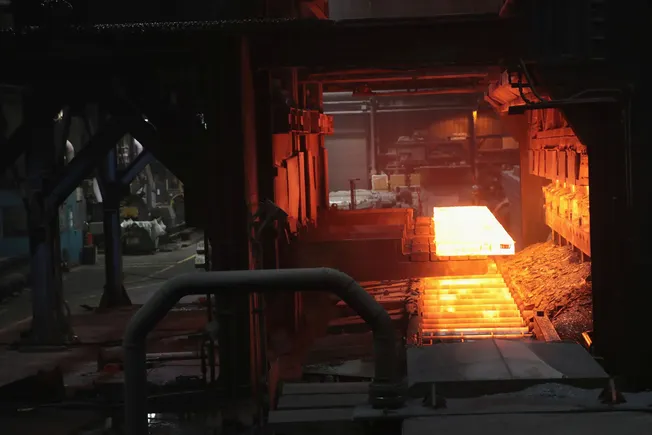
Industrial heat is becoming a more realistic clean-energy target
Industrial heat has long stood out as one of the hardest parts of the energy system to decarbonize. Heavy industry depends heavily on fossil fuels, especially natural gas, because heat has to be delivered reliably, at a wide range of temperatures, and often at a cost that leaves little room for technology experiments. A new analysis from researchers at the University of California, Berkeley argues that this picture is starting to change.
According to the report described in the source material, off-grid systems powered by local wind and solar and paired with industrial geothermal, heat pumps, and thermal energy storage could economically supply up to one-third of industrial heat demand in the United States by 2035. If that finding holds up in wider scrutiny and real-world deployment, it would mark a meaningful shift in how manufacturers think about energy cost, resilience, and decarbonization.
The result is notable not because it claims a complete transformation, but because it identifies a large, concrete share of industrial demand that may now be technically and economically addressable with clean-energy systems. For a sector often described as difficult to electrify, one-third is not a marginal figure. It suggests the industrial transition may be less constrained by basic technical impossibility than by planning, deployment timelines, and capital decisions.
What the Berkeley analysis examined
The paper, as summarized in the source text, evaluated the cost of delivered heat across low-, medium-, and high-temperature industrial uses. It used site-specific data to estimate renewable energy potential at more than 3,000 industrial sites across the country. That scope matters because industrial heat is not a single use case. Conditions vary widely by geography, resource quality, process temperature, and local energy prices.
Rather than presenting a generic national average, the analysis appears to focus on where combinations of on-site resources and clean-heat technologies align in favorable ways. The source says the economics are particularly attractive in regions with high natural gas prices and low-cost renewable resources, including California and parts of the northeastern United States.
That regional detail is important. Industrial decarbonization is often discussed as a national challenge, but adoption decisions happen at the facility level. A steel plant, food processor, chemical site, or manufacturing campus will evaluate options based on its own process temperatures, load profile, fuel exposure, and local electricity or renewable potential. Site-specific modeling therefore tells a more useful story than national abstractions.

Why one-third matters
Supplying up to one-third of U.S. industrial heat demand with off-grid renewable systems would be consequential on several fronts. First, it would cut dependence on natural gas in a sector that has historically treated gas as the default answer for process heat. Second, it would create a path toward more predictable energy costs, especially in a market where gas prices can be volatile. Third, it would expand the role of storage and thermal management technologies that are often discussed less than wind and solar themselves but are essential to making industrial systems work.
Jose Dominguez, a research manager at UC Berkeley and one of the report’s authors, framed the advantage in economic terms in the source interview. Clean heat systems, he said, can give manufacturers more control over costs and predictability. That may be the most persuasive argument for industry. Climate targets matter, but industrial operators usually move fastest when reliability and long-term cost certainty improve at the same time.
The analysis also lands in a broader policy context. The source notes that the industrial sector was identified by the Biden administration as especially difficult to move away from fossil fuels. That characterization has shaped much of the recent conversation around decarbonization: power and passenger transport have clearer technology pathways, while industrial energy demand remains more stubborn because temperature requirements are high and downtime is expensive.
Different temperature bands need different technologies
The source material highlights an important finding from the report: not all industrial heat should be treated the same. Heat pumps were described as the most cost-effective clean solution for low-temperature industrial processes below 200 degrees Celsius. For high-temperature processes, thermal batteries were said to offer competitive or lower costs.
That distinction matters because it breaks the industrial heat challenge into more manageable segments. Low-temperature applications exist across food processing, pulp and paper, and other manufacturing activities where heat pumps may already be a commercially legible option. High-temperature processes are tougher, but the reported competitiveness of thermal batteries suggests that electrified heat storage may have a growing role where direct substitution has looked difficult.
Storage is central here. Industrial sites do not consume energy only when the wind is blowing or the sun is shining. Pairing renewable generation with thermal storage can convert intermittent electricity into dispatchable process heat, making on-site systems more compatible with continuous operations. The addition of industrial geothermal in the source summary also points to a portfolio approach rather than a single-technology solution.
The caveats are real
The finding is promising, but the source text also includes constraints that should not be overlooked. The paper has not been peer reviewed. That does not invalidate the result, but it does mean the analysis has not yet cleared a formal external review process. For a claim with potentially large implications for industrial investment, that distinction matters.
There is also a difference between modeled economic viability and executed deployment. Dominguez acknowledged that even where these systems are economical, they still need to be planned and developed. That may sound obvious, but it is often the critical barrier. Industrial facilities make investment decisions on long cycles, integrate equipment around existing production schedules, and face operational risks if new systems underperform. A favorable model is a starting point, not a guarantee of adoption.
In addition, the source frames the opportunity as off-grid or on-site systems. That is strategically interesting because it suggests some manufacturers could reduce exposure to both fossil fuel markets and parts of the wider power system. But it also means deployment would depend heavily on local land, siting conditions, engineering integration, and capital availability.
What changes if the economics hold
If subsequent research and projects support Berkeley’s conclusion, the practical implication is that industrial decarbonization may be entering a different phase. The first phase focused on whether clean heat options existed at all. The next phase may be about where they pencil out first, how quickly they can be built, and which industrial subsectors can move ahead without waiting for a full system-wide overhaul.
That would be a meaningful change in tone for the sector. Industrial emissions are large, and they have often been treated as an intractable residue of the energy transition. A finding that one-third of heat demand could be served economically by 2035 does not eliminate the hard parts of the challenge, but it does narrow the territory of the impossible.
The strongest takeaway from the source material is therefore less about a single number than about momentum. Clean heat technologies have advanced enough that parts of industry may no longer be choosing between decarbonization and affordability. In favorable locations, they may be starting to choose between legacy fuel dependence and a new set of on-site energy systems that promise lower emissions with better cost control.
This article is based on reporting by Utility Dive. Read the original article.
Originally published on utilitydive.com




