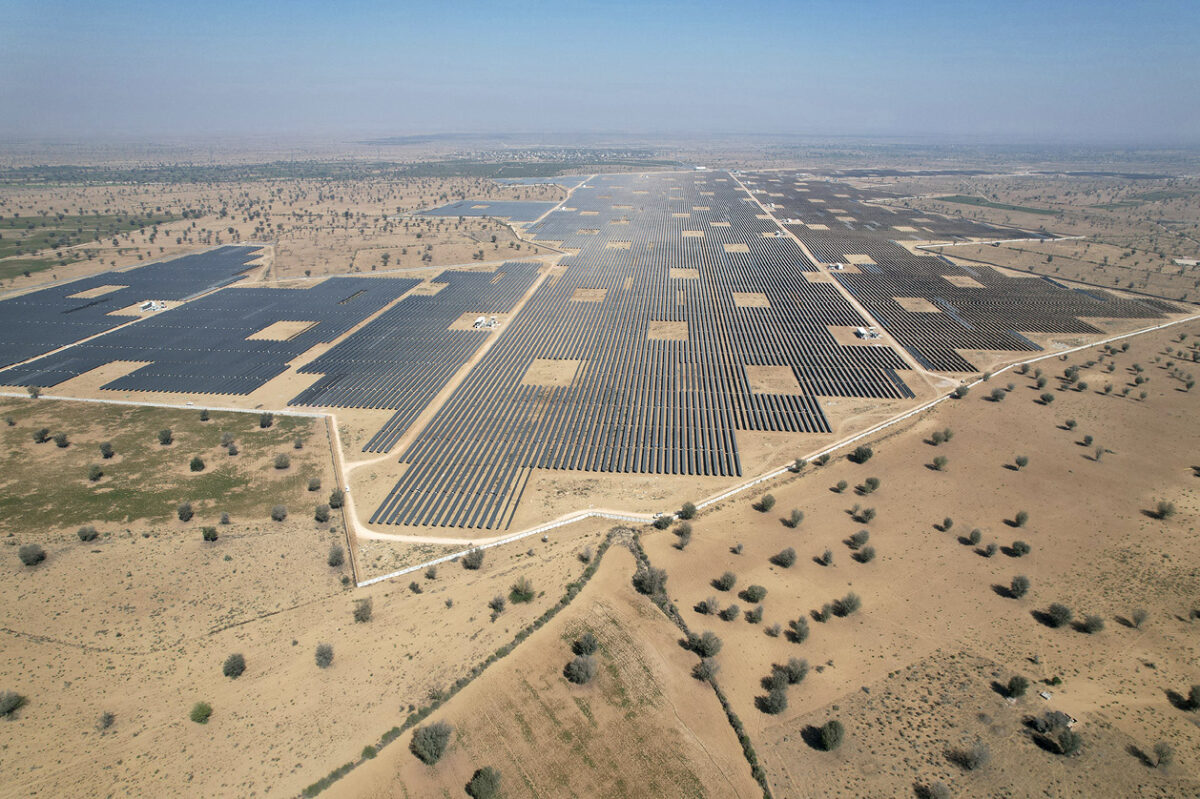
India is generating more clean power than parts of its grid can absorb
India curtailed large amounts of renewable electricity in the first quarter of 2026, highlighting a familiar but increasingly urgent problem in fast-growing power systems: building solar and wind capacity is not enough if transmission and grid operations cannot keep pace.
According to the supplied source text, analysis from Ember found that India curtailed around 470 gigawatt-hours of renewable energy in the first three months of the year. Nearly 300 gigawatt-hours of that total was attributed to transmission constraints, while another 170 gigawatt-hours was linked to system inflexibility.
Those losses are more than an accounting issue. Every curtailed megawatt-hour represents clean electricity that was available but not delivered, reducing the effective value of renewable investments and slowing emissions reductions. On March 30 alone, India lost 34 gigawatt-hours of clean generation, an amount the source text equates to the daily electricity use of roughly 5 million urban middle-class households.
Where the bottlenecks are showing up
The curtailment was concentrated in parts of the country where renewable growth and grid capability appear to be out of sync. The northern region accounted for 178 gigawatt-hours of curtailed power and the western region 122 gigawatt-hours, according to the supplied report. By contrast, the southern region recorded no transmission-related curtailment, which the analysis attributes to stronger synchronization between generation growth and grid expansion.
That regional contrast is important. It suggests India’s challenge is not a simple national shortfall in grid capability, but a planning and sequencing problem. Some parts of the country are integrating new renewable capacity more effectively than others, showing that curtailment is not inevitable if transmission investment, dispatch capability, and generation deployment are aligned.

Why curtailment matters more now
As renewable penetration rises, curtailment becomes a more sensitive indicator of system quality. In early stages of deployment, a grid may absorb new solar and wind projects with limited friction. But once generation scales quickly, constraints in transmission corridors, balancing resources, and operational flexibility become harder to ignore.
India’s first-quarter figures suggest it is moving deeper into that phase. The issue is not simply that renewable output varies. It is that parts of the system still cannot move or manage that output efficiently when it is available. Transmission bottlenecks strand power geographically, while inflexibility prevents the wider system from adapting fast enough to changing generation patterns.
That creates multiple costs. Developers lose revenue. Consumers miss out on available clean electricity. Grid operators face tougher balancing challenges. Policymakers risk a widening gap between installed renewable capacity and actual delivered renewable energy.
Infrastructure, not ambition, is the limiting factor
The curtailment numbers also sharpen a broader energy transition lesson. Ambitious renewable targets can drive investment and project development, but the pace of grid modernization determines how much of that capacity turns into usable power. Transmission lines, regional coordination, and flexible system operation are not supporting details. They are core clean-energy infrastructure.
The southern region’s performance offers a useful contrast in the supplied source text. With no transmission-related curtailment reported there, stronger coordination between grid expansion and generation growth appears to have made a measurable difference. That is a practical policy signal: where network planning keeps up, clean power losses can be reduced.
India’s challenge is particularly consequential because of the scale of its electricity demand growth and its central role in global clean-energy deployment. If renewable curtailment keeps rising, it could erode investor confidence and reduce the real-world emissions benefit of new projects. If the grid catches up, India could turn more of its installed capacity into dependable decarbonization progress.
A transition test for the next buildout phase
What makes the first-quarter data significant is not just the headline number, but the stage of transition it represents. India has moved beyond the question of whether it can build renewables at scale. The next test is whether it can build the operational and transmission backbone needed to use them fully.
The answer will shape the economics of future projects and the reliability of the broader power system. Curtailment on this scale signals that the bottleneck is shifting from generation to integration. That is a common turning point in power transitions, but one that demands fast policy and infrastructure response.
India still has the advantage of being able to learn from regions within its own grid that are performing better. The southern system shows that coordinated expansion can reduce losses. Replicating that success elsewhere will be crucial.
For now, the data is a warning that clean-energy growth alone is not the finish line. Delivering renewable electricity when and where it is produced depends on a grid capable of carrying the transition the rest of the way.
This article is based on reporting by PV Magazine. Read the original article.
Originally published on pv-magazine.com