Offshore solar posts a stronger energy yield in Taiwan comparison
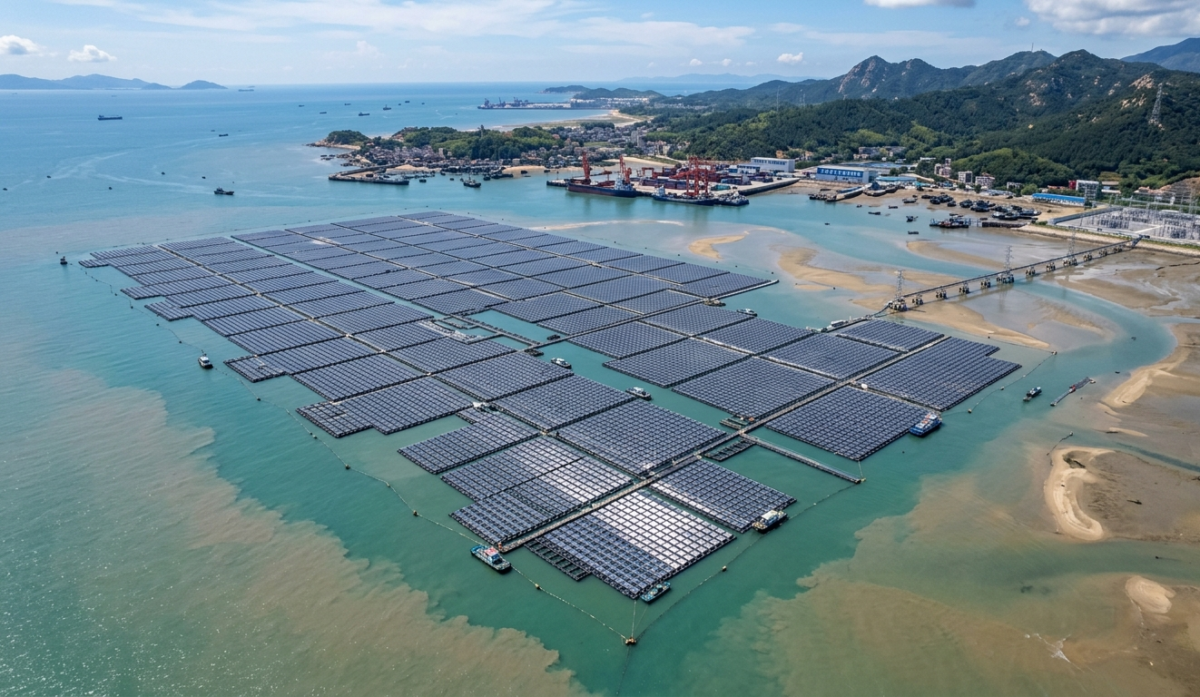
Researchers in Taiwan have reported that offshore floating solar could produce about 12% more electricity over its lifetime than a comparable ground-mounted photovoltaic installation, adding fresh evidence that marine solar may become a meaningful option where land is constrained and coastal conditions are favorable.
The study, summarized by pv magazine, compared a 100 megawatt ground-mounted plant in Changbin Industrial Park with a 181 megawatt offshore floating PV system. The larger offshore capacity was used to normalize the comparison across two different system configurations, allowing the researchers to evaluate energy yield, efficiency, and environmental performance on a more equivalent basis.
The headline result is straightforward: the offshore setup produced more electricity over its lifetime. The researchers attributed the gain primarily to cooling and intertidal effects. In solar systems, cooler operating conditions can improve module performance, and the marine environment appears to offer enough thermal advantage to lift output despite the additional complexity of placing PV infrastructure offshore.
Why the result matters
Floating solar is often discussed as a way to preserve land, reduce water evaporation on inland reservoirs, or make use of underutilized surfaces. Offshore floating PV extends that logic further, but it has faced persistent questions about cost, durability, marine engineering, and long-term maintenance. A result showing a measurable lifetime generation advantage does not settle those concerns, but it does strengthen the case that offshore deployments deserve serious technical consideration rather than being treated as speculative concepts.
That matters particularly in places with dense land use, competing industrial demands, or coastal geographies that may support marine energy infrastructure. Taiwan is a relevant test environment for exactly those reasons. A higher output profile can meaningfully affect project economics, even if the initial capital burden is higher.
The source text describes offshore floating solar as technically viable, which is a more useful conclusion than a simple performance win. A technology can outperform on paper and still fail in practice if it cannot withstand real operating conditions. The significance of this comparison is that it points to a workable engineering pathway, even while leaving some major commercial constraints unresolved.

The economics are not solved yet
The study’s more cautionary finding is that the offshore configuration remains roughly 30% more expensive. That is not a marginal difference. It suggests that stronger energy yield alone is not yet enough to make offshore floating PV an easy substitute for ground-mounted systems in most markets.
Cost pressure likely reflects several known challenges embedded in the source description: durability demands, marine engineering requirements, and the broader difficulty of installing and maintaining electrical infrastructure in offshore settings. Salt exposure, structural stress, anchoring, access, inspection, and survivability all add complexity compared with a conventional solar farm on land.
As a result, the near-term case for offshore floating PV is unlikely to rest on universal competitiveness. It is more likely to depend on specific regional conditions where land is scarce, coastal siting is practical, and the value of higher output justifies the extra engineering burden. In that sense, offshore floating solar may develop the way many energy technologies do: not by beating incumbents everywhere, but by winning in constrained, high-value niches first.
Cooling and intertidal effects are the key advantage
The researchers credit the offshore system’s better lifetime generation to cooling and intertidal effects. The cooling explanation is intuitive. Solar modules generally lose efficiency as they heat up, so an installation exposed to marine airflow and moderated temperatures can preserve more performance over time.
The mention of intertidal effects is important because it suggests the advantage is not purely meteorological. Site conditions unique to the offshore environment may influence panel behavior, operating temperatures, or system exposure in ways that improve overall generation. The supplied text does not provide a deeper mechanism, so the most defensible conclusion is that the marine setting appears to offer performance benefits beyond the land-based case used in the study.
For developers and policymakers, that means offshore floating PV should not be analyzed only as a land solar project moved onto water. It may need its own performance assumptions, cost models, and design rules, especially in places with strong tidal variation or distinctive coastal climates.
Where this leaves the market
The broader solar industry is still driven mainly by simpler, cheaper ground-mounted and rooftop systems, and nothing in the source material suggests that is about to change. Ground PV remains the easier build. It is less expensive and far less dependent on specialized marine engineering. But the Taiwan analysis adds to a growing argument that offshore floating solar can no longer be dismissed as a fringe idea.
The right takeaway is not that offshore floating PV has already won an economic contest. It has not. The reported 30% cost premium is a serious constraint, and durability remains an open practical issue. The stronger conclusion is that the technology can produce more electricity over its lifetime under the conditions studied, which gives project developers and governments a more credible basis for further work.
If future engineering reduces cost and improves long-term resilience, offshore floating PV could become a more substantial part of coastal energy planning. For now, this study marks an important intermediate step: it identifies a performance edge large enough to matter and pairs it with a candid reminder that commercial readiness still depends on solving the hard parts of building energy systems at sea.
This article is based on reporting by PV Magazine. Read the original article.
Originally published on pv-magazine.com




