Breakthrough in Perovskite Solar Technology
Researchers at the Helmholtz-Zentrum Berlin (HZB) in Germany have developed a highly complex triple-junction perovskite solar cell that achieves a record 27.3% efficiency while demonstrating a lifetime of 770 hours under continuous operation. This advancement addresses two of the biggest challenges facing perovskite photovoltaics: efficiency and durability.
How Triple-Junction Cells Work
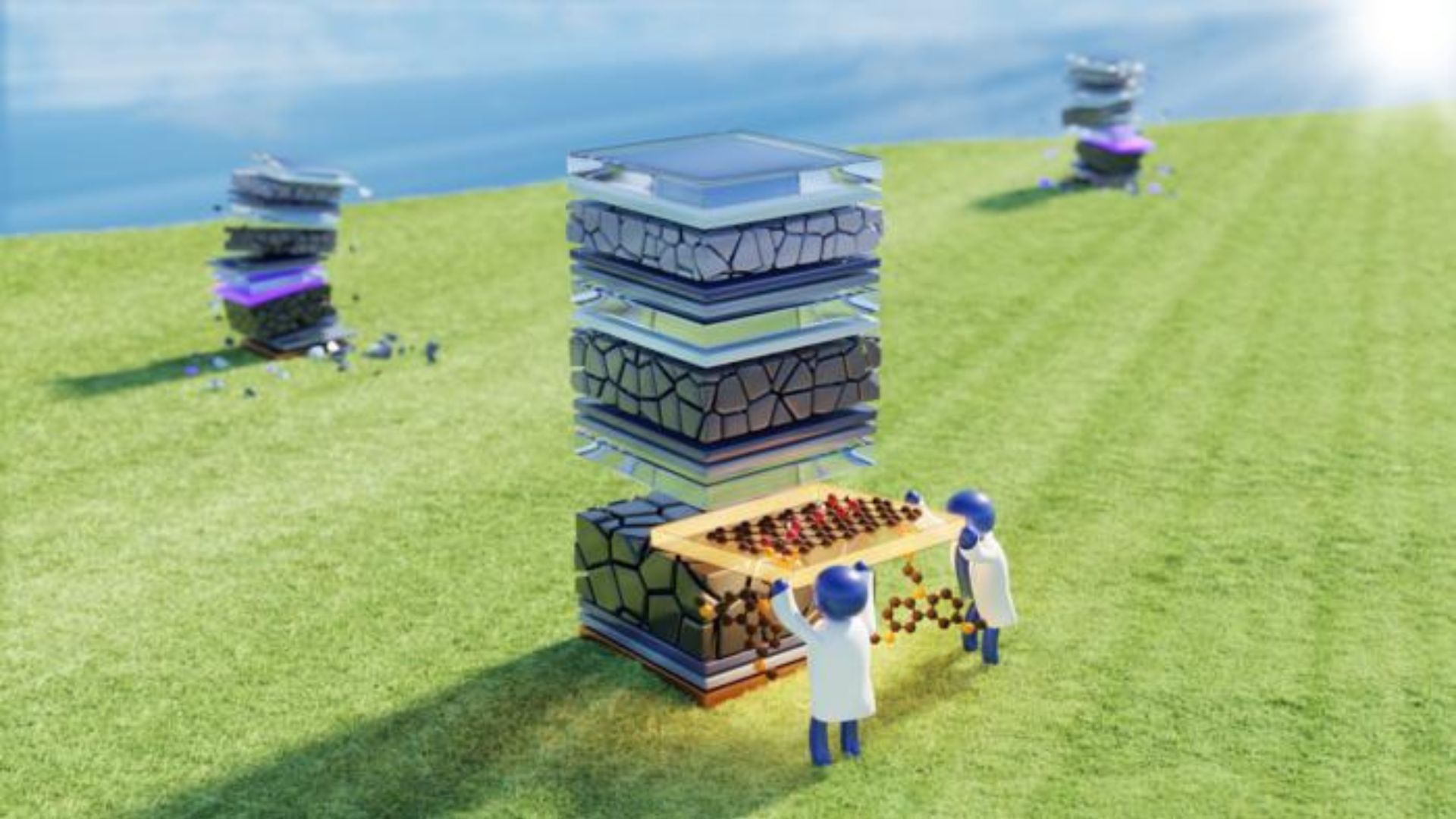
Triple-junction solar cells stack three different absorber layers, each tuned to capture a specific portion of the solar spectrum. By combining materials that absorb high-energy (blue), mid-energy (green), and low-energy (red) photons, these cells can theoretically exceed the Shockley-Queisser limit of single-junction cells. The HZB team optimized the interfaces between layers to minimize energy losses and improve charge extraction.

Efficiency and Stability Metrics
The new cell achieved a certified efficiency of 27.3% under standard test conditions. More importantly, it retained 80% of its initial efficiency after 770 hours of continuous illumination and maximum power point tracking. This represents a significant improvement over previous triple-junction perovskite cells, which often degraded within hundreds of hours.
Material and Manufacturing Innovations
The researchers used a combination of organic-inorganic hybrid perovskites and fully inorganic perovskites to create the three junctions. They employed advanced deposition techniques to ensure uniform film formation and reduce defects. The team also developed a novel passivation strategy to suppress non-radiative recombination, a major cause of efficiency loss.


Implications for Solar Energy
Perovskite solar cells have attracted intense interest due to their low-cost manufacturing and high efficiency potential. However, stability issues have hindered commercialization. The HZB demonstration shows that triple-junction designs can achieve both high efficiency and extended operational life, bringing perovskite technology closer to practical applications in utility-scale solar farms and building-integrated photovoltaics.
Comparison with Other Technologies
Single-junction perovskite cells have reached efficiencies around 25-26%, while silicon cells max out near 27%. Triple-junction designs can surpass these limits. The 27.3% efficiency of this cell is competitive with the best silicon-perovskite tandems, but with the advantage of being entirely perovskite-based, simplifying manufacturing.

Future Research Directions
The HZB team plans to further improve stability by exploring new encapsulation methods and alternative contact materials. They also aim to scale up the cell size from laboratory scale to commercial modules. Collaborations with industry partners are underway to accelerate technology transfer.
Conclusion
The development of a triple-junction perovskite solar cell with 27.3% efficiency and 770-hour lifetime marks a significant milestone in photovoltaic research. It demonstrates that perovskite technology can achieve both high performance and durability, paving the way for next-generation solar cells that are efficient, stable, and cost-effective.
This article is based on reporting by Interesting Engineering. Read the original article.
Originally published on interestingengineering.com