The Turning Point: New Leadership Takes the Helm
Lucid Motors entered 2026 with award-winning technology, a world-class luxury SUV, and one of the most ambitious global manufacturing strategies in the EV sector. By midyear, the company is fighting for operational stability, financial runway, and the time it needs to launch the vehicle that may finally bring scale. What happens next will determine whether Lucid becomes a cornerstone of Saudi Arabia's industrial transformation — or remains one of the EV industry's most brilliant unfinished stories.
The turning point arrived on June 1, when Silvio Napoli formally took over as CEO. Napoli is not a Silicon Valley visionary; he is an industrial operator. His decades at Schindler Group were spent managing complex, globally distributed manufacturing systems — precisely the kind of discipline Lucid has lacked. His early messaging focused on cost competitiveness, accountability, and organizational streamlining. Within weeks, those words became action.
Deep Cuts: Workforce Reduction and Operational Consolidation
Lucid announced layoffs affecting roughly 1,500 employees, about 18 percent of its workforce, just months after a previous 12 percent reduction. Nearly one-third of the company has been cut in 2026. The second production shift at AMP-1 in Casa Grande, Arizona, was eliminated. And in a move that surprised even internal teams, interim CEO Marc Winterhoff did not return to his previous role. The chief operating officer position was abolished entirely, consolidating operational authority under Napoli.
CleanTechnica’s source inside Lucid, speaking on condition of anonymity because they were not authorized to discuss internal matters, described the restructuring as “the most serious reset since the company was founded.” According to the source, Napoli made clear that “the era of building capacity ahead of demand is over. Everything is being recalibrated to survive until Cosmos launches.” The source added that teams were told to expect “a smaller, more focused Lucid” for at least the next year.

Financial Pressures: Revenue Growth Amidst Deep Losses
The financial backdrop explains the urgency. Lucid’s first-quarter results showed revenue rising 20 percent year over year to $282.5 million, but the company still posted a net loss of roughly $1 billion. Production reached 5,500 vehicles, yet deliveries totaled only 3,093 — a gap that ties up capital and signals demand challenges. The imbalance between production and sales highlights the difficulty Lucid faces in converting its technological prowess into market traction, especially in the premium EV segment where competition from Tesla, Rivian, and legacy automakers is intensifying.
Lucid's cash burn rate remains a concern. With the layoffs and shift elimination, the company aims to extend its runway through the launch of the Cosmos, a midsize SUV expected to be more affordable than the Air sedan and Gravity SUV. The Cosmos is seen as Lucid's best chance to achieve volume production and economies of scale, but it requires significant investment in tooling, supply chain, and marketing.
The Saudi Bet: AMP-2 and Industrial Transformation
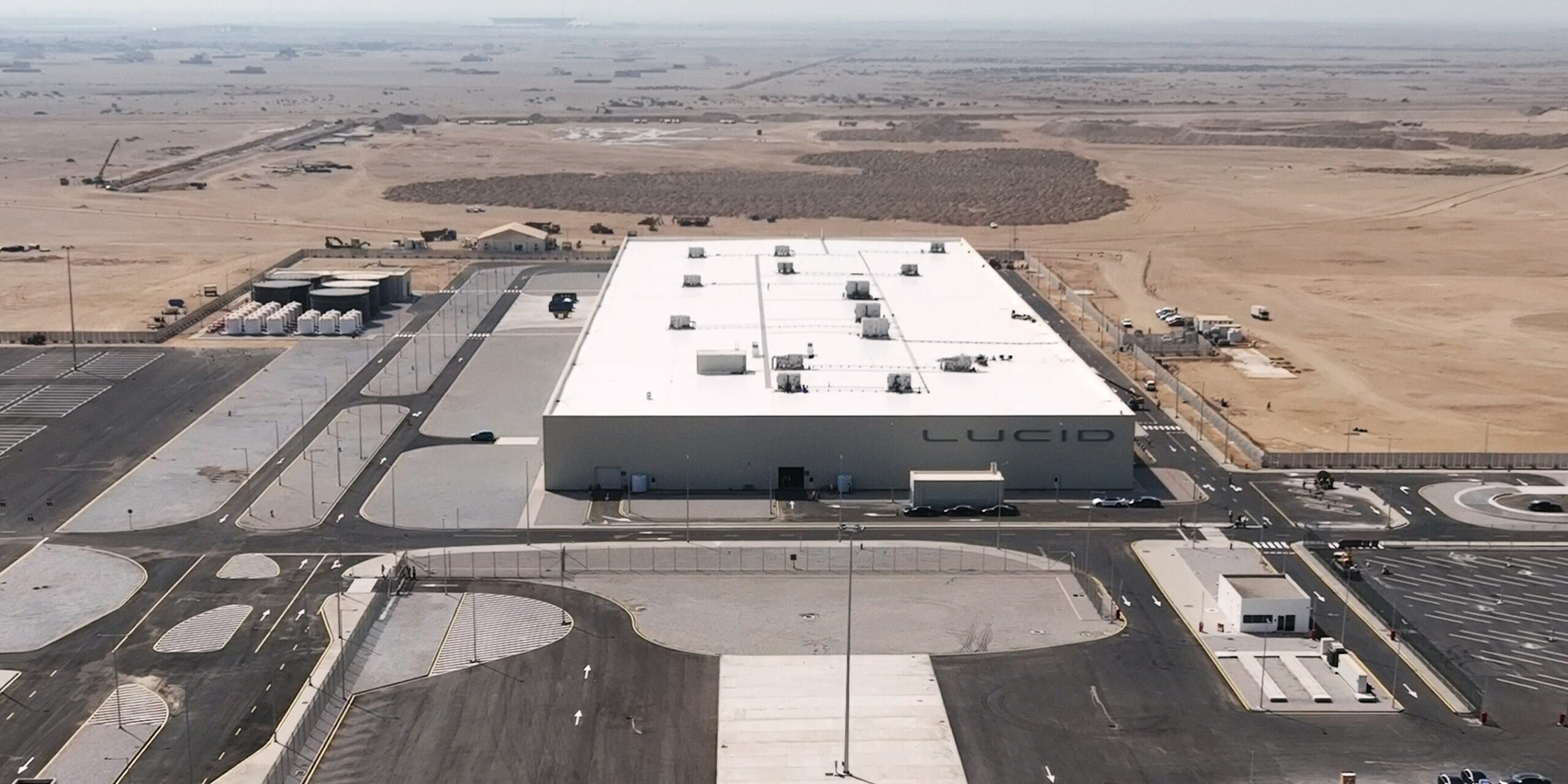
Lucid Group officially opened the first-ever car manufacturing facility in Saudi Arabia. As Lucid’s second Advanced Manufacturing Plant (AMP-2) and first international plant, the facility will produce Lucid’s groundbreaking electric vehicles for Saudi Arabia and export to other markets. The Saudi factory is a key pillar of the kingdom's Vision 2030 plan to diversify its economy away from oil and build a domestic EV industry. Lucid, in which Saudi Arabia's Public Investment Fund (PIF) holds a majority stake, is central to that vision.
However, the harsh reality of the EV market has forced Lucid to recalibrate its ambitions. The Saudi plant, while a symbol of the partnership, also adds fixed costs and complexity. Napoli's cost-cutting measures suggest a more cautious approach, prioritizing survival over aggressive expansion. The question is whether the Saudi backers will continue to fund losses as Lucid works toward profitability.

Cosmos: The Make-or-Break Vehicle
All eyes are on the Cosmos, Lucid's upcoming midsize SUV that is expected to start at around $50,000, significantly lower than the Air's $70,000+ price tag. The Cosmos is designed to compete in the mainstream luxury EV segment, targeting higher volumes. Lucid's technology, including its efficient powertrain and battery systems, gives it a potential edge, but the company must execute flawlessly on manufacturing and delivery.
Napoli's experience in global manufacturing at Schindler could be invaluable. He is known for rigorous cost control and process optimization. Under his leadership, Lucid is likely to focus on simplifying production, reducing waste, and improving supply chain resilience. The elimination of the COO role and consolidation of authority under Napoli suggests a hands-on approach to operational management.
Industry Context: EV Market Turbulence
Lucid's struggles are not unique. The EV industry is experiencing a shakeout, with many startups facing cash crunches and demand slowdowns. Tesla has cut prices, squeezing margins for competitors. Rivian is also under pressure to ramp up production while controlling costs. Legacy automakers are scaling back some EV investments due to slower-than-expected adoption. In this environment, Lucid's high-end positioning makes it vulnerable to shifts in consumer spending.
Nevertheless, Lucid's technology remains highly regarded. The Air was named MotorTrend's Car of the Year and has won numerous awards for its range and performance. The Gravity SUV, launched earlier, has received positive reviews. The Cosmos could be the vehicle that finally brings Lucid to scale, but it must be priced and marketed effectively.

Outlook: A Smaller, More Focused Lucid
For the next year, Lucid will operate as a leaner organization. The layoffs and shift elimination are painful but necessary to preserve cash. Napoli's message is clear: the company must survive first, then thrive. The success of the Cosmos will determine whether Lucid can achieve sustainable growth and fulfill its Saudi ambitions.
If the Cosmos launches on time and meets demand, Lucid could emerge as a major player in the EV market. If not, the company may face a more existential crisis. The Saudi partnership provides a financial backstop, but even the PIF has limits. The next 12 months will be critical for Lucid's future.
This article is based on reporting by CleanTechnica. Read the original article.
Originally published on cleantechnica.com