Sodium-ion storage is moving from chemistry promise toward utility-scale deployment
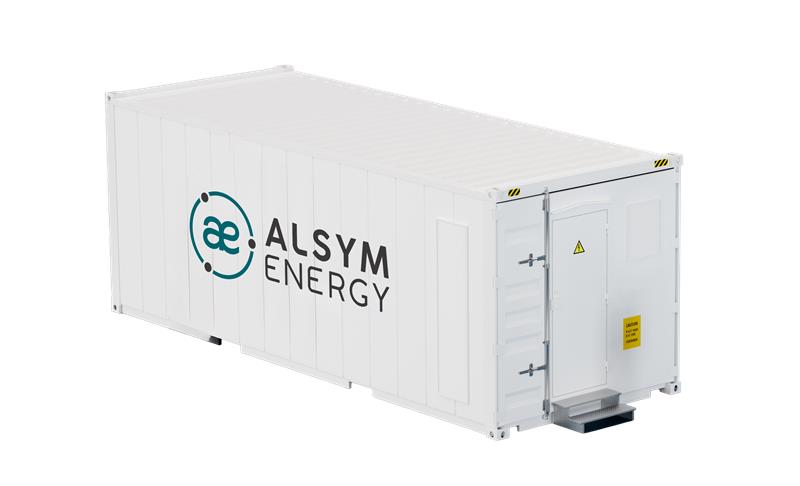
Alsym Energy and Juniper Energy have struck a strategic agreement to deploy 500 MWh of sodium-ion battery energy storage systems, with most of the buildout expected in California. The partnership is notable not just for the headline capacity, but for where the companies believe the technology can compete. Much of the deployment is expected in the Mojave Desert, where high temperatures place extra cooling demands on storage assets and can expose weaknesses in battery system design.
That makes the deal an important real-world test of whether sodium-ion can secure a meaningful place in grid storage markets currently dominated by lithium-ion systems. For years, alternative chemistries have promised safety, cost or materials advantages without breaking decisively into large-scale deployment. This agreement suggests at least some developers now see sodium-ion as more than a laboratory alternative.
The case being made against lithium’s default position
According to the source text, both partners view sodium-ion as a better technical fit than lithium-ion in hot regions such as the Mojave. Alsym says its Na-Series chemistry is designed to avoid thermal runaway and operate efficiently with passive rather than active cooling. If that claim holds in field conditions, the implications are meaningful. Cooling systems add complexity, cost and operational burden to large battery installations, especially in climates where ambient heat is already punishing.
Reducing or simplifying cooling requirements could trim balance-of-plant costs and change the economics of storage projects in harsh environments. That would not automatically displace lithium-ion, which benefits from manufacturing scale and extensive deployment experience. But it could create a more defensible niche for sodium-ion where safety and thermal management are unusually important.
Why this deployment matters now
Alsym officially introduced its Na-Series in October 2025, and the Juniper deal follows another large partnership mentioned in the source text: an 8.5 GWh agreement involving iron flow battery company ESS. Taken together, these moves indicate that storage developers and suppliers are broadening their chemistry bets rather than relying on a single winning format for every use case.
That shift is rational. The storage market is no longer only asking for energy capacity. It is asking for different performance envelopes, cost structures and safety profiles depending on location and duty cycle. A chemistry that is less compelling for one application can become highly attractive in another if it lowers operating complexity or project risk. In that context, sodium-ion does not need to beat lithium-ion everywhere. It needs to win where its tradeoffs are most favorable.
California is a logical proving ground
California is one of the most demanding and visible battery storage markets in the world, combining large renewable energy fleets, high grid flexibility needs and serious heat exposure in inland regions. A 500 MWh deployment there gives sodium-ion a chance to prove itself in a market that matters commercially and symbolically. If the systems perform well, they will do so under conditions that are difficult to dismiss as edge cases.
The Mojave Desert angle is especially important because temperature resilience is one of the partnership’s central claims. Battery technologies often look strong in controlled comparisons and weaker in full project integration. By leaning into a harsh environment rather than avoiding it, the companies are effectively making thermal performance part of the product story.
Alternative chemistries are entering a more serious phase
The broader takeaway is that battery diversification is becoming more concrete. For a long period, grid storage discussion often revolved around future alternatives waiting behind lithium-ion’s scale advantage. What is changing is the willingness of developers to commit meaningful capacity to those alternatives in actual projects. A 500 MWh agreement is not yet proof of market transformation, but it is large enough to matter.
The strategic importance extends beyond one contract. Storage markets are becoming more sensitive to supply-chain concentration, safety expectations and site-specific engineering demands. Technologies that reduce dependence on active cooling, lower fire risk or simplify plant design can gain traction even if they do not immediately dominate headline market share.
For now, the Alsym-Juniper deal should be read as a deployment test with broader implications. It will show whether sodium-ion can translate its claimed advantages into bankable performance in one of the world’s toughest storage environments. If it can, the battery landscape may become less about a single dominant chemistry and more about matching each project to the right materials and operating profile.
This article is based on reporting by PV Magazine. Read the original article.
Originally published on pv-magazine.com