Police watchdog identifies risks in retrospective facial recognition
Police officers could wrongly identify or arrest innocent people if they treat retrospective facial-recognition matches as evidence rather than intelligence requiring further checks, according to a new report from His Majesty’s Inspectorate of Constabulary.
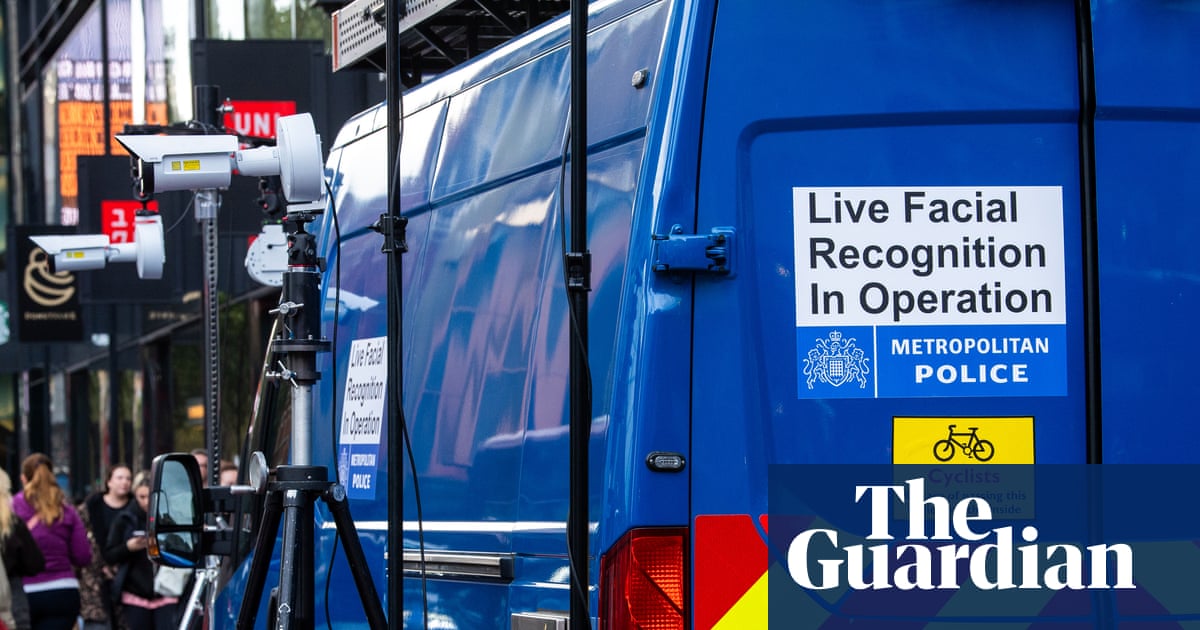
The inspection focused on retrospective facial recognition, or RFR: a process in which investigators compare an image of an unknown person against stored images after an incident. Unlike live facial recognition, which is used in real time, retrospective searches are generally presented as a less controversial application of the technology. The watchdog’s findings show that the safeguards surrounding its use remain consequential.
The report says that some investigators did not understand that a result from retrospective facial recognition required corroborative enquiries before officers took enforcement action. In a small number of cases, inspectors found that officers relied too heavily on potential matches, resulting in what the report described as inappropriate investigative action.
Potential match is not proof
The distinction between an investigative lead and evidence is central to the watchdog’s warning. Facial-recognition systems can return possible matches, but those matches must be assessed alongside other information. A potential similarity between a probe image and a custody image does not establish that the people shown are the same person.
According to the report, a failure to make that distinction creates a risk of incorrect identification or arrest and could damage public confidence in the technology. That risk is amplified when the initial image submitted for a search is poor quality, blurred or includes more than one face.
Inspectors found examples of unsuitable probe images being uploaded to the system. Those practices make it less likely that the system will return reliable matches and increase the importance of careful human review.

Bias concerns remain
The watchdog also found continuing concerns about bias in the algorithm used for retrospective facial recognition. The report says the system is more likely to incorrectly flag people from ethnic-minority groups as suspects.
That finding gives the procedural failures added weight. A technology that can generate false matches poses a general risk if users over-rely on its output. If errors fall unevenly across communities, the consequences may also be distributed unevenly.
The report does not argue that facial recognition has no investigative value. It says the technology can help fight crime. Its conclusion is that the system must be used with an understanding of its limitations, and that police practice must ensure a match is followed by additional verification before action is taken.
Data-retention and legal gaps
Inspectors also identified concerns about the handling of custody images. The report found that some images that should have been deleted had instead been retained. Such failures can further undermine public trust, particularly because facial-recognition systems depend on image databases assembled through police processes.
Another major finding is that legislation has not kept pace with the technology. The inspectorate says there is no comprehensive statutory framework governing facial recognition in this context. That absence makes it more difficult to establish consistent rules, responsibilities and accountability across police forces.
The lack of a complete legal framework is significant because retrospective facial recognition involves several decisions that affect individual rights:
- Which images may be retained and searched.
- What quality standards should apply to probe images.
- How algorithmic matches are reviewed and documented.
- What corroboration is required before investigative or enforcement action.
- How bias, audit findings and deletion requirements are monitored.

Training and oversight are central
The findings point to a problem that is not solely technical. Even if an algorithm improves, it can still be misused if personnel misunderstand what its result means. The report’s account of investigators acting without sufficient corroboration suggests that training, process design and supervision are as important as the underlying software.
For police forces, the practical requirement is clear: a system output should initiate an investigation, not conclude one. Officers need to verify possible matches using further enquiries and ensure that any subsequent action rests on a broader evidential basis.
For regulators and policymakers, the report adds pressure for a framework that can set common standards. Without one, decisions about deployment, safeguards and data handling may vary from force to force while the technology’s use becomes more established.
A test for public confidence
Facial recognition is often defended as a tool that can improve the speed and reach of investigations. Its legitimacy, however, depends on whether the public believes it is accurate, fair and subject to meaningful controls.
The inspectorate’s warning shows how easily confidence can be eroded: an algorithmic result is misunderstood, weak-quality images are submitted, corroboration is skipped, or data that should have been deleted remains in storage. Each failure can turn a system intended to assist investigators into a source of avoidable harm.
The report therefore frames retrospective facial recognition as a governance challenge as much as a technological one. The question is not simply whether police can use the capability, but whether they can do so with safeguards strong enough to prevent unreliable matches from driving real-world enforcement decisions.
As police adoption of facial-recognition tools continues, the watchdog’s findings provide a concrete benchmark: potential matches must remain intelligence, human investigators must conduct further checks, and legal and operational safeguards must be strong enough to protect people from wrongful identification.
This article is based on reporting by The Guardian. Read the original article.

Originally published on theguardian.com