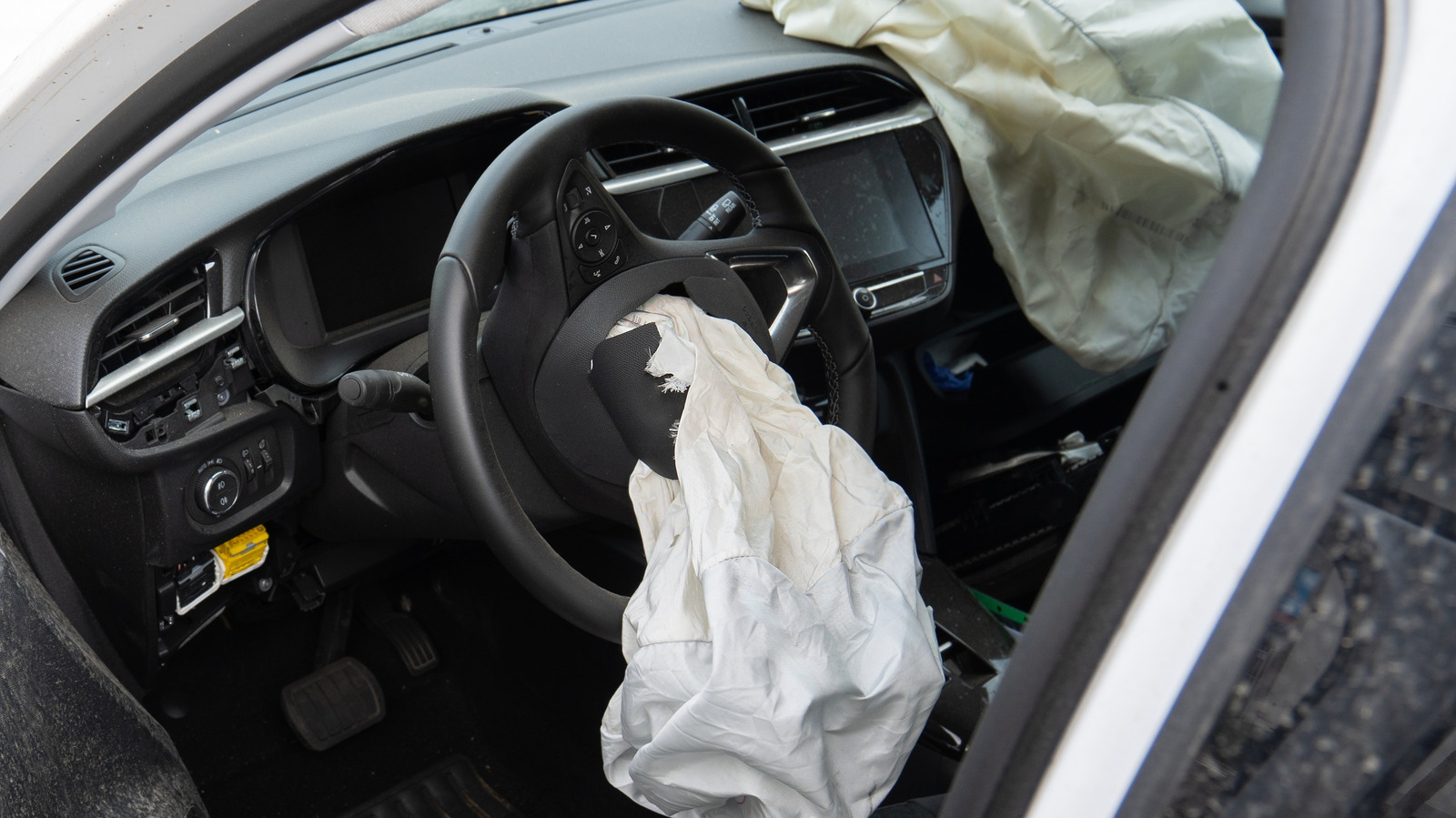
The Risks of DIY Airbags
Cars offer plenty of opportunities for satisfying DIY projects, from swapping air filters to changing oil. However, there is one component that even experienced DIYers should never attempt to build themselves: the airbag system. A recent experiment by YouTube channel Turnah81 vividly demonstrates why homemade airbags are not just ineffective but potentially deadly.
In the video, Turnah81 constructed a rudimentary airbag using an old pillowcase stuffed into a PVC tube with an olive jar lid. Instead of relying on the complex pyrotechnic and electronic systems used in factory airbags, he attempted to inflate the bag using compressed air triggered by a battery and an inertial fuel-cut-off switch. The first test was a resounding failure, with the bag deploying too slowly and with insufficient force. Even after several iterations, including using combustion to speed deployment, the results remained dangerously inadequate.
How Real Airbags Work
To understand why DIY airbags fail, it helps to know how a typical automotive airbag functions. When a collision is detected, impact sensors and accelerometers send a signal to the airbag control module, which triggers an igniter. This igniter sets off a chemical reaction that rapidly produces nitrogen gas to inflate a nylon fabric bag. Older systems used sodium azide and potassium nitrate, while modern ones often employ guanidinium nitrate with a copper nitrate oxidizer. Some newer designs use compressed gas or hybrid systems. According to the National Highway Traffic Safety Administration (NHTSA), the entire deployment process occurs in less than 1/20th of a second.
This speed and precision are critical. Airbags must deploy at the exact moment of impact to cushion the occupant and then deflate quickly to prevent suffocation. DIY attempts cannot replicate the controlled chemical reaction, the precise timing, or the reliability required. Turnah81's homemade version, even after modifications, deployed far too slowly to offer any protection in a real crash.

Why DIY Airbags Are Dangerous
The primary danger of a DIY airbag is that it may not deploy at all, or it may deploy too late, too slowly, or with too little force. In a collision, a fraction of a second can mean the difference between life and death. A homemade airbag that fails to inflate properly could give the driver a false sense of security, leading to more reckless behavior. Moreover, using improvised materials like PVC pipes and pillowcases introduces risks of shrapnel, fire, or toxic fumes. The combustion method used by Turnah81, involving setting fire to a combustible liquid, could easily cause burns or explosions.
Even if a DIY airbag somehow inflates, its shape, size, and placement are unlikely to match the engineered specifications of a factory system. It might not cover the correct area or could deploy with uneven force, causing injury. The NHTSA and other safety organizations strongly advise against any tampering with airbag systems, let alone building one from scratch.
What DIYers Should Know
While many car repairs and modifications are safe for skilled DIYers, airbags are not among them. The complexity of the sensors, control modules, and chemical propellants means that even professional mechanics must follow strict procedures when replacing airbags. Used airbags should never be reused, and deployed airbags must be replaced with new, factory-spec parts. Attempting to build a substitute is not only dangerous but also illegal in many jurisdictions, as it violates safety regulations.
If you are working on a car that has deployed airbags, the safest approach is to have a certified technician replace the entire system, including sensors and the control module. For those who enjoy DIY projects, there are plenty of other modifications that are both safe and rewarding—such as upgrading suspension components, installing a new stereo, or improving engine performance. Leave the airbags to the experts.

Conclusion
The experiment by Turnah81 serves as a stark warning: DIY airbags are a terrible idea. They fail to provide the protection needed in a crash and introduce new hazards. As the saying goes, some things are best left to professionals, and car airbags are at the top of that list. Always prioritize safety over cost savings or curiosity when it comes to critical safety systems.
This article is based on reporting by Jalopnik. Read the original article.
Originally published on jalopnik.com