Robotics moves deeper into clinical imaging workflows
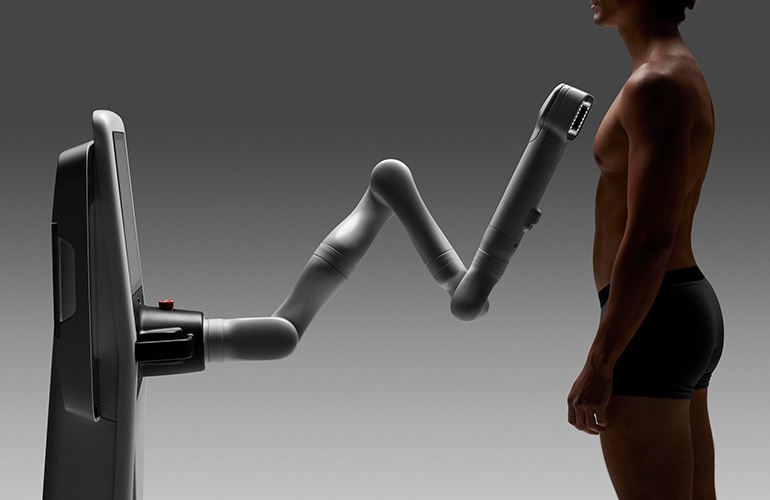
SquareMind has raised $18 million to support the rollout of Swan, a robotic dermatology platform aimed at automating full-body skin imaging for physicians. According to the company description reported by The Robot Report, the system combines robotics and artificial intelligence to perform rapid, standardized dermoscopic imaging and generate structured data for lesion mapping, tracking, and identification.
The pitch is clear: dermatology is dealing with high patient volumes, long waitlists, and limited time for detailed documentation during routine skin exams. If a robotic platform can capture comprehensive imaging quickly and consistently, it could reduce workflow strain while helping clinicians spot new or changing lesions earlier.
Why dermatology is a plausible target for automation
Dermatology is one of the most image-rich areas in medicine, which makes it a natural candidate for computer vision and automation. Skin screening involves visual inspection, comparison over time, and documentation quality that can vary depending on clinician workload and visit length. That creates an environment where structured imaging can provide immediate operational value even before any AI layer is asked to make complex diagnostic judgments.
The SquareMind story is therefore not only about AI-assisted detection. It is also about standardization. The report says Swan is designed to capture standardized, full-body dermoscopic skin imaging and to integrate into clinical workflows in just minutes. In medical settings, standardization is often the first step toward scalable analytics. Without consistent acquisition, downstream interpretation tools have less reliable input.
What the company says Swan does
The supplied report describes Swan as what SquareMind claims is the world’s first robot to capture standardized, full-body dermoscopic skin imaging. It acts as an augmented dermatoscope, providing a whole-skin-surface view at a level typically obtained when examining moles up close. Image acquisition is automated and meant to support review through AI-based software that helps track new or changing lesions.
This matters because melanoma detection often depends on recognizing change over time, not just evaluating a single image in isolation. The report notes that 80% of melanomas are new lesions, a statistic used to argue for better documentation and longitudinal comparison. If automated imaging can reliably create structured baseline records, it may give clinicians a stronger basis for monitoring future changes.
That does not mean the robot replaces dermatologists. The company’s own framing, as quoted in the source, is that the technology acts as a companion to reduce cognitive burden and free physicians to focus on patient care and clinical decision-making. That is a more realistic adoption story than fully autonomous diagnosis.
The operational case may be as important as the clinical case
Medical AI companies often focus public messaging on diagnostic performance. But adoption in real clinics usually depends at least as much on workflow fit, staffing pressure, reimbursement logic, and documentation efficiency. On those terms, SquareMind’s target market makes sense.
Skin screening is described in the report as the highest-volume procedure in dermatology, while demand is outpacing capacity amid an aging population and long wait times. That means a platform that reduces exam friction and improves record completeness could attract interest even if its earliest value is operational rather than revolutionary.
In many clinical environments, the winning automation tools are those that shave time from repetitive steps while preserving physician oversight. If Swan can capture clinically useful images in minutes and fit into existing visit structures, its adoption case may be stronger than companies pursuing much more disruptive workflow changes.

Why the funding round matters
The $18 million financing is modest by the standards of some health-tech funding booms, but its backers give the round added weight. The report says it was led by Sonder Capital, a venture fund co-founded by Intuitive Surgical founder Fred Moll, with participation from multiple other investors. For a robotics startup in a regulated clinical space, the mix of capital and domain credibility matters almost as much as the headline number.
The company says the funding will support commercial, engineering, and customer support growth ahead of a near-term launch in the U.S. and Europe. That suggests SquareMind is moving from technical development toward the more difficult phase of deployment. In medical robotics, commercialization is where many companies discover whether prototype enthusiasm translates into sustainable clinical use.
The hurdles ahead
Several questions remain unanswered in the supplied report. Clinical validation, regulatory specifics, reimbursement pathways, and procurement timelines will all matter. So will physician trust in the imaging quality, the usability of the review software, and the practical requirements for installation and training.
There is also a broader issue facing AI-enabled medical devices: how to prove that better data capture and analysis actually improve outcomes at the system level. Faster documentation and more complete lesion mapping are appealing, but health systems will eventually want evidence of value in detection, triage, throughput, or cost efficiency.
Even so, dermatology offers one of the cleaner paths for robotics-plus-AI adoption because imaging is central to the specialty and because standardization itself has obvious benefits.
A sign of where healthcare robotics is heading
SquareMind’s financing reflects a larger movement in healthcare robotics. Rather than focusing only on surgical systems or hospital logistics, companies are increasingly targeting high-volume diagnostic and documentation workflows where automation can structure data, reduce clinician burden, and create new software value layers.
If Swan gains traction, it will be because it addresses a practical gap: too many patients, too little time, and too much variability in how skin observations are recorded across visits. That is exactly the kind of bottleneck robotics can sometimes help relieve.
The $18 million raise does not guarantee success. But it does indicate investor belief that dermatology is ready for more automated imaging infrastructure, and that AI in medicine may advance as much through better data capture as through better algorithms.
This article is based on reporting by The Robot Report. Read the original article.
Originally published on therobotreport.com