Funding a broader physical AI push
Sereact has raised $110 million in Series B funding to scale Cortex 2.0, the company’s so-called robotic brain, and to support its expansion into the United States. The announcement is notable not just because of the size of the round, but because it reflects a broader shift in robotics: investors are backing companies that argue real-world deployment data matters more than polished lab demonstrations.
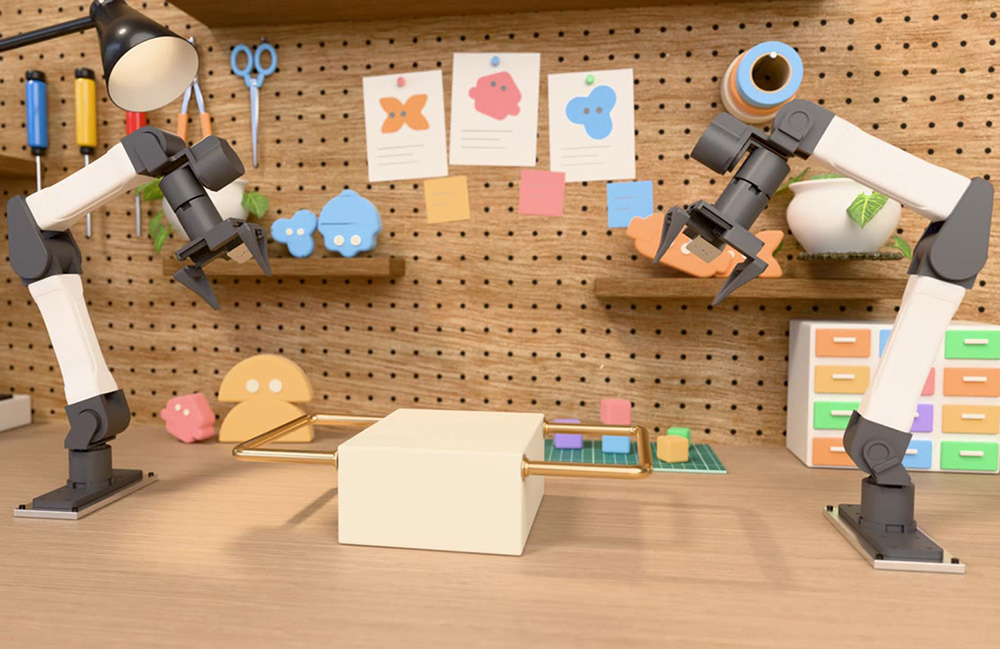
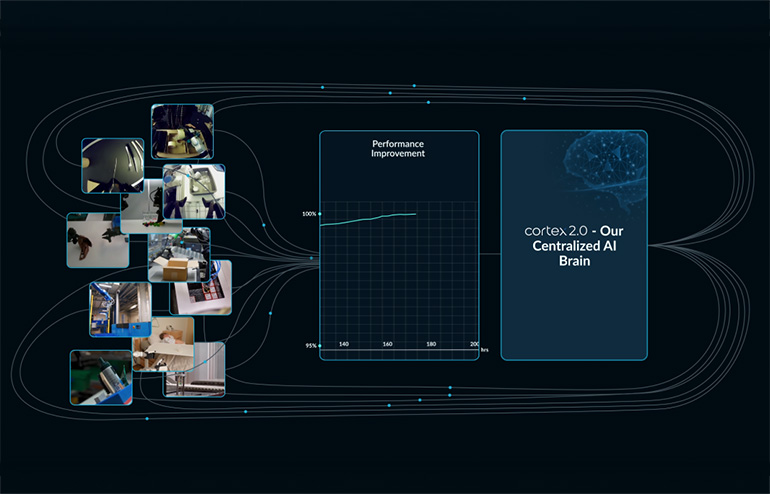
The Stuttgart-based company says Cortex runs across single-arm picking cells, dual-arm returns stations, humanoid robots, and Sereact Lens, a 3D perception system for inventory and quality control. In practical terms, Sereact is positioning itself as a physical AI layer that can transfer across different robot embodiments and tasks rather than staying locked to one narrow hardware configuration.
That portability claim is central to the pitch. Robotics has long struggled with brittleness, especially when systems trained for one environment meet the messiness of another. Sereact’s view, articulated directly in the supplied report, is that “real robotics AI” cannot be built in isolation. CEO and co-founder Dr. Ralf Gulde argues it has to be shaped by a data flywheel fed by production deployments, failure cases, and repeated learning from what happens on real floors rather than in controlled settings.
The company backs that argument with operational numbers. It says it has 200 systems in the field, has completed one billion picks, and requires one intervention per 53,000 picks. Those figures are self-reported, but they are still important because they frame Sereact’s competitive claim: scale in robotics AI does not come only from model size or simulation volume. It comes from exposure to huge numbers of physical interactions with difficult, irregular objects under commercial throughput constraints.
Warehouses were Sereact’s first proving ground, and the reasoning is straightforward. According to the company, warehouses provide an unusually rich training environment: billions of data points, a wide range of object shapes, strict performance demands, and real consequences when the robot gets things wrong. That makes warehouse automation more than a business niche. It becomes a data engine for broader embodied intelligence.
Sereact says every successful pick, failure, and recovery can be captured alongside synchronized observations, robot state, gripper force feedback, and outcome data, then filtered and used to update the model. Updated policies undergo automated regression checks before rolling out to the fleet. Whether or not that loop proves durable at much larger scale, it reflects a maturing robotics approach in which deployment itself is the training pipeline.
The next step is expansion beyond picking. The company says it plans to grow Cortex 2.0 into tasks such as assembly and kitting while opening a Boston office and hiring local engineering, commercial, and application staff. That U.S. entry is strategically important. Many of the world’s highest-value warehouse, manufacturing, and logistics customers are in North America, and proximity matters when robotics vendors need to support integrations, troubleshoot edge cases, and iterate with customers.
The customer list cited in the report includes Daimler Truck, Mercedes-Benz, BMW, MS Direct, Active Ants, DeltiLog, Rohlik Group, and Austrian Post. That suggests Sereact is already operating with a mix of industrial and logistics users rather than selling a purely experimental stack. If the company can translate that base into broader manufacturing tasks, it may strengthen the case that embodied AI platforms should be judged by field performance more than by demo aesthetics.
The funding also fits the wider AI market narrative. While software AI has moved quickly through consumer and enterprise interfaces, physical AI remains harder because it must deal with contact, uncertainty, latency, safety, and the stubborn variability of the real world. Investors are therefore looking for proof that a company has both learning architecture and operational traction. Sereact is trying to present itself as one of the rare players with both.
The core claim is ambitious: a generalizable robot brain that improves because it is already working in production. The next few years will test whether that model can extend from warehouse picking into more complex manipulation and coordinated industrial tasks. If it can, the Series B will look like growth capital behind a company that caught the embodied AI wave early. If not, it will still stand as evidence of where the robotics market now believes defensible value is created: on the floor, in the loop, and at scale.
This article is based on reporting by The Robot Report. Read the original article.
Originally published on therobotreport.com