From lab-style prototype work to fielded systems
Ghost Robotics is set to use the Robotics Summit & Expo in Boston on May 27-28, 2026, as a platform to review what it describes as 10 years of legged robotics in action. The Philadelphia company says it has shipped more than 1,000 robots since its 2015 founding, a figure that gives rare scale to a segment of robotics that has often been discussed more in terms of demonstrations than sustained deployment.
CEO and co-founder Gavin Kenneally is scheduled to deliver a session titled “From Prototype to Perimeter: 10 Years of Legged Robotics in Action,” focused on lessons from fielding quadruped systems in defense, security and industrial environments. That framing is notable because it shifts attention away from spectacle and toward durability, control software and mission-specific use cases.
A robotics market moving beyond novelty
Legged robots have spent much of the past decade capturing attention through videos and pilot projects, but commercial and government buyers ultimately care about whether the machines can operate reliably in real environments. Ghost Robotics’ argument is that its systems have crossed that threshold, particularly through deployments tied to mission-critical work.
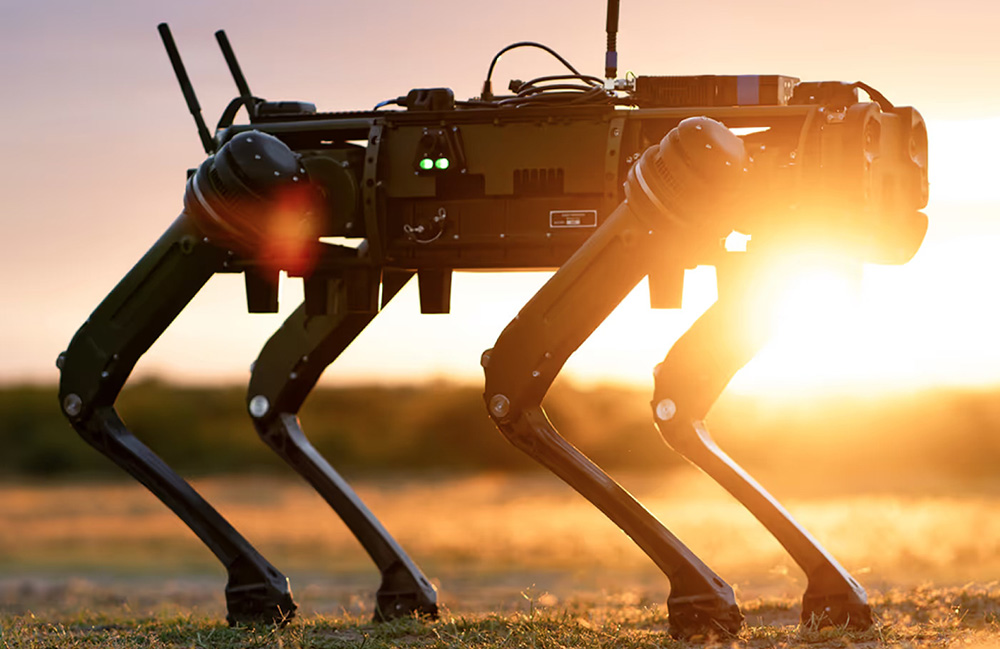
The company’s Vision 60 robot is already used across the U.S. Department of Defense for a range of tasks, according to the source material. That does not, by itself, resolve broader questions about how large the total market for quadrupeds will become. It does, however, signal that a meaningful subset of customers sees value in mobile robots that can handle terrain and patrol patterns that are not ideal for wheeled systems.
Software and payloads are becoming the differentiators
Ghost Robotics says its robots run on the company’s own electronics, software stack and control system. That point matters because as legged mobility matures, competitive advantage shifts from basic locomotion toward system integration: autonomy, control robustness, sensor fusion and the ability to adapt a robot to specific tasks.
The company’s late-2025 release of a manipulator arm for Vision 60 fits that pattern. By adding manipulation to a mobile quadruped platform, Ghost is trying to expand what the robot can do beyond observation or movement alone. A lightweight, top-mounted arm changes the machine’s role from patrol asset to a more versatile field system capable of interacting with objects.
That is the more important industry signal. The next phase of legged robotics is unlikely to be defined solely by whether a robot can walk well. It will be defined by whether it can perform enough useful work, with enough reliability, to justify procurement and long-term support.
What the next five years may test
Kenneally’s planned talk is expected to cover real-world case studies, software advances and expectations for the next five years in both public- and private-sector applications. Those themes reflect where the sector stands now. The major technical milestone is no longer proving that quadrupeds can move. It is showing where they fit operationally and economically.
For defense and security users, that may mean perimeter work, inspection and access to difficult terrain. For industrial users, the challenge is whether legged systems can deliver dependable returns in inspection, hazardous environments or sites built for humans rather than machines.
Ghost Robotics’ decade marker therefore says as much about the state of the market as it does about one company. Shipping 1,000 robots does not mean legged robotics is fully mainstream. But it does suggest the category has advanced well beyond concept-stage enthusiasm. The sector is entering a phase where platform maturity, software capability and mission integration will matter more than hype.
This article is based on reporting by The Robot Report. Read the original article.
Originally published on therobotreport.com