The company is positioning agents as a team layer above individual AI assistance
OpenAI is expanding its push from personal productivity into coordinated workplace automation with the launch of workspace agents in ChatGPT, a new product the company says is designed for shared, long-running tasks inside organizations.
Announced April 22, the feature is being introduced as a research preview for ChatGPT Business, Enterprise, Edu, and Teachers plans. OpenAI describes workspace agents as an evolution of GPTs: Codex-powered agents that can be created once, shared across a team, and used to handle multi-step workflows such as preparing reports, drafting messages, writing code, routing requests, or moving work across connected systems.
The core claim is not simply that AI can help an individual user produce text faster. It is that teams can package a recurring workflow into an agent that works within organizational permissions, pulls context from the right tools, asks for approval when required, and continues operating in the cloud even when the user is offline.
From solo prompting to shared process automation
That distinction is important. Most mainstream generative AI adoption to date has been framed around the individual knowledge worker: summarize this document, draft this email, write this code snippet. Workspace agents target a different level of value. They are meant to sit closer to business process infrastructure, where the challenge is not one person’s output, but coordination among people, systems, approvals, and handoffs.
OpenAI’s own framing emphasizes exactly that point. The company says many of the most important workflows inside organizations depend on shared context and cross-team decisions, and that workspace agents are designed for those situations. It cites an internal use case in which its sales team uses an agent to gather details from call notes and account research, qualify leads, and draft follow-up emails directly in a representative’s inbox.
If that model works broadly, it could mark a meaningful step in enterprise AI adoption. The value proposition shifts from “AI as assistant” to “AI as workflow participant,” one that can gather information, follow predefined steps, and keep tasks moving rather than waiting for a human to reassemble context each time.
Designed to be created by teams, not just developers
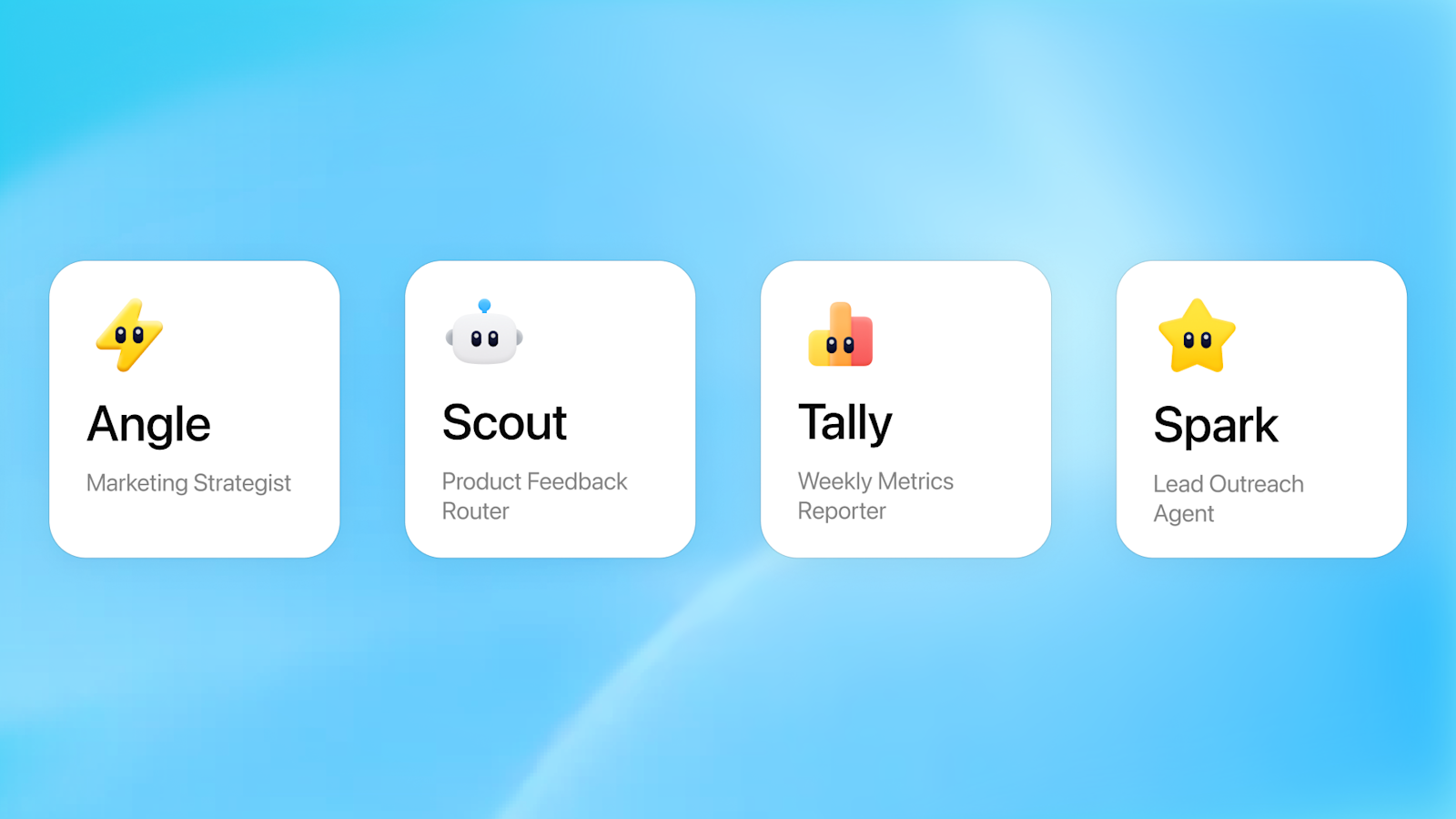
OpenAI says users can start by clicking Agents in the ChatGPT sidebar and describing a workflow their team does often. ChatGPT then guides them through turning that description into an agent. The company’s examples include software review and policy routing, product feedback triage, weekly metrics reporting, lead outreach, and third-party risk management.
That no-code or low-friction creation model is strategically significant. One of the barriers to workflow automation has always been the cost of formalizing process knowledge into software. If business teams can now describe a recurring job in natural language and generate a usable shared agent around it, the threshold for automation drops sharply.
Of course, that does not mean the hard parts disappear. Real enterprise workflows involve messy data, exceptions, permissions, and accountability. But OpenAI’s pitch suggests it believes the interface problem is becoming tractable: instead of building everything from scratch, organizations can increasingly express intent in conversational terms and let the platform scaffold the logic.
The competitive enterprise question: permissions and control
OpenAI is also clearly aiming at the governance question that has slowed some enterprise adoption. The company says workspace agents operate within the permissions and controls set by the organization. That framing matters because companies are often less worried about whether an AI model can draft a report than whether it can do so safely, using approved systems, with clear boundaries around access and approvals.
The ability to share an agent across a workspace is another important piece. Consumer AI tools often scale poorly inside organizations because each user recreates prompts, workflows, and conventions independently. A shared agent gives teams a reusable object: one workflow definition, many users, and the possibility of improving it over time. OpenAI also says teams will be able to use these agents in ChatGPT or Slack, suggesting the company wants agents to live where work already happens rather than only inside a standalone interface.
Editor’s note in the announcement said GPTs will remain available while teams test workspace agents, and that OpenAI plans to make it easy to convert GPTs into workspace agents. That signals an evolutionary product path rather than an abrupt replacement. Existing custom AI setups are being positioned as building blocks for more organizationally aware automation.
Why this launch matters beyond one product update
The broader significance is that enterprise AI vendors are racing to claim the layer between conversational interfaces and operational software. Whoever controls that layer may become the default system for turning work descriptions into semi-autonomous execution. OpenAI’s launch shows it wants ChatGPT to be more than a chat surface or model endpoint. It wants it to become an orchestration environment for recurring team tasks.
That ambition comes with practical challenges. Shared agents need reliability, auditability, and predictable behavior. They must know when to act, when to ask, and when to stop. They must also fit into existing software ecosystems without creating new security or compliance burdens. OpenAI’s announcement addresses those needs conceptually, but the research-preview status shows the product is still early.
Even so, the move is significant because it reflects a maturing view of AI deployment. The next gains are likely to come less from isolated prompting and more from embedding AI in durable organizational routines. Weekly reports, approval routing, ticket creation, lead qualification, vendor screening, and feedback triage are exactly the kinds of jobs where repetition and structure make automation attractive.
A sign of where workplace AI is heading
Workspace agents represent a bet that the future of enterprise AI will be shared, procedural, and persistent. Instead of each employee repeatedly asking for help with the same task, teams can define that task once and let an agent handle much of the flow.
Whether that becomes standard practice will depend on execution. Companies will judge these systems less by how impressive they sound in demos than by whether they reduce manual coordination without introducing new risks. But OpenAI’s launch makes one thing clear: the market is moving beyond the era of one-off chat assistance. The next competition is over who can turn AI into a trusted part of how organizations actually run.
This article is based on reporting by OpenAI. Read the original article.
Originally published on openai.com