Europe is facing a jobs warning tied directly to energy costs
A fresh warning from the European Commission is underscoring how quickly geopolitical shocks can spread into transport and industry. As cited by Reuters in Jalopnik's roundup, European automotive, construction, metals, chemicals, and transport sectors could lose up to 1.3 million jobs this year because of a surge in energy prices linked to the U.S.-Iran conflict. That estimate, delivered by Labour Commissioner Roxana Minzatu, turns a broad energy story into a concrete employment risk.
The scale of the numbers matters. Reuters, as quoted in the piece, says the automotive sector could face the largest losses, with layoffs of up to 600,000 jobs. Construction, metals, chemicals, and transport are also exposed. Battery projects could see 85,000 jobs at risk, while solar manufacturing could lose 58,852 jobs. Another 4,500 steel jobs could be affected because of low-carbon measures. Taken together, the warning sketches a chain reaction rather than a single-sector downturn.
Transport is being hit as part of a much wider industrial problem
Although the Jalopnik item appears in an automotive news roundup, the Reuters figures show that the problem is much broader than car production alone. Transport sits inside an energy-intensive economic web. When fuel and energy prices rise sharply, the effect does not stop at drivers paying more at the pump. It travels through logistics networks, supply chains, factory operations, and household budgets.
That wider framing is what makes the Commission's estimate important. Europe is not only dealing with expensive mobility. It is dealing with the industrial consequences of expensive energy. Automotive plants, metals production, construction activity, chemicals manufacturing, and transport operations all face cost pressure at once. That increases the likelihood that companies will delay investment, trim output, or cut labor rather than absorb the full hit.
The report's inclusion of battery and solar jobs is especially telling. These are sectors often discussed as part of Europe's long-term industrial transition. If they are vulnerable during an energy-price spike, then the challenge is not simply protecting legacy manufacturing. It is preserving momentum in newer strategic industries as well.

The automotive sector looks especially exposed
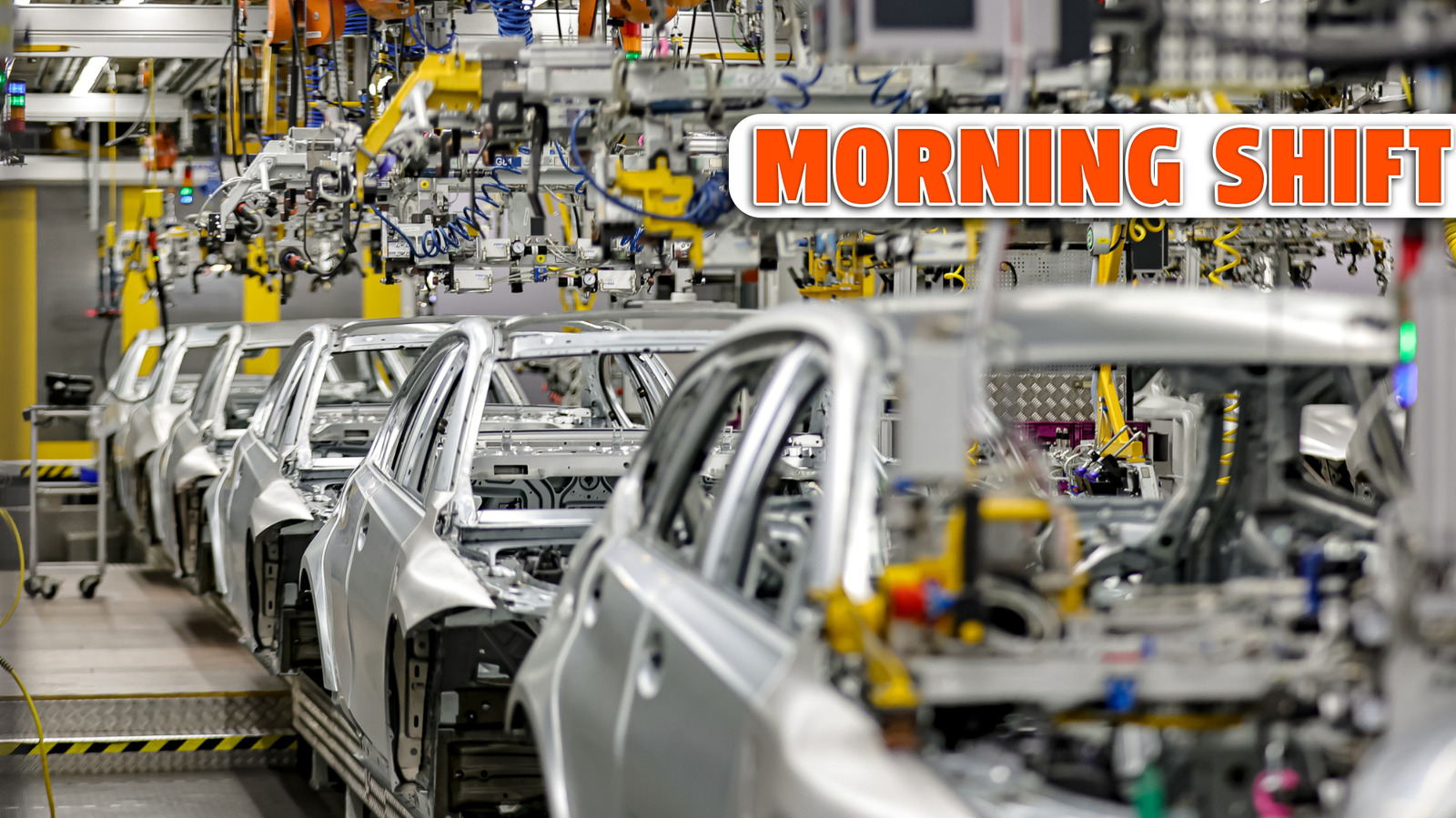
The largest single number in the Reuters estimate is the up to 600,000 layoffs projected for the EU automotive sector. That figure alone would make this a major industrial story. It suggests that the auto industry remains highly sensitive to external cost shocks even as it navigates transitions in powertrain mix, supply chains, and regulation.
Automotive manufacturing combines several points of vulnerability at once. It is energy-intensive, deeply integrated across borders, and linked to suppliers in materials, logistics, components, and downstream retail. When energy costs rise, the effect is not limited to assembly plants. It can squeeze the economics of the entire supporting network. A jobs estimate of this size implies the Commission sees the sector as a central transmission channel for the broader shock.
The warning also lands at an awkward moment for the industry. Automakers and suppliers have already been managing strategic uncertainty around electrification, hybridization, and shifting trade conditions. A sharp energy-price shock adds another layer of instability to decisions that were already capital-intensive and politically charged.
Households are part of the equation too
The Reuters figures cited in Jalopnik do not focus only on industry. They also estimate that low-income households could spend an additional 1.4% of income on transport fuel. That number matters because it connects industrial risk to social pressure. A rise in fuel spending can weaken household resilience at the same time that layoffs or hiring freezes threaten incomes in exposed sectors.
This overlap is politically significant. Transport fuel costs are visible, frequent, and difficult for many households to avoid. When those costs rise during periods of labor-market anxiety, pressure builds quickly. Even if job losses ultimately come in below the most severe estimate, the combination of higher costs and threatened employment can shape public sentiment long before the full economic effects are measured.
That is one reason transport remains central to the story. It is both an industrial input and an everyday necessity. Price shocks are felt in freight systems and factory budgets, but also in commuting, deliveries, and household spending decisions. Few sectors connect macroeconomics and daily life as directly.
An energy shock can scramble industrial priorities
The Commission's estimate highlights a recurring problem for industrial strategy: short-term energy disruption can destabilize long-term planning. Europe has large stakes in automotive competitiveness, advanced battery capacity, cleaner manufacturing, and renewable energy supply chains. Yet all of those priorities become harder to execute when businesses are suddenly forced to manage a rapid cost spike.
That does not mean those strategies disappear. It means the path becomes more fragile. Companies facing higher operating costs may slow projects, rethink staffing, or shift investment timelines. Governments may face pressure to cushion sectors in the near term while still trying to preserve longer-term policy goals. The result is not a clean tradeoff but a more difficult balancing act.
The report's reference to jobs at risk in battery projects and solar manufacturing is a reminder that transition-oriented sectors are not insulated just because they are politically favored. They are still exposed to energy costs, financing conditions, and industrial uncertainty. In other words, the transition itself can be disrupted by the very market shocks it is partly meant to address.
Why this warning deserves attention now
The value of the Commission estimate is not that it predicts a fixed outcome with certainty. It is that it clarifies the order of magnitude of the risk. Up to 1.3 million jobs, including up to 600,000 in automotive alone, is large enough to reshape the economic and political conversation even before the final tally is known.
For transport and manufacturing watchers, the warning shows how quickly international conflict can move from headline geopolitics into the mechanics of employment, pricing, and industrial viability. Energy is not a side variable. It is a central operating condition. When it moves sharply, industries built on thin margins and large energy needs can be forced into abrupt decisions.
Europe now faces exactly that kind of pressure. If energy costs stay elevated, the impact will not be confined to fuel stations or market charts. It will be visible in factory staffing, transport budgets, household spending, and the pace of industrial transition. The Commission's estimate is therefore best read as an early warning of systemic stress, not just a dramatic headline number.
This article is based on reporting by Jalopnik. Read the original article.
Originally published on jalopnik.com