BMW Shows Its Direction for the Electric M3
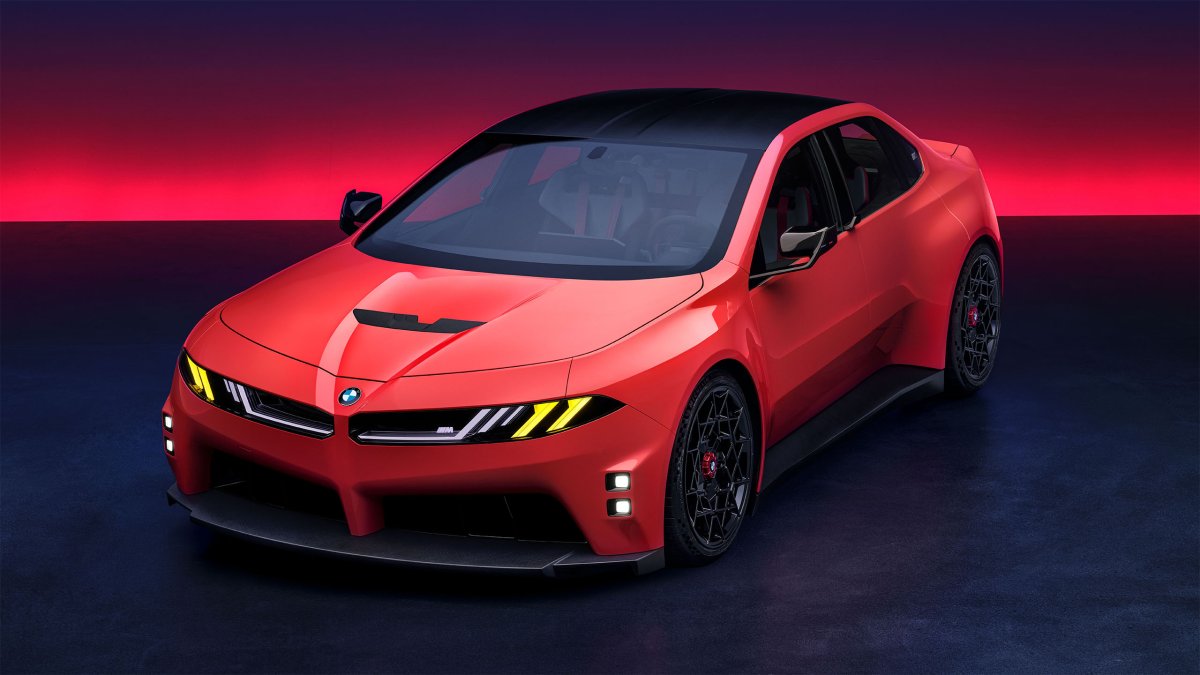
BMW has revealed the M Concept Neue Klasse, its clearest public preview yet of the design direction for the next-generation electric M3. The concept draws from the visual language already established by the new i3 sedan and iX3 SUV, but applies it to a performance sedan for the first time.
That makes the car important beyond styling. For BMW M, this is a statement about how one of its most recognizable performance nameplates will translate into the electric era. According to the source material, the production future behind the concept includes an electric version of the next M3 as well as a separate internal-combustion model, a dual-track strategy meant to broaden the transition rather than force it.
The announcement does not provide full specifications, but it does supply enough detail to show how BMW wants to position the electric car: technologically advanced, visually aggressive and distinct from the gasoline model in both powertrain architecture and performance behavior.
Four Motors and Faster Energy Recovery
The most consequential technical detail in the source text is that the future electric M3 is expected to use electric motors at each wheel. That points to a highly sophisticated torque-management setup, one likely intended to turn electrification into a handling advantage rather than simply a straight-line power play.
The article also says the car will use a unique cell chemistry that allows it to charge and recuperate energy more quickly than conventional EVs. BMW’s argument, then, is not merely that an electric M3 can be fast. It is that the car can be engineered for repeated performance demands in a way that suits the M brand.
That matters because performance EV skepticism often centers on endurance, feedback and consistency. Track driving rewards more than peak output. It demands repeatability, thermal control and confidence under braking and acceleration. By highlighting charging and recuperation speed, BMW appears to be addressing that concern directly, even if the company has not yet released full production figures.
A Reset in M-Car Design Language
Visually, the concept is doing a different kind of work. BMW has spent recent years dividing opinion with some of its M-car styling, especially around grille proportions. The M Concept Neue Klasse looks intended to reset that conversation.
The source text describes dramatically flared fenders, square running track lights near the lower bumper and yellow daytime running lights that evoke endurance racing. The concept debuted in France ahead of the 24 Hours of Le Mans, a setting that reinforces BMW’s effort to link the design with motorsport cues rather than treat it as a generic EV exercise.
One of the more notable changes is the reinterpretation of BMW’s front-end signature. Instead of the long, narrow kidney treatment seen on the outgoing M4, the concept combines the kidneys and lights into a wider graphic. Based on the reporting, that broader treatment creates a more cohesive face while keeping the aggression buyers expect from an M car.
Large apertures for cooling at the front and rear, plus center pillars that bridge to the splitter and diffuser, complete the effect. The result is a car that appears deliberately performance-focused without leaning as heavily on the visual excess that sometimes defined recent M designs.
Inside the Cabin, More Radical Choices
The interior points to a similarly assertive design strategy. BMW uses the M tri-color motif with Bathurst Blue seats and Berry Red five-point harnesses, making the concept’s performance identity unmistakable. The dashboard is described as wearing a knit material with a backlit pattern that initially resembles a digital honeycomb display.
At the same time, the concept hints at a more controversial ergonomic shift. The source text notes that buttons that might once have lived on the dash or center console have been moved onto the steering wheel and made capacitive. That suggests BMW is still pushing toward a cleaner, more digitalized cabin environment, even in a vehicle intended to embody driver engagement.
Whether that choice survives intact into production will matter. Enthusiast buyers often tolerate futuristic interfaces less readily in performance cars than in everyday EVs. Physical clarity and intuitive control are part of the product brief, not secondary concerns.

Why the Concept Matters Now
The M Concept Neue Klasse arrives at a moment when legacy performance brands are under pressure to prove they can electrify without flattening their identities. BMW is not alone in that challenge, but the M3 name carries special weight. It is a benchmark car, one that has long stood for usable, driver-focused performance rather than raw specification chasing.
That is why this concept matters even before final numbers are known. It suggests BMW intends to preserve several core M themes:
- A sedan format rather than a crossover-first interpretation.
- Distinctive motorsport-linked styling cues.
- Technical differentiation through advanced powertrain layout.
- A separate combustion offering for buyers not ready to switch.
Those choices give BMW room to evolve the badge without abandoning its base. They also acknowledge a market reality: electrification in performance cars remains an expansion strategy, not a one-size-fits-all replacement.
A Preview, Not a Full Verdict
There is still a large distance between a design concept and a finished production car. The source material does not establish how much of the concept’s visual drama, cabin experimentation or technical promise will reach customers unchanged. Nor does it answer the deeper question of how the electric M3 will feel compared with its gasoline counterpart.
But as an early signal, the message is clearer than previous teasers. BMW is not treating the electric M3 as a compliance exercise or a quiet derivative. It is treating it as a flagship interpretation of what the M division can become next.
If the company can translate the concept’s confidence into a production sedan with genuine repeatable performance and credible driver engagement, the Neue Klasse M program could become one of the more consequential electric sports sedan launches of the coming cycle. For now, the concept’s main achievement is simpler: it makes BMW’s electric M future look intentional rather than provisional.
This article is based on reporting by The Drive. Read the original article.
Originally published on thedrive.com