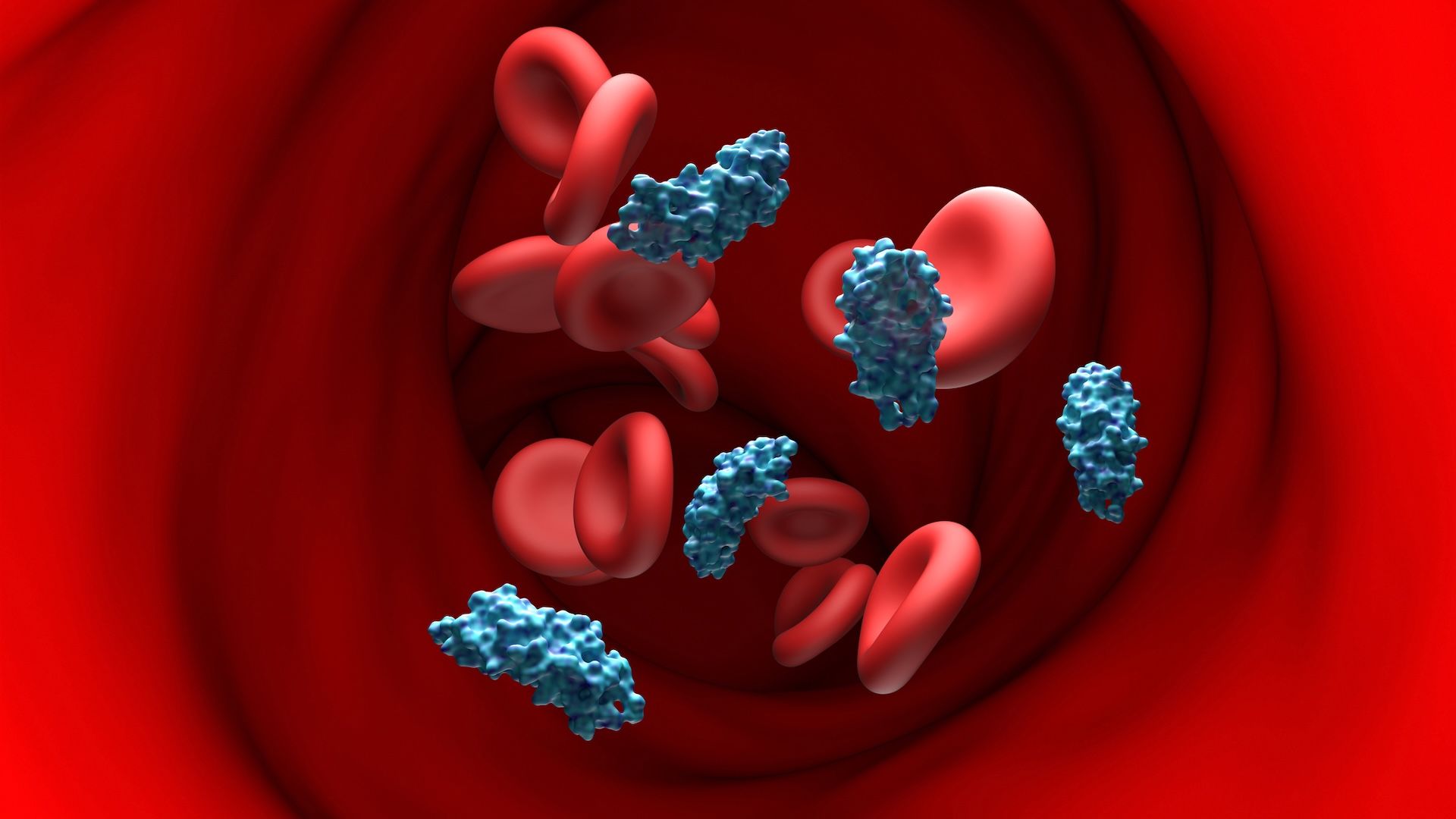
A Gene Everyone Has, in Versions That Matter Enormously
Most people have never heard of APOE, but the specific variant they inherited may be the single biggest genetic determinant of whether they develop Alzheimer's disease. Apolipoprotein E is a protein involved in lipid transport throughout the body and brain, and the gene that encodes it comes in three common variants: APOE2, APOE3, and APOE4. Nearly every human being on Earth carries two copies of one or some combination of these variants. The distribution matters enormously: APOE4 carriers face a significantly elevated lifetime risk of Alzheimer's, while APOE2 appears protective. A new wave of research is now asking whether we can change which version a person has — using gene therapy to convert dangerous APOE4 to the safer APOE3 form.
The APOE4 variant is present in roughly 25 percent of the general population, and it is carried by an estimated 40 to 65 percent of all Alzheimer's patients. People who inherit one copy of APOE4 face roughly three to four times the normal risk of developing late-onset Alzheimer's; those who inherit two copies face a risk eight to twelve times higher than APOE3 homozygotes. These are among the largest genetic effect sizes known in common complex diseases.
What APOE4 Actually Does to the Brain
The mechanisms linking APOE4 to Alzheimer's pathology are still being untangled, but several pathways are well established. APOE4 is less efficient at clearing amyloid-beta protein from the brain compared to APOE3 and APOE2, allowing the toxic plaques that are a hallmark of Alzheimer's to accumulate more readily. APOE4 also impairs the function of neurons' mitochondria, disrupts the integrity of the blood-brain barrier, and promotes neuroinflammation — a chronic low-grade immune activation in the brain that accelerates neurodegeneration.
More recently, researchers have identified that APOE4 exists in an unstable structural conformation compared to other variants. At the molecular level, the APOE4 protein misfolds in ways that reduce its functional efficiency and make it prone to pathological interactions. This structural insight has opened new doors for drug design: if APOE4's shape can be corrected, perhaps its damaging effects can be neutralized.
Gene Therapy as a Rewrite Tool
The most ambitious approach now under investigation is not just to block APOE4's effects but to replace it entirely. Researchers at the Gladstone Institutes and several university medical centers have demonstrated in mouse models and human cell cultures that delivering a corrective gene — essentially introducing APOE3 or APOE2 coding sequences into neurons — can shift the molecular environment of the brain toward a healthier state. The goal is to convert APOE4-expressing cells to APOE3 expressors, reducing amyloid accumulation and neuroinflammation simultaneously.
The delivery challenge is formidable. Getting gene therapy constructs across the blood-brain barrier and into the right cell types — primarily astrocytes, the brain's support cells that produce the most APOE — requires viral vectors with very specific tropism. Adeno-associated viruses, particularly AAV9 and newer engineered variants, have shown the ability to transduce astrocytes after intrathecal or intravenous delivery, making them lead candidates. Early-phase clinical trials targeting APOE4-associated Alzheimer's risk are in planning stages at multiple institutions.
Base Editing: A More Precise Option
Beyond traditional gene replacement, the emerging field of base editing offers a more surgical approach. Base editors — engineered proteins derived from CRISPR machinery — can convert single DNA letters without cutting the double helix, dramatically reducing the risk of unintended mutations. The difference between APOE3 and APOE4 comes down to a single nucleotide change. Base editors designed to reverse this change have shown promising results in cell lines and animal models, and the precision makes them particularly attractive for a preventive application: treating APOE4 carriers before any symptoms appear, potentially decades before Alzheimer's would manifest.
The Broader Landscape of APOE Research
APOE4's role in Alzheimer's does not exist in isolation. Researchers have found that APOE status modifies the effectiveness of currently approved Alzheimer's treatments, including lecanemab and donanemab, both of which target amyloid plaques. APOE4 carriers on these drugs face a substantially higher risk of amyloid-related imaging abnormalities — microbleeds and swelling in the brain — which has prompted calls for APOE genotyping before prescribing.
Meanwhile, the rare APOE2 variant — found in only about 7 percent of the population — appears to confer significant protection against Alzheimer's even in people with other risk factors. Understanding why APOE2 is protective has inspired efforts to develop small molecules that can mimic its structural properties, creating an APOE2-like state pharmacologically without requiring genetic modification. Several such compounds are in early preclinical development.
The convergence of gene therapy technology, structural biology insights, and large-scale APOE research is creating genuine momentum toward clinical interventions. For the approximately 2 billion people worldwide who carry at least one copy of APOE4, the next decade of Alzheimer's research may be the most consequential in the disease's history.
This article is based on reporting by Live Science. Read the original article.