Chile’s energy message is shifting from momentum to execution

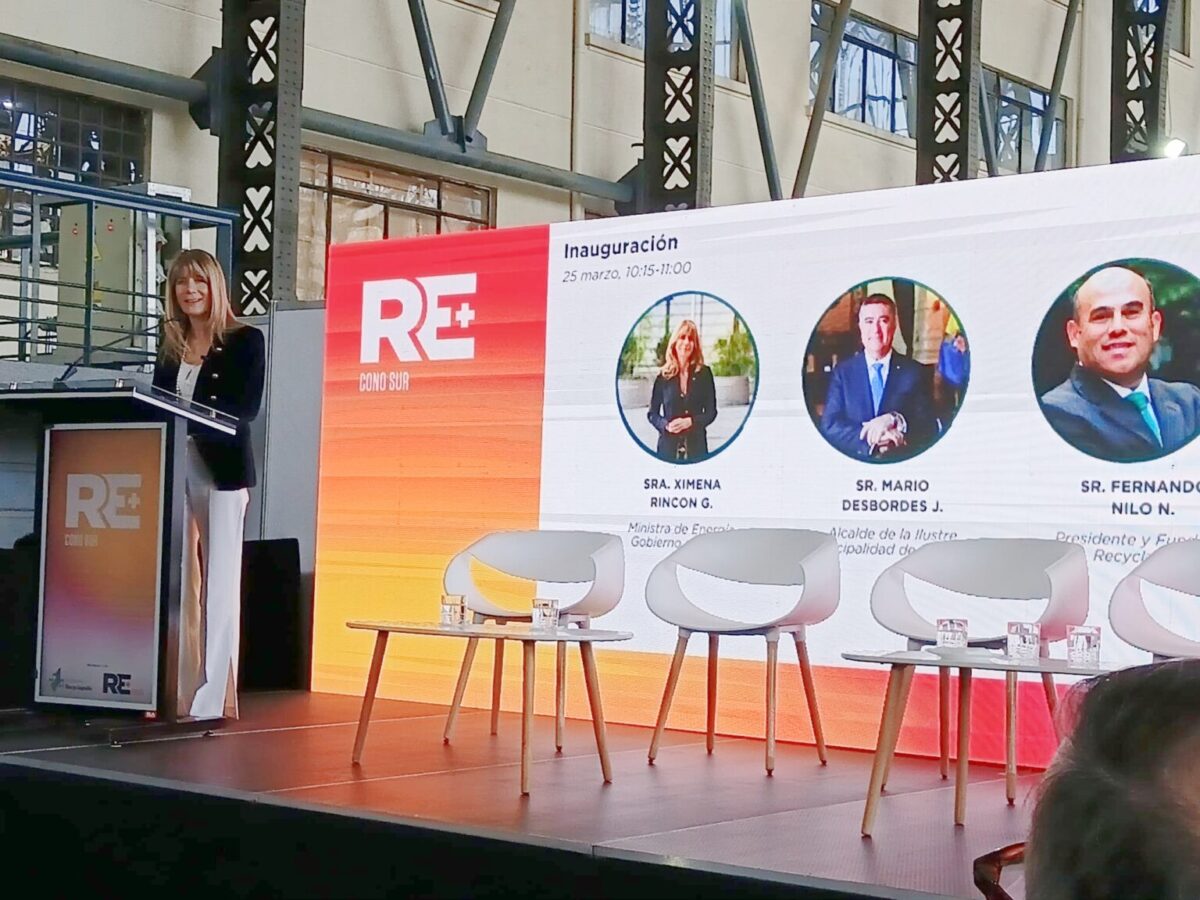
Chile has spent years building a reputation as one of Latin America’s renewable-energy leaders. At the RE+ Southern Cone Summit in Santiago, Energy Minister Ximena Rincón argued that the next stage of the transition will require something more demanding: a proactive push on storage, electrification, efficiency, and enabling infrastructure.

That framing matters because it suggests Chile no longer sees additional renewable generation alone as enough. According to the supplied report, Rincón urged the country to move beyond a passive approach and accelerate deployment across several key sectors, while continuing the broader effort to reduce reliance on fossil fuels.

From leadership to system performance

The central challenge is not whether Chile can build renewable capacity. The minister said the country has already positioned itself as a regional leader. The harder question is whether the overall energy system can convert that strength into a more reliable, efficient, and electrified economy.

That is why the summit message focused on more than solar and wind additions. Rincón highlighted the need to reduce system losses and improve efficiency. Those concerns point to the infrastructure side of the transition, where gains depend on networks, operational performance, and the ability to move and store clean power when and where it is needed.

Why storage is moving to the center

Energy storage and batteries featured prominently in the minister’s remarks, reflecting a global reality now playing out in Chile as well. High levels of renewable generation can expose bottlenecks in grids that were not built for variable power at scale. Storage helps address that by smoothing delivery, supporting reliability, and making better use of clean generation that might otherwise be curtailed or poorly matched to demand.

The emphasis on storage therefore signals maturity in policy thinking. Early transition phases often focus on getting renewables onto the system. Later phases have to solve for integration. Chile appears to be moving decisively into that second category.

Electrification broadens the agenda

Rincón also called for progress on electromobility and efficiency, showing that Chile’s energy transition is broadening from power supply to end-use transformation. That matters because decarbonization does not happen only by cleaning up the grid. It also depends on shifting transport and other sectors toward electricity where possible, while reducing waste across the system.

This is a more difficult policy agenda because it requires coordination across infrastructure, regulation, industrial planning, and consumer adoption. But it is also where much of the real economic value of an energy transition can be captured. A system that merely produces renewable electricity is not the same as one that uses it productively across the economy.

The role of domestic resources

The minister also pointed to Chile’s copper and water resources as potential enablers. That is significant because it ties the energy transition to national comparative advantages. Copper is a foundational material in electrification and grid buildout, while water resources can intersect with broader industrial and energy strategies depending on how infrastructure is developed.

Invoking those assets suggests Chile wants to think about the transition not only as a climate necessity, but as an opportunity to align domestic resources with long-term industrial positioning. That is a more strategic view than simply adding clean generation capacity.

A regional signal from Santiago

The RE+ Southern Cone Summit message resonates beyond Chile. Many emerging renewable leaders are reaching the point where the easy narrative of rapid clean-energy growth meets the harder engineering and policy work of integration. Storage, efficiency, and electrification are becoming the decisive questions, not because renewable deployment no longer matters, but because success now depends on what happens after the electrons are generated.

Chile’s advantage is that it appears to recognize that shift early. By calling for a more proactive stance, the government is acknowledging that leadership in the next phase will depend on reducing losses, enabling infrastructure, and moving faster in adjacent sectors rather than relying on past progress alone.

The next transition challenge

The supplied report does not announce a single new law or investment package. Instead, it captures something equally important: a change in emphasis. Chile’s energy debate is moving from expansion to system optimization and cross-sector deployment.

That is often where transitions become politically and technically harder. It is easier to celebrate renewable leadership than to rebuild systems around storage, efficiency, and electrification. But that harder phase is where durable gains are made. If Chile follows through on the direction outlined in Santiago, it will be attempting exactly that.

This article is based on reporting by PV Magazine. Read the original article.