Net exports do not mean insulation from global prices
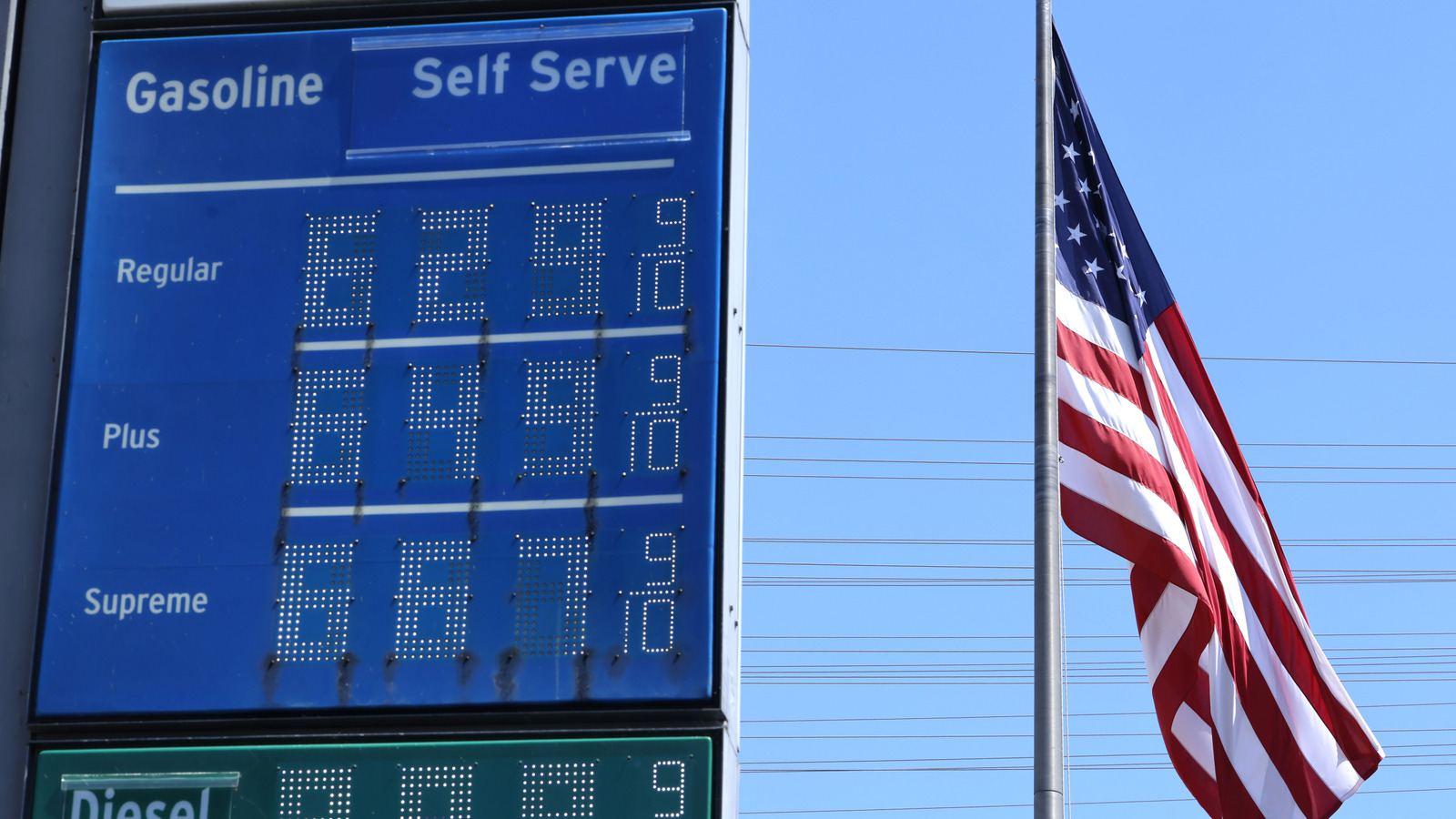
The United States is often described as “energy independent” because it produces more oil than it consumes. On the surface, that can make rising gasoline prices look contradictory. If the country is a net exporter, many drivers reasonably ask why domestic fuel costs can still climb sharply.
The short answer is that net export status does not isolate the United States from the global oil market. Oil is traded as a global commodity, and price formation does not stop at national borders. A supply shock, geopolitical crisis, or surge in trader expectations in one region can raise prices far beyond the point where the disruption began.
That is why developments far from U.S. highways can still hit American wallets. The source material points to the current war in the Middle East as an example of the kind of crisis that can trigger a run-up in demand and bidding behavior. When traders expect tighter supply or more risk, crude prices move, and those higher costs work their way through refining and fuel distribution into gasoline prices.
America still imports large amounts of crude
Another source of confusion is the difference between the country’s aggregate oil balance and the specific barrels moving into refineries. According to the supplied source text, 40 percent of the oil reaching U.S. refineries comes from other countries. That alone helps explain why the phrase “energy independent” can be misleading in everyday discussion.
The U.S. may produce a lot of oil overall, but that does not mean every refinery can simply switch to domestic supply without complication. Import patterns persist because refining infrastructure, logistics, and economics still favor certain foreign barrels in many cases. A country can be a net exporter on paper while remaining deeply entangled in cross-border energy flows in practice.
That dependence is not necessarily a sign of weakness; it is a feature of a highly integrated energy system. But it does mean retail fuel prices are shaped by more than domestic production totals. Consumers buying gasoline are experiencing the output of a global industrial network, not a sealed national loop.

Refineries are built for particular kinds of crude
One of the clearest reasons imports remain important is refining compatibility. The source text explains that much of the oil produced domestically is light crude, while many U.S. refineries were built to process heavier crude imported from abroad. Those design choices reflect decades of historical supply patterns, when foreign oil accounted for a larger share of U.S. energy needs.
Retrofitting major refinery assets to optimize for a different crude slate would be expensive. The source says such changes could cost billions of dollars. That means the system cannot quickly reconfigure itself just because domestic production is high. Infrastructure decisions made years earlier still shape present-day economics.
This is a critical point in understanding pump prices. Oil production is only one layer of the story. Refining capacity, crude quality, and plant configuration determine how easily raw production can become finished fuels in a way that is cost-effective for each region.
Location and transport costs still matter
Even when domestic oil is available, getting it to the right refinery at the right cost is not trivial. The source notes that the United States is geographically vast and that, in some regions, importing oil from Canada or Mexico can be cheaper than moving domestic production across the country. Those transportation differences help explain why gas prices vary regionally and why imports can remain economically rational even in a high-output country.
Energy debates often treat “domestic versus foreign” as a simple binary. The real system is more physical than rhetorical. Pipelines, terminals, shipping routes, and refinery locations all matter. If a refinery can source appropriate crude more cheaply from a nearby foreign supplier than from a distant domestic field, those economics will shape purchasing behavior.
The result is a market in which American consumers are affected by both domestic and international logistics. Higher crude costs abroad do not stay abroad if they influence the alternatives available to refiners and traders serving the U.S. market.

Global chokepoints amplify risk everywhere
The source highlights another reason prices can rise broadly: key transit routes handle enormous shares of global oil flows. Roughly 20 percent of the world’s oil, it says, moves through the Strait of Hormuz. That kind of concentration means threats to one maritime chokepoint can raise concern across the entire market.
Even oil produced in Oklahoma is not priced in isolation from those risks. Traders respond to the possibility of disruption as well as disruption itself. If supply appears more vulnerable, bidding can rise before physical shortages fully materialize. Those movements feed into crude benchmarks and, ultimately, into refined product prices.
This is why the idea of total national price independence does not hold up well in oil markets. A globally traded commodity with concentrated transport routes and internationally linked pricing can transmit shocks quickly. Domestic output helps, but it does not nullify global exposure.
Why prices can stay high longer than drivers expect
Consumers often notice that gasoline prices rise quickly and fall more slowly. The source attributes part of that to the way crises drive demand and bidding higher, with the resulting increase taking time to reverse. Once higher-cost crude works through the system, the decline back down is not immediate.
That lag can be frustrating, but it is consistent with a market where supply contracts, shipping commitments, and refining economics adjust over time rather than all at once. The important point is that the relationship between U.S. production and retail fuel prices is indirect. More output at home can improve overall supply and trade balance, but it does not guarantee stable or low gasoline prices in the face of global volatility.

What drivers should understand
- Net oil exports do not mean the U.S. is detached from global crude pricing.
- Many American refineries still rely on imported heavy crude.
- Transportation and regional refining economics shape what oil gets used where.
- Geopolitical crises and chokepoints such as the Strait of Hormuz can move prices worldwide.
The label “energy independent” captures only part of the picture. The U.S. is a major producer, but gasoline is still priced within a market defined by global trading, imported crude, refinery constraints, and geopolitical risk. That is why gas prices can rise even when the country produces more oil than it consumes.
This article is based on reporting by Jalopnik. Read the original article.
Originally published on jalopnik.com