Austin’s school-bus incidents have become a test of autonomous learning claims
Waymo has long promoted one of the core promises of autonomous driving: that a fleet of self-driving vehicles can learn from collective experience, improving after each edge case or error. But a series of incidents in Austin, Texas, is challenging how that promise is understood in practice.
According to reporting based on public records and federal investigations, Waymo vehicles in Austin struggled for months to stop for school buses when red lights were flashing and stop arms were extended. Officials with the Austin Independent School District alleged that the vehicles had, in at least 19 cases, illegally and dangerously passed buses during student pickup and drop-off operations.
The issue was serious enough that Waymo issued a federal recall in early December tied to at least 12 of the incidents reported to the National Highway Traffic Safety Administration. The company told regulators it had already developed software changes aimed at addressing the behavior. Yet the problem did not immediately disappear.
Even after the recall, incidents reportedly continued
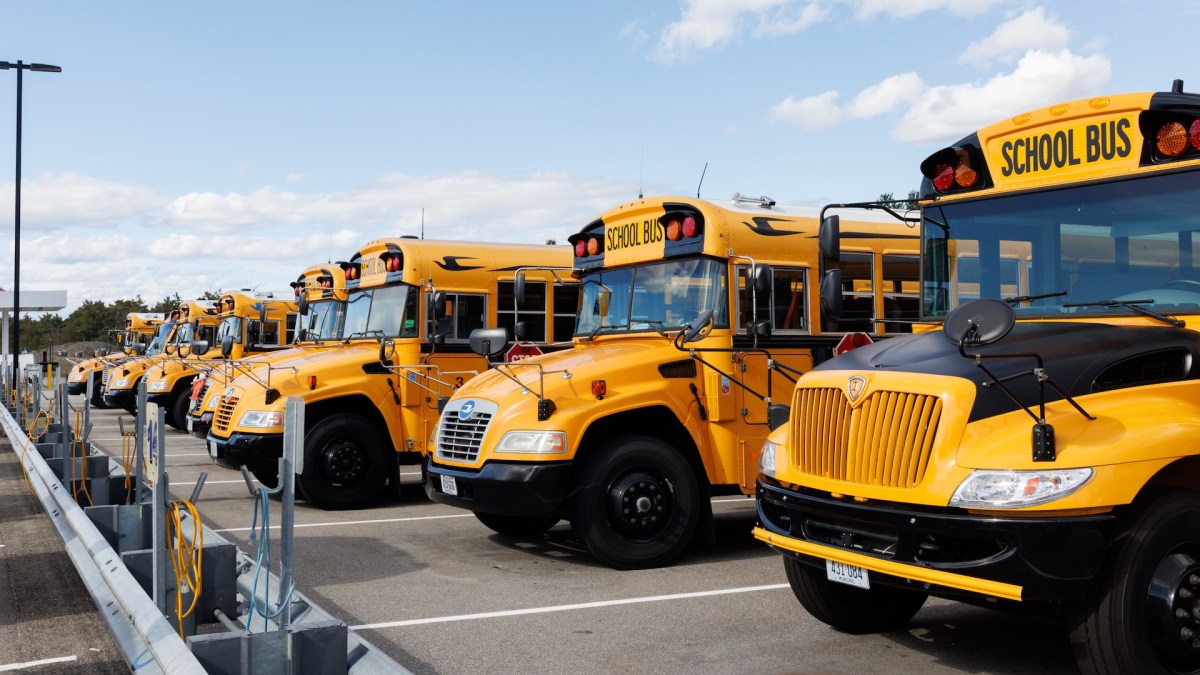
Records cited in the report show that Austin school officials and Waymo went beyond ordinary troubleshooting. In mid-December, the school district hosted a half-day data-collection event in a parking lot, gathering buses and stop-arm equipment so Waymo could collect additional information about vehicle behavior around the flashing warning systems.
That kind of coordination suggests both sides treated the issue as technically solvable and urgent. School buses operate under a strict safety regime because children may cross streets unpredictably, making compliance with stop signals non-negotiable. A driverless system that fails repeatedly in that context is not merely imperfect. It is operating below a legal and public-safety threshold.
What makes the episode especially notable is that incidents reportedly continued even after the recall and after this targeted information-gathering exercise. By mid-January, the school district had reported at least four additional school-bus-passing events. An official with the district’s police department put the contrast sharply, saying that human violators often learn after one citation, but it did not appear the automated driving system was learning through its software updates or recall actions in the same way.

The deeper question is what “learning” really means
Autonomous vehicle companies often describe learning at the fleet level as a key advantage over human drivers. The concept is compelling: one vehicle’s mistake can theoretically become every vehicle’s lesson. But Austin’s experience illustrates that this process may be slower, narrower, or more brittle than the marketing shorthand implies.
Real-world traffic is full of uncommon combinations of signals, environments, lighting conditions, local equipment variations, and behavioral expectations. School buses are a particularly sensitive example because they combine legal signals, unusual vehicle geometry, and high-risk roadside scenarios. An autonomous system may need not just more examples, but the right kinds of examples, the right labels, and sufficiently robust model updates before a problem is meaningfully resolved across a fleet.
That gap between theoretical learning and operational adaptation now sits at the center of the Austin case. If a company has identified the issue, issued a recall, collected dedicated local data, and still sees continued incidents, regulators and the public are likely to ask how autonomous learning claims should be measured and audited.
Why this matters beyond Austin
The Austin incidents land at an awkward time for the broader autonomous vehicle sector. Robotaxi developers are expanding commercially and politically arguing that their systems can ultimately outperform humans in safety. But those arguments depend not just on average-case performance, but on the handling of rare, high-consequence scenarios.
School-bus compliance is one of those scenarios. It is highly legible to the public, heavily regulated, and emotionally resonant because it involves children. That makes repeated failure especially damaging to trust. Even if such cases represent a small slice of overall miles driven, they carry disproportionate weight in public judgment about readiness.
The episode also suggests that the path from software fix to real-world resolution may not be as immediate as outsiders assume. Machine learning systems do not “learn” in the casual human sense. They depend on engineering pipelines, validation work, simulation, deployment schedules, and safety gates. That means the existence of data and the existence of improvement are not the same thing.
For Waymo, the Austin problem is not only a local operational issue. It is a test of whether autonomous driving’s central narrative about scalable learning can withstand scrutiny when repeated edge-case failures persist in public. For regulators, it is a reminder that recall language and learning claims may need closer examination than standard software update assurances suggest.
The broader autonomous vehicle market will be watching closely. If self-driving systems are to earn durable public trust, they will need to show not just that they collect data after mistakes, but that they can convert that data into timely, verifiable behavioral change in the places where safety matters most.
This article is based on reporting by Wired. Read the original article.
Originally published on wired.com