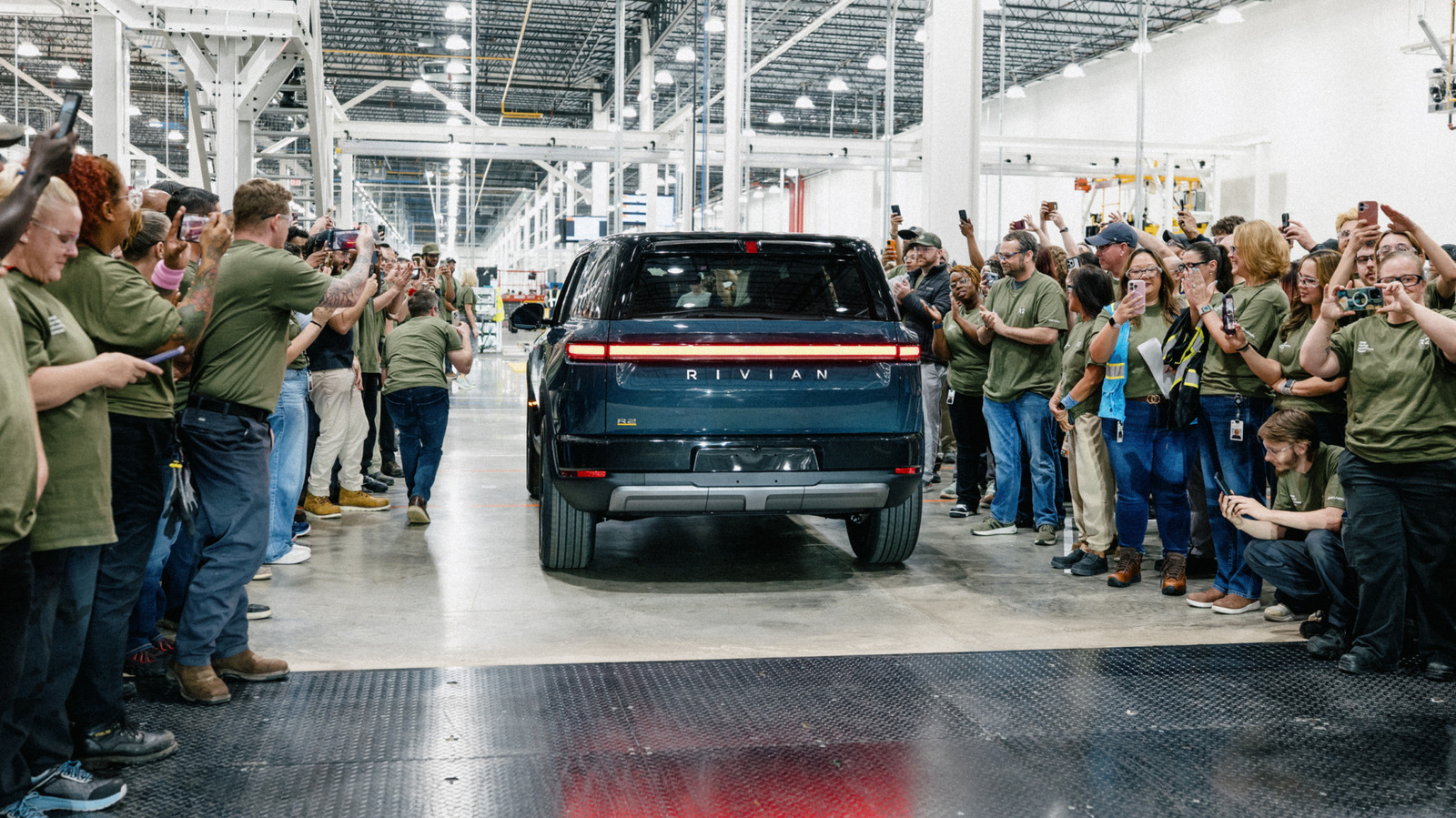
A key launch moves forward under pressure
Rivian says the first production R2 has rolled off the line at its plant in Normal, Illinois, marking an important milestone for the electric-vehicle maker at a time when execution matters more than ever. The timing makes the moment especially notable. The launch came only days after an EF-1 tornado struck the factory complex, causing part of the roof of Building 2 to collapse.
That building matters because it is dedicated to R2 operations. In other words, the damage did not hit some distant or symbolic corner of the site. It affected the area directly tied to one of Rivian’s most important upcoming products. Yet production has moved forward quickly enough for the company to present the rollout of the first production R2 as evidence that the launch remains on track.
For Rivian, that is more than a resilience story. It is a credibility test. The R2 is widely seen as one of the company’s pivotal vehicles, a model that could help determine whether Rivian can translate early enthusiasm into broader commercial scale.
Why the R2 matters so much
The R2 is positioned as a mid-size electric crossover aimed at a more accessible segment than Rivian’s earlier vehicles. That makes it central to the company’s growth strategy. A premium niche can define a brand, but a more attainable, higher-volume vehicle is what often decides whether an EV maker becomes a durable manufacturer or remains a specialist.
According to the source text, Rivian had already been preparing heavily for this moment. The company completed a 1.1-million-square-foot expansion of the Normal facility, and R2 validation vehicles began rolling off the line in January. The move from validation units to production vehicles just a few months later shows the program advancing on a compressed and closely watched timeline.
The storm damage therefore arrived at exactly the wrong moment. Any disruption near the start of production carries outsized risk because the launch phase is where manufacturing systems are still being stabilized. That Rivian pushed forward despite the damage will be read positively by many observers, but it also underscores how much pressure sits on this program.
What happens next
The first production vehicles will initially go to Rivian employees, according to comments cited from CFO Claire McDonough. Customer deliveries are expected later this spring, while broader customer configurations are due in June. That sequence is typical of careful launch management, allowing the company to put early units in controlled hands before wider delivery volume builds.
It also means the real test is still ahead. Rolling one production unit off the line is symbolically important, but sustainable customer delivery is what determines whether a launch is operationally healthy. Investors, reservation holders and competitors will be watching closely for signs that Rivian can move from ceremonial milestone to steady throughput.
Rivian says it has been encouraged by reservation levels for the R2 overall. That demand signal matters because it suggests the product has market traction before full customer rollout. But demand by itself is not enough. The company must now prove that it can manufacture at quality and scale while recovering from a physical disruption to the facility.
The tornado becomes part of the story
There is also a reputational dimension. Rivian has presented the rapid post-storm progress as a reflection of team coordination and emergency response. CEO RJ Scaringe thanked employees for following safety protocols and helping lead cleanup and repair efforts. In practical terms, that message helps reframe the tornado from a narrative of vulnerability to one of execution under stress.
Still, the event is a reminder of how exposed modern manufacturing remains to physical shocks. Weather, facility damage and regional disruptions can alter launch timing even when the underlying product plan is sound. As climate-linked events become more common, factory resilience may become a larger part of the EV competitive landscape.
A milestone with larger stakes
The first production R2 is therefore significant for several reasons at once. It marks progress on a vehicle that could reshape Rivian’s business, it shows the company maintaining momentum after an unexpected disruption and it gives the market a fresh data point in evaluating Rivian’s manufacturing maturity.
But this is only the opening act. The real importance of the R2 will be determined over the coming weeks and months, as employee units transition into customer deliveries and then into broader market availability. If Rivian can keep the launch stable after the tornado setback, the company will have done more than build a new vehicle. It will have demonstrated that it can navigate one of the hardest phases in automotive manufacturing under unusually difficult conditions.
This article is based on reporting by Jalopnik. Read the original article.
Originally published on jalopnik.com