Smart returns to the city-car idea
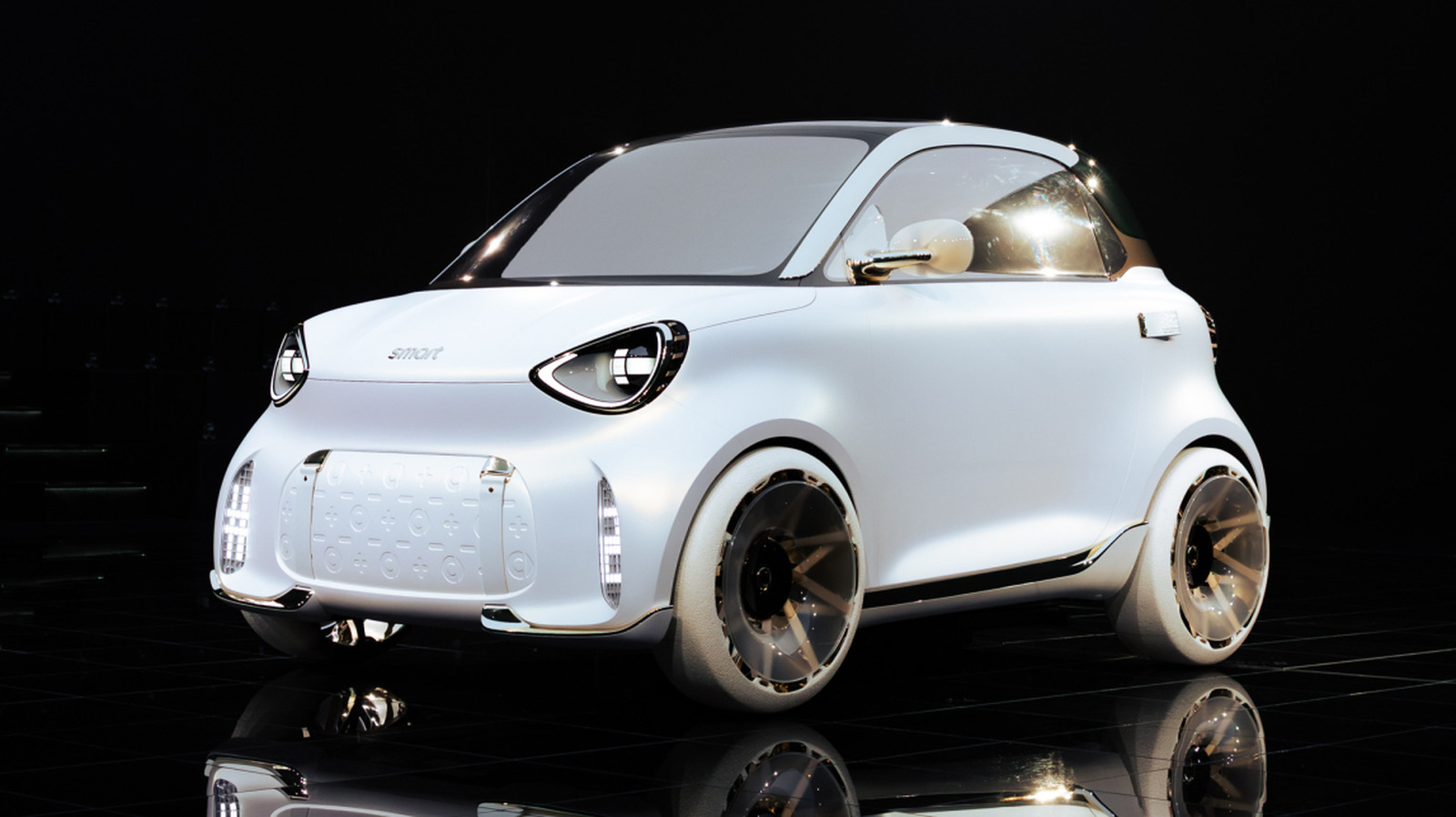
Smart has revealed a new concept called the #2, a compact electric vehicle that previews the company’s next-generation small city car and effectively signals a successor to the Fortwo. The timing matters. The last Fortwo rolled off the line in 2024, and since then Smart has focused on larger four-door vehicles. The #2 shows that the brand is not abandoning the ultra-compact segment that originally defined it.
Even in concept form, the message is clear: Smart wants to revive its tiny-car identity without reviving the limitations that used to come with it. The company says the vehicle is built on its self-developed Electric Compact Architecture, or ECA, and the headline numbers are dramatically improved over the old Fortwo EQ.
The concept’s projected range is nearly 186 miles on the European WLTP cycle, while charging from 10% to 80% is said to take under 20 minutes. That is a major increase from the outgoing Fortwo EQ’s 75-mile WLTP range, according to the supplied source text. For a car built around dense urban use, that shift is not just incremental. It changes what the vehicle can plausibly be used for.
Still small, but not trapped by old compromises
Smart says the #2 grows by just 3.9 inches compared with the old Fortwo, reaching 109.9 inches in overall length. In other words, it stays very small. That is central to the concept’s appeal. The brand is not trying to turn the Fortwo replacement into a generic subcompact crossover or a softened reinterpretation of a city car. It is still chasing the same packaging premise: minimal footprint, maximum urban maneuverability.
What has changed is the expected capability. Earlier generations of tiny EVs often looked clever but demanded substantial compromises in range and use flexibility. The #2 concept suggests Smart believes current battery and charging technology can now support a genuinely practical small-format electric car rather than merely a stylish niche object.
That distinction matters because the global EV market has tended to skew upward in size. Many automakers have concentrated on SUVs, crossovers, and premium vehicles where margins are stronger. A purpose-built electric city car is a more specific bet, one that depends on urban congestion, parking constraints, and regional demand patterns rather than on universal appeal.
Fashion-forward design is part of the pitch
The concept does not appear to be radical in overall form, but the source text makes clear that Smart is leaning heavily into design details. Jalopnik describes elements on the front section that resemble straps and gold buckle-like accents, comparing the effect to a luxury handbag. Smart design chief Kai Sieber framed the car as an expression of a broader brand philosophy in which “Function becomes Fashion.”
That phrasing captures the company’s current challenge. Smart cannot sell a tiny electric car on rationality alone. Urban practicality is part of the value, but the brand also needs to make smallness aspirational again. The handbag comparison may sound superficial, yet it signals the real strategy: packaging a constrained vehicle format as a deliberate lifestyle object rather than as a budget or penalty-box choice.
It is a familiar move in automotive branding. Mini built a large part of its modern identity on turning compact packaging into a design statement. The source text explicitly notes that Smart, now co-owned by Mercedes-Benz and Geely, is in some ways following a similar path after expanding into trendier premium crossovers.
What comes next for the production car
The production version of the #2 is expected to debut at the Paris Motor Show later this year, and the article says it should look very similar to the concept. That is a useful clue, because some concept cars exist mainly to signal intent. In this case, the stated expectation is that the eventual market version will closely resemble what Smart has already shown.
Geographically, the company says the model will come to Europe, China, and selected other markets. The source text strongly suggests the United States is not expected to be one of them. That outcome is not surprising. Small urban cars have historically struggled in the U.S., where market preference has tilted toward larger vehicles and the economics of homologating niche models can be difficult.
Europe and China, by contrast, are more plausible arenas for a vehicle built around compact dimensions, electrification, and city use. If the production #2 meets the range and charging targets implied by the concept, it could offer a more credible small-EV proposition than earlier attempts in the category.
Why the #2 matters beyond Smart
The #2 is a test of whether the electric transition can diversify vehicle types rather than simply electrify the same large formats consumers already know. If small EVs can deliver acceptable range, fast charging, and strong design identity, they may become more competitive in crowded cities where road space and parking are finite.
Smart’s move also reflects a broader industry question: does electrification make compact cars more attractive again, or do consumers still gravitate toward larger vehicles even when propulsion changes? The company is betting that there is room for a highly branded, highly recognizable city car that no longer feels technologically compromised.
The Fortwo once symbolized a particular view of urban mobility. The #2 concept suggests Smart wants to update that idea for a battery-electric era, keeping the footprint that made the original famous while removing some of the constraints that kept it marginal. If the production car arrives close to the concept, the brand may have found a way to make the tiny city EV relevant again.
This article is based on reporting by Jalopnik. Read the original article.
Originally published on jalopnik.com