Electric propulsion may be edging toward missions too large for today’s ion engines
NASA’s Jet Propulsion Laboratory is advancing a new magnetoplasmadynamic, or MPD, thruster that could push electric propulsion into a more ambitious class of spaceflight. The technology described in the source runs at up to 120 kilowatts of power, roughly 25 times the level of the electric thrusters flying on NASA’s Psyche spacecraft. That does not mean crewed Mars missions are suddenly close at hand, but it does mark a meaningful step in one of spaceflight’s hardest engineering problems: how to move heavier spacecraft efficiently across vast distances without carrying prohibitive amounts of chemical propellant.
The appeal of electric propulsion has been understood for years. Instead of relying on combustion, electric thrusters use electrical power to ionize propellant and accelerate it with electromagnetic fields. The result is low thrust but exceptional efficiency. The source text says electric thrusters use roughly 90% less fuel than chemical rockets, one reason they are attractive for deep-space missions where continuous acceleration over long periods can compound into very high speeds.
Why current electric thrusters are not enough for crewed deep-space missions
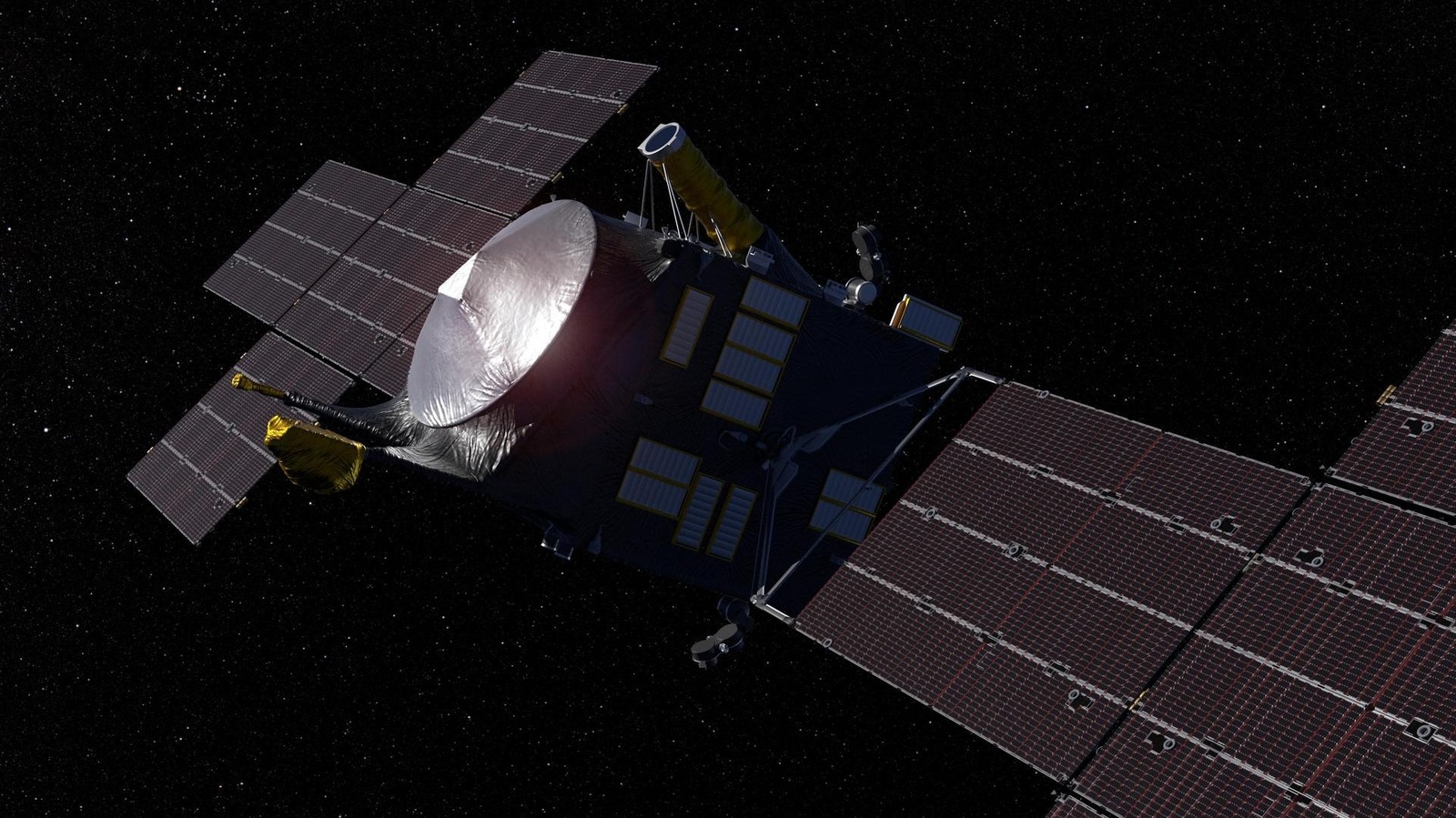
The limitation is not the concept but the scale. Traditional electric propulsion works well for relatively small spacecraft that can afford to accelerate gradually for years. Psyche is the current reference point in the source material. It launched in 2023, is still accelerating, and recently passed Mars while traveling just over 12,000 mph on its way toward a much higher eventual speed.
That performance is impressive, but it also illustrates the bottleneck. Slow, efficient acceleration is useful for robotic missions with long timelines. It is less obviously suited to transporting astronauts, life-support systems, supplies, shielding, and mission hardware over interplanetary distances. A crewed vehicle would require substantially more thrust and power than the ion systems used on today’s science missions.
That is where JPL’s reported breakthrough becomes important. An MPD thruster operating at 120 kW suggests an attempt to preserve electric propulsion’s fuel efficiency while moving into a more capable power class. If that scaling can be made practical, it could help close part of the gap between delicate deep-space probes and larger mission architectures.
What makes an MPD thruster different
The supplied source frames the technology as a lithium-plasma electric thruster. In broad terms, MPD engines generate thrust by turning propellant into plasma and accelerating it electromagnetically. That approach can, in principle, support higher power operation than the smaller electric propulsion systems commonly used on spacecraft today.
The promise is straightforward: more power means more useful thrust, and more useful thrust makes electric propulsion relevant to missions that cannot wait years for modest acceleration to add up. The challenge, as always in space engineering, is turning laboratory progress into a flight-ready system that can operate reliably for long durations without unacceptable thermal, material, or power-system penalties.
The source text does not claim that those problems are solved. What it does establish is that JPL has reached a significant milestone in pushing electric thrusters into a more demanding regime. That alone makes the development notable. In space propulsion, power scaling is not a cosmetic improvement; it is the difference between a technology suited to specialized robotic missions and one with the potential to support much larger ambitions.
The Mars connection is real, but still indirect
The article’s framing around human missions to Mars should be read as directional rather than immediate. The source itself notes that no one is going to Mars anytime soon. That caution is appropriate. Deep-space transportation involves propulsion, but also radiation exposure, mission duration, in-space power generation, habitat systems, reliability, and launch economics. A better thruster helps only one part of that puzzle.
Even so, propulsion remains a central constraint. Chemical rockets are powerful, but they burn through propellant quickly and impose severe mass penalties. The heavier the mission, the more punishing that tradeoff becomes. Electric propulsion offers the opposite profile: excellent efficiency but traditionally too little thrust. High-power MPD systems are compelling because they aim to move the balance point, potentially enabling architectures that are neither purely chemical nor limited to today’s low-thrust electric systems.
Why this matters beyond Mars headlines
Even before any human application, better high-power electric propulsion could reshape robotic exploration, cargo transport, and long-duration missions in cislunar and deep-space environments. A more capable electric engine could support heavier payloads, faster transit profiles for some mission designs, or more flexible spacecraft operations once outside Earth’s atmosphere.
It could also change what mission planners consider realistic. Technologies often influence space strategy long before they reach astronauts. A propulsion advance can alter payload assumptions, spacecraft mass budgets, and the economics of reaching distant targets. If MPD systems continue improving, they may open options that current ion thrusters simply cannot support at useful scale.
A propulsion milestone worth watching
The strongest takeaway from the source material is not that Mars is solved. It is that NASA is still pushing on a propulsion category that could become far more important as space missions grow in size and distance. A 120 kW electric thruster, especially one presented as a breakthrough by JPL, signals progress in exactly the area that has long constrained electric propulsion’s role.
In spaceflight, breakthroughs often spend years as enabling technologies before they become mission headlines. This development fits that pattern. If high-power lithium-plasma propulsion proves durable and scalable, it may not make the first trip to Mars on its own, but it could help define how the next generation of deep-space vehicles is designed.
This article is based on reporting by Jalopnik. Read the original article.
Originally published on jalopnik.com