A struggling flagship gets a substantial technical update
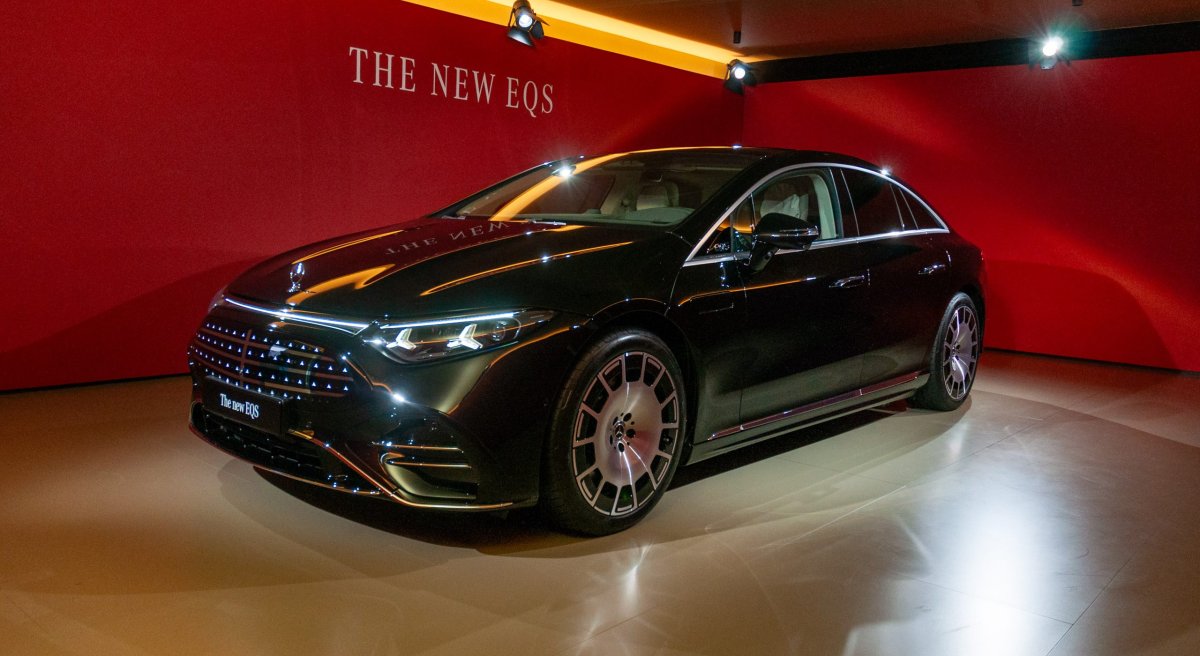
Mercedes-Benz has taken another shot at its flagship electric sedan, unveiling a refreshed 2027 EQS with changes aimed squarely at the complaints that have dogged the model since launch. The update combines improved range and charging performance with a more attention-seeking look and a new steer-by-wire system paired with a yoke-style steering control.
The EQS has had a difficult run in the market. According to the source material, dealers questioned whether the vehicle felt aspirational enough, discounts grew steep, and production for the U.S. market was paused before later resuming. Against that backdrop, this midcycle refresh looks less like a cosmetic tune-up and more like an attempt to reset the car’s proposition.
Mercedes is clearly trying to answer two different problems at once. One is technical: make the EQS more competitive as an EV by improving efficiency, charging speed, and usable range. The other is emotional: make it feel more distinctive and more obviously premium in a segment where image matters as much as specification.
What changed under the skin
The biggest improvements are mechanical and electrical. When the 2027 EQS reaches the U.S. later this year, its battery capacity will rise from 118 kWh to 122 kWh. The pack is not physically larger; Mercedes says it has become more energy dense. That modest increase in stored energy is paired with broader efficiency changes meant to stretch distance more meaningfully than the raw battery gain alone would suggest.
The result, according to the report, is an expected increase from today’s EPA-estimated 385 miles of range to about 420 miles on a full charge. In a large luxury EV, that kind of improvement is important. It does not just sharpen a spec-sheet number. It reduces charging stops on long trips and gives the vehicle stronger standing in a market where range remains a shorthand for technical credibility.
Mercedes is also adding a two-speed transmission, a feature it has already introduced on newer electric models such as the CLA and GLC-Class EVs. Different gear ratios at different speeds can improve efficiency and drivability, and in this case the company is using that hardware to help the EQS do a better job both at cruising and at extracting value from its battery.
The updated car also gets new electric motors rated at either 544 or 585 horsepower depending on configuration. Power alone is not the headline here, but the new motors matter because they are described as more economical as well. Mercedes is not simply chasing larger numbers; it is trying to present the EQS as a more polished long-distance electric platform.
800 volts and faster charging bring the EQS closer to current expectations
Perhaps the most consequential change is the move to an 800-volt electrical architecture. That puts the EQS on more modern footing in fast charging, where premium EV buyers increasingly expect shorter and less disruptive stops.
Mercedes says the system will support charging at up to 350 kW, allowing the EQS to add as much as 175 miles of range in 10 minutes under ideal conditions. That is the kind of claim meant to change ownership behavior, not just marketing language. Faster charging is especially valuable in a large luxury sedan because the vehicle is positioned for long-haul comfort, which makes road-trip charging performance more relevant than in a smaller city-focused EV.
The company also says that when plugged into a 400-volt fast charger, the car can effectively split its battery pack, enabling peak charging at 175 kW. That is a practical compatibility detail that suggests Mercedes is trying to make the EQS more flexible across varied charging infrastructure rather than optimizing only for the best-case station.
Luxury theater remains part of the strategy
If the technical changes are plainly useful, the styling and cabin updates are more polarizing. Mercedes has retained the broad stance of the EQS while adding backlit stars to the grille panel and even offering a backlit stand-up hood ornament. Inside, optional front-door panels can feature stitched laurels referencing the Mercedes emblem, while redesigned cupholders and heated front seatbelts continue the luxury-heavy positioning.
These details show that Mercedes is trying to inject more theater into a car that critics and dealers have sometimes seen as too anonymous for its price. The risk is obvious: conspicuous touches can either reinforce a premium identity or feel overworked. But the company appears willing to push harder on visual personality rather than letting the EQS remain understated and commercially vulnerable.
The yoke is the boldest gamble
The most controversial element may be the new yoke and steer-by-wire system. Traditional steering linkage has shaped driver expectations for more than a century, so replacing it with an electronically mediated system inevitably becomes a trust exercise as well as a design choice.
Mercedes’ yoke is described as more enclosed than some previous examples, encouraging a fixed nine-and-three hand position. The company is betting that the system can feel advanced instead of alienating. If it works smoothly and consistently, it could become a differentiator. If it does not, it risks becoming the detail that distracts from the EQS’ real improvements.
Why this refresh matters
The refreshed EQS suggests Mercedes is not ready to give up on a dedicated flagship EV, even after uneven reception. The company has chosen to improve the fundamentals instead of retreating entirely to an electric version of the S-Class formula. More range, faster charging, newer architecture, and better efficiency are credible responses to market pressure.
Whether that will be enough depends on more than engineering. The EQS still needs to persuade buyers that it belongs at the top of Mercedes’ electric lineup both technologically and emotionally. This update improves its case. The technical foundation is clearly stronger, even if the light-up ornament and steering yoke will divide opinion.
For Mercedes, that may be acceptable. A flagship that sparks debate but closes obvious capability gaps is in a better position than one that struggles to stand out at all.
This article is based on reporting by The Drive. Read the original article.
Originally published on thedrive.com