A rare view inside one of endurance racing’s strangest winners
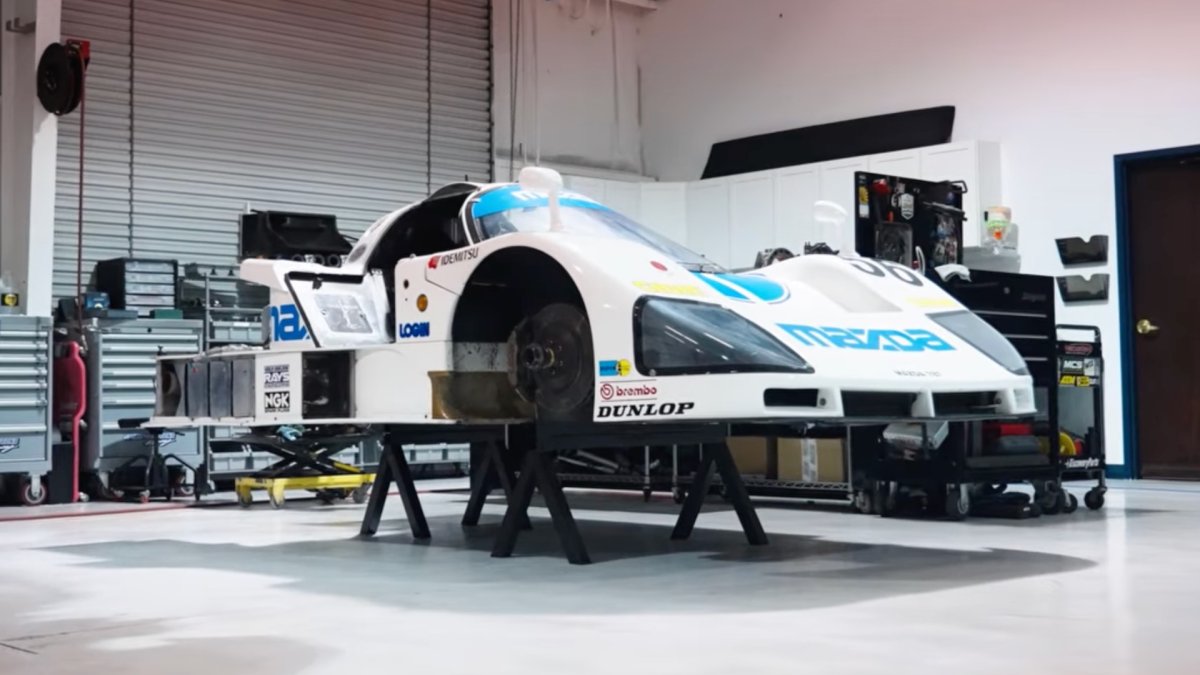
Mazda has released a six-minute documentary showing how its historic four-rotor racing engine is maintained, opening a window into the care required to keep one of motorsport’s most distinctive machines in running order. The focus is the R26B engine used in the 787B, the car that gave Mazda victory at the 24 Hours of Le Mans in 1991.
That win still stands apart. According to the supplied source text, only one rotary engine has ever won Le Mans. The 787B’s four-rotor unit, capable of revving to 9,000 rpm and producing an estimated 700 horsepower in race trim, remains one of the clearest symbols of Mazda’s willingness to pursue unconventional engineering at the highest levels of competition.
The new film matters because it is not just a nostalgia piece about old success. It is a technical record of what preservation looks like when the machine in question is highly specialized, mechanically unusual, and difficult to support decades after its racing life ended. Mazda’s message is that the engine and the cars it powered should not become static museum artifacts if they can still be operated, demonstrated, and understood.
The R26B is related to Mazda’s road-going rotary engines, but only up to a point. The source text notes that while the rotors resemble those used in road cars of the era, nearly everything else is different. The race engine even uses three spark plugs rather than two in order to improve fuel efficiency. That detail alone captures the strangeness of the design: even by rotary standards, this was a purpose-built endurance machine, optimized for a brutal combination of power, reliability, and long-duration efficiency.
Maintaining such an engine is difficult in obvious ways and subtle ones. One challenge is parts supply. The article says replacement parts are hard to find, which is no surprise for a low-volume racing powerplant tied to a specific historical moment. But the source text also suggests a more encouraging reality: major components have held up better than one might expect, thanks in part to engineering choices made for competition.
Among those choices were ceramic apex seals and heavier-duty tension springs. Those parts helped prevent the chatter that could occur when the steel apex seals used in road cars bounced against the rotary housing at high engine speeds. Apex seals are a known weak point in rotary engines because they sit at the points of the triangular rotor and must maintain compression under harsh conditions. Improvements in that area were essential if a high-revving four-rotor endurance engine was going to survive.
The rebuild process also pays close attention to the housing itself. Overheating can cause the inner surface of the housing to shrink, which can compromise sealing. During a rebuild, mechanics compare the thickness of the inner surface with the outer surface to verify that the part remains within specification. It is the sort of measurement-heavy maintenance that underscores the difference between preserving a famous race car and merely storing one.
There is a larger reason this story still matters beyond enthusiast fascination. Mazda’s 1991 Le Mans victory represented a moment when a smaller automaker, working with an unconventional engine format, reached the summit of endurance racing. The supplied source text notes that subsequent rule changes made the rotary uncompetitive, closing off any straightforward continuation of that chapter. The 787B therefore became not the start of a dynasty, but a singular achievement.
That singularity is part of why keeping these engines operational matters. Mazda no longer runs a current top-level factory sports-car program, and the article points out that preserving its vintage racers helps maintain a visible link to what the company was capable of when it fully committed to racing ambition. Historic cars are often invoked as brand mythology. In this case, the machinery itself still has enough integrity to back the mythology with noise, flame, and motion.
The film also acts as a reminder of how motorsport innovation is preserved. Race-winning hardware does not remain alive by reputation alone. It survives because specialists measure, inspect, rebuild, and source the pieces that keep extraordinary machines functional after the competitive ecosystem that created them has disappeared.
Why the 787B still matters
Mazda’s short documentary is ultimately about more than one engine teardown. It shows how an automaker preserves a rare engineering idea after the rules, the parts pipeline, and the racing context that once sustained it have all changed. For the 787B’s four-rotor engine, continued life depends on careful maintenance, deep mechanical knowledge, and a clear decision that some machines deserve to keep running.
This article is based on reporting by The Drive. Read the original article.
Originally published on thedrive.com