A Fictional Car, a Real Ticket
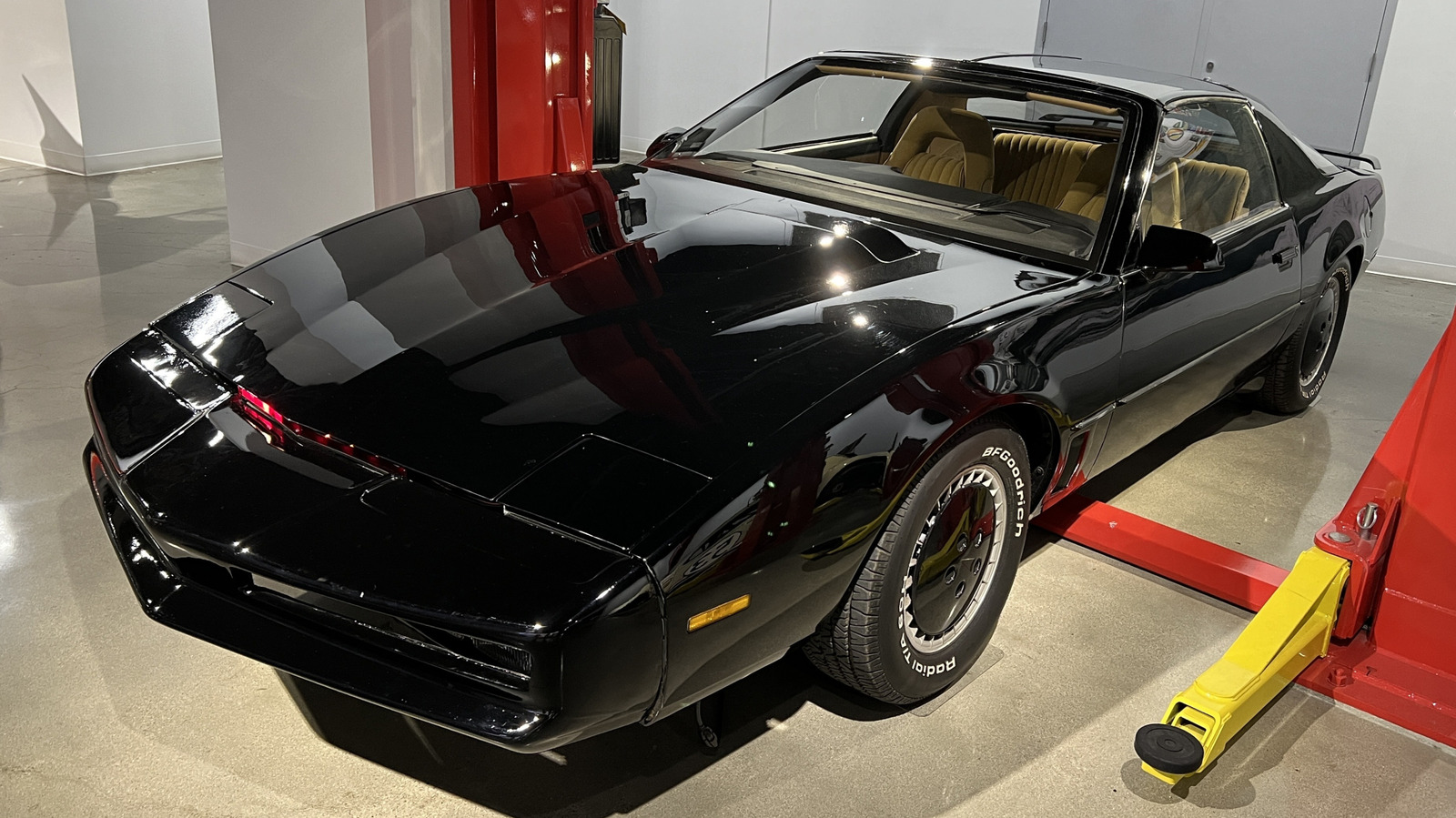
New York City’s automated traffic enforcement system appears to have issued a speeding ticket to KITT, the talking Pontiac Trans Am from Knight Rider. Or, more precisely, to a replica on display in Illinois. According to the reported account, a speed camera recorded a black Pontiac Trans Am with the California vanity plate “KNIGHT” allegedly traveling 36 miles per hour in a 25 mile-per-hour school zone on Ocean Parkway. The ticket did not stay in New York. It was sent to Volo Auto Sales in Volo, Illinois, which operates a collector car dealership and museum that includes a KITT replica.
The setup is absurd enough to read like satire. The museum car has reportedly been on display for years, making the alleged school-zone sprint physically impossible. Yet the case is notable precisely because the system treated it as ordinary. A vehicle image was captured, a plate was read, a notice was generated, and the administrative machinery moved ahead despite the obvious signs that something was wrong.
That makes the episode more than an internet-ready curiosity. It is a compact example of the strengths and blind spots of automated enforcement, where scaling up detection can also scale up error if the system’s validation layers are weak.
What the Error Suggests
Based on the account, the ticket linked the supposed violation not to a real-world vehicle operating in New York, but to a business associated with a museum display in another state. The article notes that the plate itself is fictitious in more than one sense and asks why the notice was routed to Volo in the first place. That unresolved question is the story’s most important technical detail.
Automated enforcement depends on several chained assumptions: that a camera correctly captures an image, that optical or plate-reading systems correctly identify the registration, that the registration maps to the right owner, and that human or procedural review can catch edge cases. In this instance, at least one of those steps appears to have failed badly enough that a car preserved as memorabilia wound up treated as an active offender.
Even without access to the underlying city records, the reported facts point to a broader problem familiar in automated systems. They can be very efficient at handling normal cases but brittle when confronted with unusual inputs, especially novelty plates, replicas or records that require contextual judgment rather than pattern matching.
Why This Matters Beyond the Joke
The article ties the incident to a larger concern about accuracy, noting that more than 40% of New York City speed camera tickets get thrown out. Even allowing for variation in why tickets are dismissed, that figure changes the tone of the KITT case. What looks like a one-off punchline may instead be a vivid expression of a wider reliability problem.
Automated road enforcement has expanded because it promises consistency, scale and reduced need for in-person policing. The core argument is straightforward: cameras do not get tired, distracted or selective. But the counterargument is equally important. Cameras and associated processing systems are only as good as the rules, data and review procedures around them. When an impossible case gets through, public confidence falls fast.
This is especially true in school zones, where the stakes are politically and socially high. The public may support strict enforcement around children and pedestrian safety, but that support depends on trust that the system is applying the rules accurately. A high-profile mistake, even one involving a fictional TV car, can reinforce the perception that the burden of correcting errors is being pushed onto recipients after the fact.
The Human Review Question
The most obvious question raised by the case is whether a meaningful human check existed before the notice went out. A black Pontiac Trans Am with the plate “KNIGHT” is not a subtle anomaly. Nor is a destination address tied to a museum known for collector vehicles and themed exhibits. If those facts were visible in the workflow, a reviewer should have been able to stop the ticket before it left the system.
That does not mean every camera hit can be manually investigated in depth. At city scale, automation exists because the volume is too high for case-by-case scrutiny. But the KITT episode suggests there is room for better exception handling. Certain combinations of inputs could be flagged for elevated review, such as novelty plates, cross-state mismatches, museum-linked registrations or vehicle records with unusual status.
These safeguards are not glamorous, but they are often what separates usable automation from automation that merely externalizes cleanup work onto the public.
A Small Story With a Larger Lesson
The Jalopnik piece closes by leaning into the fantasy: if KITT were real, it jokes, the car would have been smart enough to jam the speed camera. The humor works because the factual core is already strange enough. But the enduring lesson is more serious. The problem is not that a fictional hero car was implicated in a traffic violation. The problem is that a real enforcement pipeline apparently failed to notice an obviously implausible case.
That matters because transportation systems are becoming more automated across the board, from ticketing and tolling to driver assistance and digital registration management. Each layer promises efficiency. Each layer also needs robust handling for outliers, bad matches and records that demand context.
KITT’s ticket is unlikely to reshape policy by itself. Still, it offers a memorable reminder that even mundane civic automation can produce surreal outcomes when databases, recognition systems and review processes drift out of alignment. In that sense, the museum car in Illinois is less a punchline than a test case. If a system cannot reliably distinguish a collectible TV replica from a speeding driver in Brooklyn, the bigger conversation is not about nostalgia. It is about quality control.
This article is based on reporting by Jalopnik. Read the original article.
Originally published on jalopnik.com