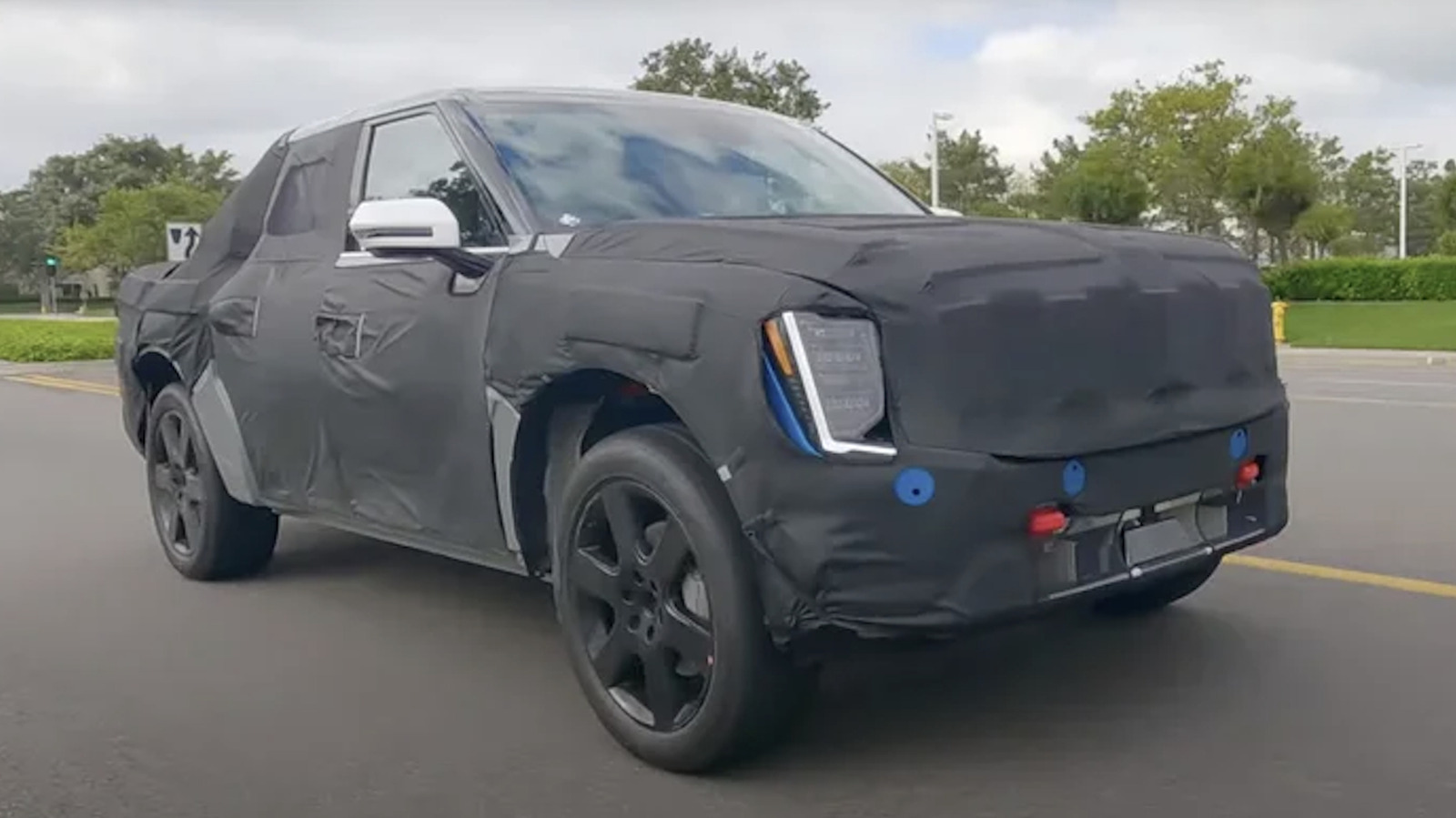
Kia is making a clearer U.S. truck move
Kia says it will launch a midsize body-on-frame pickup truck in the United States by 2030, and the company is tying that plan to hybrid and extended-range electric powertrains. The announcement matters for two reasons at once. First, it confirms that Kia intends to enter one of the most brand-sensitive and profitable corners of the American auto market. Second, it suggests the company believes the next meaningful opening in pickups may come not from a conventional battery-electric truck, but from a more flexible electrified format.
The reported target is ambitious. During the company’s Investor Day, CEO Ho Sung Song said Kia wants to sell 90,000 trucks per year and capture 7% of the midsize pickup segment by 2034. That would put the new model into direct competition with entrenched names such as the Toyota Tacoma, Ford Ranger, and Chevrolet Colorado, all of which already have dealer networks, customer familiarity, and product reputations in the segment.
Why the powertrain choice stands out
The drivetrain strategy is the most interesting part of the announcement. Kia said the truck will use conventional hybrid and extended-range EV powertrains. In the current U.S. midsize market, that is an unusual proposition. The Tacoma is noted in the report as the only midsize truck available solely as a hybrid in the United States right now, while no mainstream rival is defined by an EREV setup.
That choice reflects a broader automotive recalibration. Just a year earlier, the vehicle had reportedly been expected to arrive with an electric drivetrain. Now the language has shifted. The article notes that an EV version was not mentioned in the latest statement. That omission does not prove an all-electric variant is gone permanently, but it does show where Kia thinks the most practical product opportunity lies at this moment.
Range-extended architectures are attractive because they can promise some of the appeal of electric driving while reducing the anxiety associated with towing, off-road use, rural driving, and charging access. Those are exactly the use cases that make pickup buyers harder to move into pure battery-electric products. Kia’s decision suggests it sees hybridization and range extension as a better match for truck expectations than an all-in battery strategy, at least in this phase of the U.S. market.
A response to a changing market
The truck plan is part of a wider shift inside Kia’s U.S. business. The report says the company is aiming to reach 1 million sales in the United States and expand its hybrid lineup from five vehicles to eight. At the same time, Kia has cut its 2030 EV sales expectation for the second year in a row, now projecting 1 million EVs instead of the 1.3 million it previously targeted.
That combination tells a coherent story. Kia is not abandoning electrification, but it is redistributing its bets. Hybrids are being used as the bridge between consumer demand today and the all-electric future the industry once expected to arrive faster. In the truck segment, where utility, towing, payload, and travel range shape buyer behavior, that bridge may be especially important.
There is also a competitive dimension within the Hyundai Motor Group. The report notes that Hyundai recently confirmed it is also working on a midsize pickup truck for the U.S. market by 2030, alongside a body-on-frame SUV concept. Kia’s announcement makes clear that the group intends to pursue the truck space through more than one badge and product identity.
Execution will be difficult
The U.S. pickup market does not reward late entrants simply for showing up. Buyers tend to be loyal, expectations are high, and product credibility is hard earned. Kia says the future truck will deliver what midsize pickup buyers want: interior room, off-road capability, and towing ability. Those are necessary table stakes, not differentiators. The real test will be whether Kia can combine those basics with an electrified powertrain in a way that feels like an upgrade rather than a compromise.
Price will matter, though the report does not provide one. So will dealer preparation, service competency, and accessory ecosystems, all of which influence truck adoption. The midsize segment is not just about specification sheets. It is also about identity, aftermarket support, and confidence in long-term ownership.
Kia does have an advantage in entering at a moment of transition. Truck buyers are being asked to consider new drivetrain formats, new software expectations, and new cost structures. A company that arrives with something distinct can gain attention if it solves a real problem. An EREV truck that preserves utility while offering lower fuel use or a different driving experience could qualify as distinct. But the segment will still punish anything that looks unproven or underbuilt.
The strategic signal is bigger than one model
Even before the vehicle exists, the announcement is notable as a signal about industry priorities. For years, the most visible electrification story in trucks was the battery-electric pickup. Kia’s plan points to a more mixed future. In that future, body-on-frame trucks can still be electrified, but the winning formula may be partial electrification, extended range, and flexible architecture rather than pure battery propulsion alone.
That is especially relevant because the company is making the call now, not after the market has fully settled. By 2030, competitors may have adjusted too, but Kia is staking out a position in advance: the next opening in pickups could belong to products that promise electrification without forcing buyers to reorganize how they use a truck.
The targets remain aggressive and the product remains years away. But the announcement is meaningful because it turns a vague possibility into a declared strategy. Kia is not merely talking about more U.S. sales. It is choosing one of the hardest segments in the market and saying hybrids and range-extended EVs belong there. If that bet is right, the company may be arriving late to trucks but early to the format that matters most in the next round of competition.
This article is based on reporting by Jalopnik. Read the original article.
Originally published on jalopnik.com