An electric conversion from before the modern EV boom
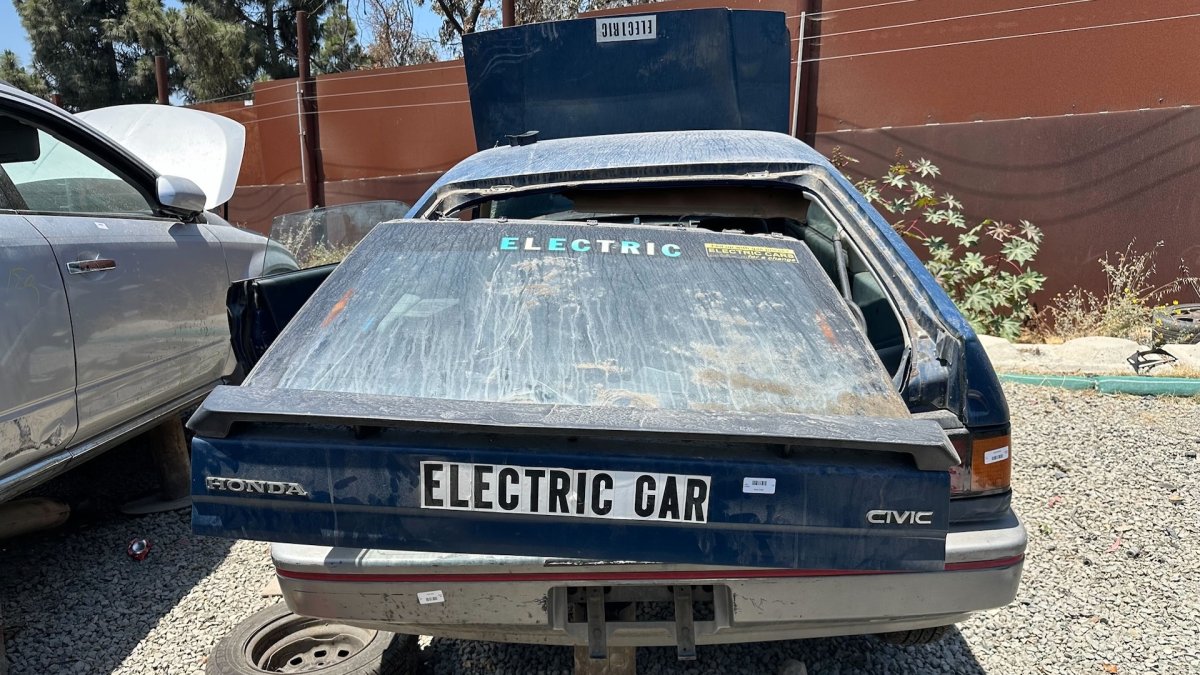
A rusting first-generation Honda CRX found at a Pick Your Part yard in Chula Vista, California, is a small but vivid reminder that electric-car experimentation long predates Tesla and the current battery-powered market. The Drive reports that the car carries EV decals, a battery pack mounted behind the seats, control electronics packed into the cabin, and an onboard charger identified as a K&W BC-20, a piece of hardware associated with do-it-yourself conversions.
Those details matter because they suggest the CRX was not a factory prototype and not an obvious commercial package from a major company. Instead, it appears to be part of a more improvised period in EV history, when builders used available components and fabrication skills to convert ordinary gasoline cars into electric vehicles. That makes the junkyard discovery valuable less as a collector car than as evidence of how persistent interest in electrification remained even when the mainstream auto industry was largely focused elsewhere.
Electric cars never fully disappeared
The Drive places the find in a longer historical arc. Electric propulsion competed with internal combustion and steam more than a century ago before losing out as the dominant automotive technology. Even so, electric motors and batteries never vanished from transportation culture. Instead, interest survived in smaller communities of engineers, hobbyists, and niche companies that kept building and testing practical conversions.
The article points to several examples from that period. Electric Vehicle Association sold converted Ford Fairmonts to the federal government. A Sears XDH-1, an electric Fiat 128 conversion sold through Sears, became the first EV to run Pikes Peak. What makes the CRX stand out is that The Drive says it has not identified a known commercially available CRX conversion, which strengthens the case that this example was likely an individual or limited-run effort.
Honda’s own EV path took a different direction
The do-it-yourself CRX also sits alongside a lesser-known chapter of Honda’s corporate EV development. According to Honda’s company history cited by The Drive, the automaker built an electric prototype based on the second-generation CRX as a familiarization project for its first EV development team, formed in 1988. That prototype produced 26 horsepower from a single motor and used an aluminum body and acrylic windows to keep weight down.
Those lessons later informed the Honda EV Plus, a small hatchback produced in the 1990s in response to California’s zero-emission vehicle mandate. But Honda did not aggressively pursue battery-electric cars at the time. The article says the company shifted attention toward other technologies, using leftover EV Plus chassis for early FCX fuel-cell vehicles and maintaining a broader focus on hydrogen and hybrids even after newer battery-electric vehicles began proving their commercial viability.
Why a wrecked project car still matters
On its face, the CRX is scrap. The body is deteriorating and the conversion hardware is crammed into a compact cabin not designed for it. But as a historical artifact, it captures the persistence of EV curiosity during years when major manufacturers treated battery power as peripheral, experimental, or politically driven.
That is the larger value of the find. The current EV market can make it seem as though electrification arrived suddenly with sleek modern platforms, software-heavy dashboards, and multibillion-dollar investments. This CRX suggests a rougher lineage: one built by people willing to cut, wire, fabricate, and improvise because they believed electric drive was worth pursuing long before it became fashionable again.
Even in a junkyard, that story is still visible. The charger, the battery placement, and the decals all point to a moment when the future of electric transport was being kept alive by enthusiasts working with whatever they could source. For transportation history, that makes this battered hatchback more than a curiosity. It is a record of the era between electric cars’ first decline and their modern return.
This article is based on reporting by The Drive. Read the original article.
Originally published on thedrive.com