Porsche’s wings were never just styling flourishes
Porsche’s rear spoilers have become some of the most recognizable design cues in performance-car history, but their origin is rooted in a much more practical problem: keeping fast cars stable at speed. A Jalopnik retrospective published April 14 revisits how Porsche developed a succession of rear aerodynamic treatments for the 911, turning what could have been a minor body panel into a shorthand for entire eras of the brand.
The story places Porsche’s experimentation in the broader context of racing and early aerodynamic trial and error. In the late 1960s and early 1970s, downforce was still poorly understood across much of the industry. Engineers knew that body shape mattered, but the effects of airflow separation, clean air, and rear-end lift were not yet treated with the precision expected in modern vehicle development. Porsche, which was pushing increasingly powerful race and road cars, had strong incentives to figure the problem out sooner than many rivals.
One anecdote in the piece captures that learning curve. During testing of early Porsche 917 race cars run by the Gulf-sponsored John Wyer Racing team, drivers complained of instability in high-speed corners. Engineers reportedly noticed that gnats were collecting on the front of the car but not on the rear wing, suggesting the wing was not sitting in useful airflow. Raising the wing into cleaner air improved rear stability. The episode underlines a core theme in Porsche’s spoiler history: visual changes at the tail often reflected hard lessons about how air actually behaved around a rear-engined sports car.
The 911’s shape made aero evolution especially visible
Because the basic silhouette of the 911 changed gradually over decades, Porsche’s spoiler designs became one of the easiest ways to distinguish higher-performance variants. Jalopnik argues that when a car’s overall profile remains familiar for more than half a century, the rear decklid becomes an unusually important place to communicate both engineering intent and model identity.
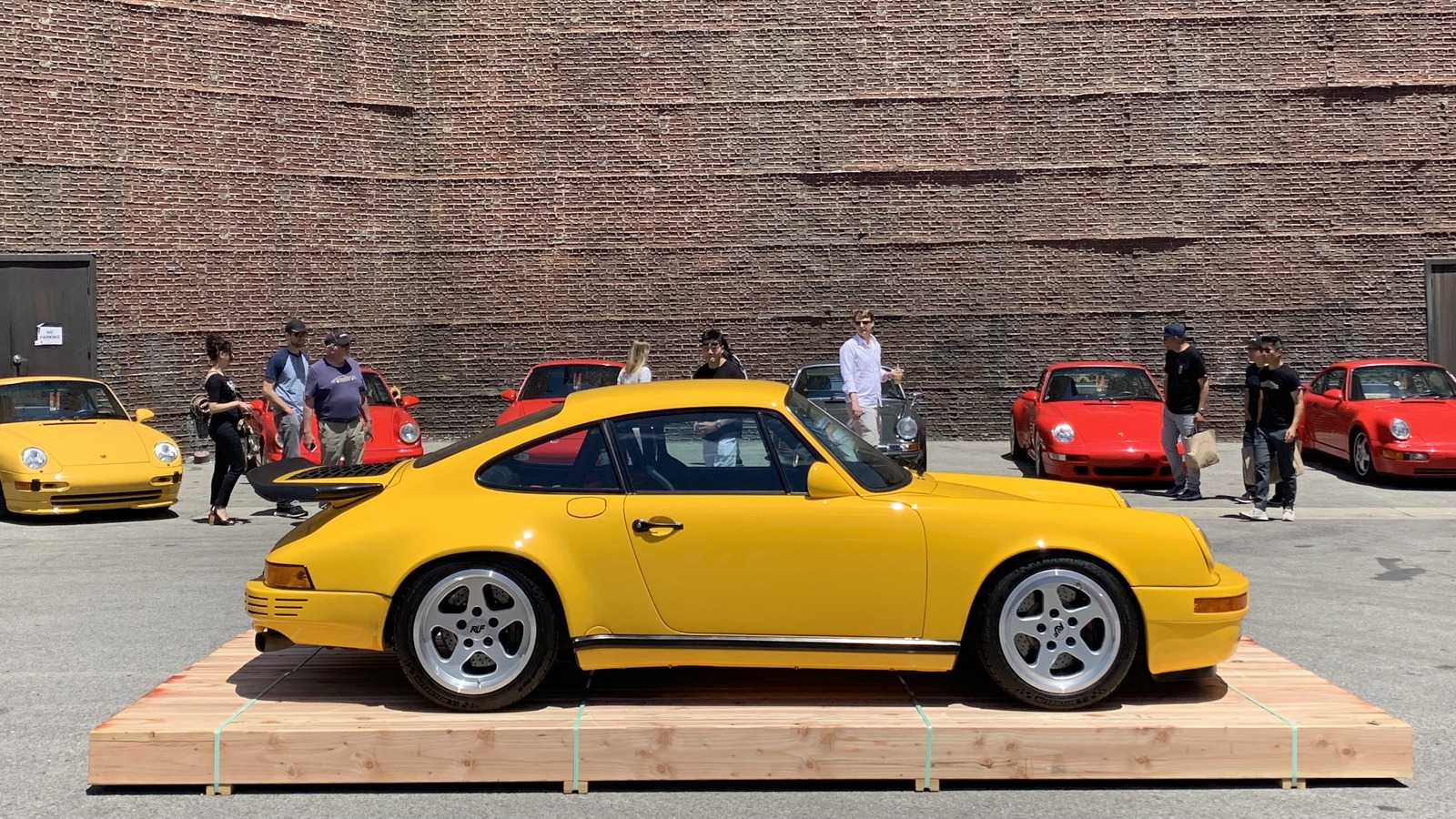
That process began in earnest in 1972, when Porsche experimented with decklid wings for motorsport use. By the 1973 model year, the company had arrived at one of its most famous solutions: the “ducktail” fitted to the Carrera 2.7 RS. The name came from its profile, with the rear edge flicking upward in a shape that resembled a duck’s tail feathers. The design was not merely decorative. It was developed to improve performance and also served as a homologation component for racing.
The aerodynamic logic was straightforward even if the execution was refined. Air flowing over the 911’s curved roofline met the rear spoiler and was redirected in a way that helped reduce lift and improve the car’s behavior at speed. That made the ducktail one of the earliest examples of Porsche turning aerodynamic necessity into an enduring visual signature.
Nicknames became part of Porsche culture
The Jalopnik survey also explains why Porsche spoiler names have lasted so long in enthusiast vocabulary. Terms such as “ducktail,” “whale tail,” and “tea tray” are memorable because they describe shapes in instantly recognizable language. They also map neatly onto specific stages of the 911’s evolution, allowing fans to identify particular engineering periods from a single silhouette.
That kind of naming matters because Porsche’s design changes have often been incremental rather than revolutionary. Small differences in the decklid, wing shape, or air path can signal major changes in cooling, stability, or track intent. The nicknames gave owners and enthusiasts an informal taxonomy for discussing those differences long before digital configurators and technical explainers made factory details widely accessible.
More broadly, the history shows how a component introduced for performance became inseparable from brand mythology. On many cars, spoilers are add-ons. On a Porsche 911, they became clues to a model’s purpose and sometimes to its place in motorsport development. The tails helped tell buyers which versions were built to go faster, corner harder, and look the part.
Aero experimentation became a brand language
The larger takeaway from the retrospective is that Porsche’s spoiler history reflects a long-running marriage of engineering and identity. As the company continued developing different rear decklids and wings, each design addressed a version of the same underlying challenge: stabilizing a car whose iconic shape also created aerodynamic complications.
That balancing act helps explain why Porsche continued revisiting the rear of the 911 across generations. Rather than abandoning the silhouette that made the car famous, the company repeatedly modified the tail to make the package work better. In the process, it created some of the most famous aerodynamic forms in automotive history.
The result is a visual record of performance development that remains unusually legible. Even for casual observers, a Porsche rear spoiler often signals more than ornament. It points to a specific attempt to master speed, airflow, and balance within the constraints of an unmistakable body shape.
- Porsche’s spoiler development accelerated in the early 1970s as the company pursued better high-speed stability.
- The Carrera 2.7 RS ducktail became an early and influential road-car solution tied to racing homologation.
- Names such as ducktail, whale tail, and tea tray turned technical aero differences into lasting enthusiast vocabulary.
This article is based on reporting by Jalopnik. Read the original article.
Originally published on jalopnik.com