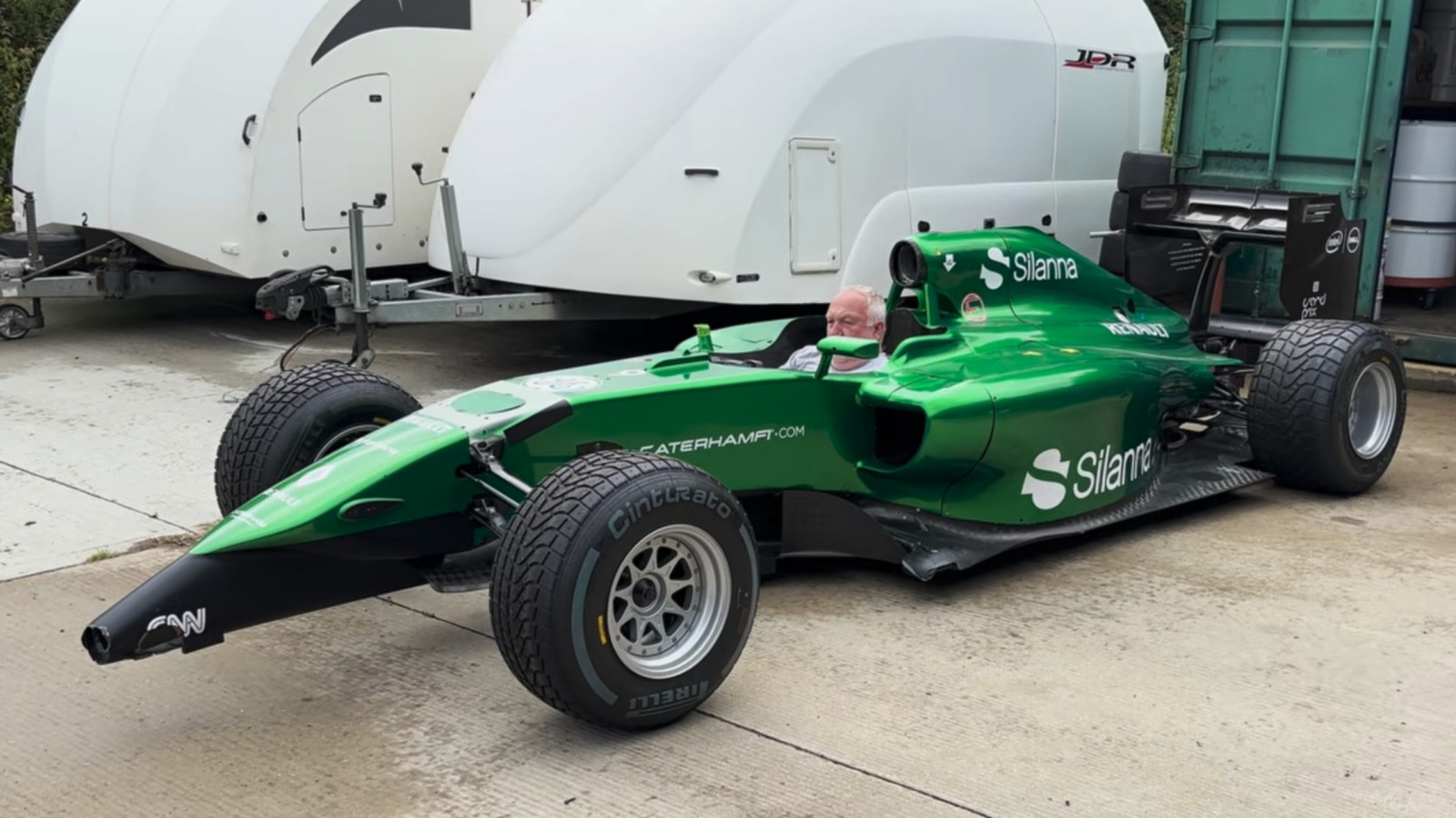
A decade-long project built from the global leftovers of Formula 1
A British motorsport enthusiast has demonstrated just how hard it is to build a real Formula 1 car outside the paddock. According to the source material, Kevin Thomas spent about 10 years sourcing enough authentic parts to create a working F1 machine, beginning with a damaged Caterham tub and expanding the project piece by piece through auctions, supplier calls, and international searches.
The story matters because it cuts through a common fantasy in enthusiast culture: that if an actual F1 car is too expensive to buy, a determined person can simply assemble one for less. Technically, that is possible. Practically, the report shows, it is a punishing exercise in patience, logistics, and compromise.
The project started with a monocoque, not a complete car
Thomas’s effort reportedly accelerated after Caterham F1 collapsed and its components became available through auction. By mid-2015, he had acquired the damaged tub of Marcus Ericsson’s car from the Hungarian Grand Prix crash for about £5,000. That was only the beginning. A tub is the core of a race car, but without the engine, gearbox, wiring, suspension, wings, and systems integration, it is far from track-ready.
From there, the build became a scavenger hunt. The report describes extensive research and repeated dead ends with actual suppliers. Even when original equipment could theoretically be obtained, the numbers quickly became unrealistic. Renault, which supplied the Caterham F1 power unit, was said to have quoted Thomas €2.4 million per quarter for an engine arrangement, along with the requirement that two Renault engineers oversee and operate it at his expense.
That detail captures the underlying economics of top-tier motorsport. Formula 1 parts are not just expensive because they are exotic. They are expensive because they live inside a tightly controlled ecosystem of engineering support, operational secrecy, and limited production. A component is often inseparable from the people, procedures, and data that make it usable.

Why projects like this rarely happen
The rarity of functional home-built F1 cars is not simply about money. It is about systems compatibility. Modern race cars are dense with specialized electronics, bespoke manufacturing, and performance assumptions that do not translate well outside a team environment. A private builder can gather hardware, but making those parts work together reliably is a different challenge entirely.
The report suggests Thomas accepted that reality and kept moving anyway. Instead of trying to recreate a perfect factory-correct machine under impossible conditions, he pursued a practical route to a drivable result. That makes the project less about museum authenticity and more about engineering persistence. The achievement is not that every part came from one original source. It is that enough genuine racing hardware was brought together to create a credible and operational car.
There is also a cultural dimension here. In an era when many vehicles are increasingly sealed, software-locked, or service-gated, enthusiast projects like this remain a reminder that mechanical ambition still has a place. They may be inefficient, expensive, and irrational by ordinary standards, but they embody a form of technical curiosity that mass-market transportation no longer encourages.
A window into the changing afterlife of race machinery
The project also illustrates what happens to elite motorsport assets when teams fail, regulations change, or equipment becomes obsolete. Auction houses, collectors, restorers, and specialist buyers create a secondary market where fragments of racing history circulate long after their competitive life is over. Most of those fragments become display pieces. A small number are turned back into moving machines.
That secondary market is shaped by access and asymmetry. The most desirable parts can disappear quickly into private collections or command prices that make practical reconstruction impossible. What remains often requires deep technical judgment: knowing which damaged parts can be repaired, which systems can be substituted, and where a faithful reproduction is no longer realistic.
Thomas’s story is compelling precisely because it embraces those constraints instead of hiding them. The point was not to prove that building an F1 car at home is easy. The point was to show what such a project actually demands when fantasy meets procurement, engineering, and time.

More than a garage curiosity
At one level, this is an enthusiast feature about an extraordinary personal build. At another, it is a case study in the value chain of advanced transportation technology. Formula 1 is often presented as a spectacle of speed and glamour. This project shows its opposite face: scarcity, complexity, and the stubborn difficulty of reproducing elite engineering once it leaves its original context.
That is what makes the build more than a garage oddity. It demonstrates how technological prestige can outlive factory ownership, but only in fragments, and only through years of determined reconstruction.
This article is based on reporting by Jalopnik. Read the original article.
Originally published on jalopnik.com