GM leaned harder on simulation to accelerate the Bolt comeback
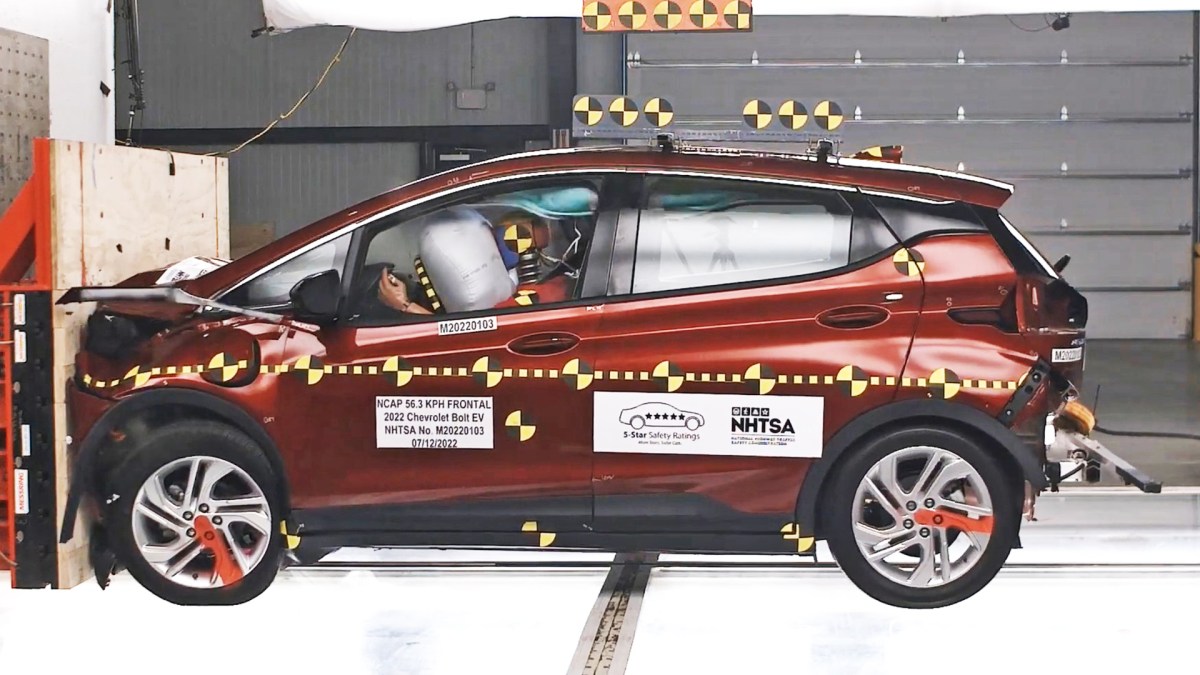
General Motors says virtual crash testing played a major role in bringing the 2027 Chevrolet Bolt EV back to market on a compressed timeline. According to Bolt chief engineer Jeremy Short, the company relied on detailed 3D simulations to sharply reduce the number of physical pre-production vehicles it had to crash during development.
The approach did not eliminate real-world testing altogether. GM still conducted the final physical crash test required for regulatory homologation. But the company says it was confident enough in its software models to use simulation for much of the development and variation work that would previously have required more destructive testing.
How the system works
Short described the virtual process as a complete 3D model of the vehicle that includes individual components and the mechanical properties of materials such as steel and plastics. GM says it uses commercially available software combined with its own additions, with the models correlated against physical testing of specific components including airbags and seats.
That setup allows engineers to run repeat scenarios and evaluate changes without rebuilding and crashing a new vehicle each time. A weld can be moved, a bracket resized, or a speed altered in the model. Instead of focusing on how realistic the visuals look, the important output is numerical: the forces acting on vehicle structures and crash-test dummies.

Engineering speed as a product advantage
The revived Bolt had to overcome more than a routine product-development cycle. The Drive reports that GM’s decision to discontinue and then revive the affordable EV forced unusual steps, including moving an assembly line and stockpiling parts for prototypes. In that context, cutting down the number of real crash vehicles becomes more than an engineering curiosity. It becomes a schedule tool.
Short’s description suggests GM now sees simulation as mature enough to shoulder more of the validation process, at least in earlier and mid-stage development. He also noted that the apparent severity of a crash can be misleading, with some ugly-looking outcomes performing better than they seem and some mild-looking scenarios requiring design changes.
What it signals for future vehicle development
Automakers have used simulation for years, but GM’s comments imply a growing willingness to trust those tools at a higher level of decision-making. That could matter well beyond the Bolt. Faster iteration means faster development cycles, fewer prototype builds, and potentially lower engineering costs if the digital models are accurate enough.
For consumers, the immediate story is about the return of an affordable EV. For the industry, the more important signal may be how that return was enabled. GM is arguing that software can now replace a larger share of expensive physical crash work without compromising the final regulatory step. If that becomes common practice, digital validation will be as central to vehicle launches as the assembly line itself.
This article is based on reporting by The Drive. Read the original article.
Originally published on thedrive.com