Ford Confirms a Canceled EV Program Is Still Influencing Its Future
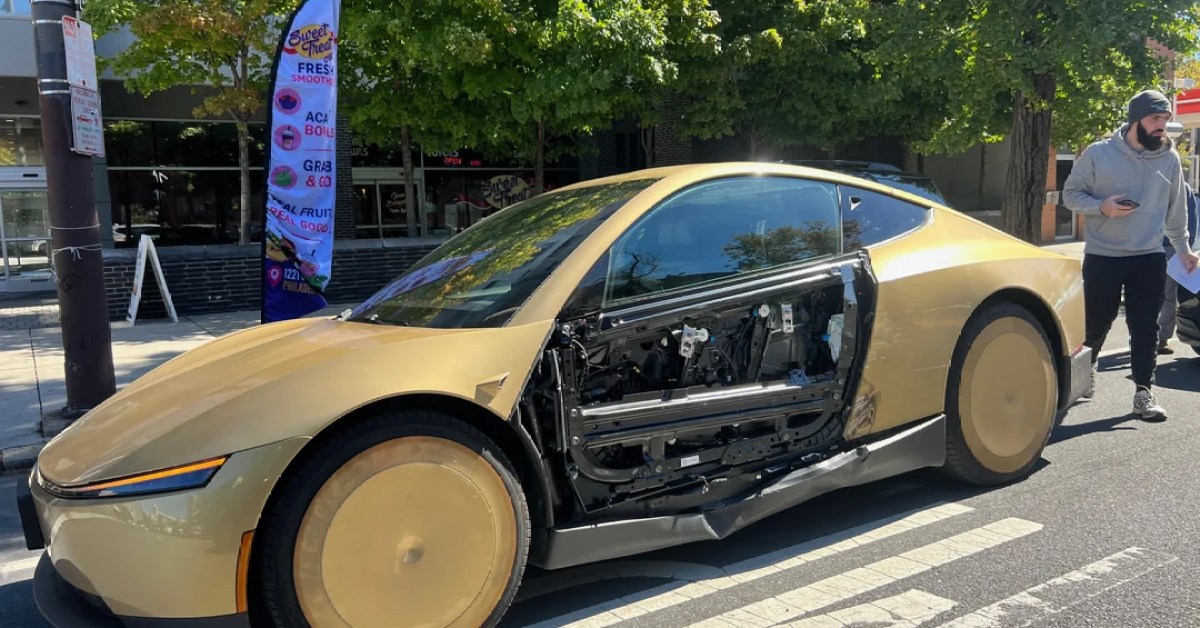
Ford has publicly confirmed that the long-discussed three-row electric SUV once touted as a breakthrough program was canceled in 2024, ending months of speculation about a vehicle that never made it to market. But the project has not been discarded entirely. In comments reported by The Drive on April 17, a Ford spokesperson said the vehicle is now being used as a research platform and that its design and engineering lessons will significantly influence the company’s next generation of electric vehicles.
That combination of cancellation and continued internal relevance makes the story more than a look back at a shelved product. It offers a view into how major automakers are reworking EV strategy under economic pressure while trying to preserve useful technological progress from programs that no longer fit current commercial realities.
A High-Ambition EV That Never Reached Production
The SUV had been presented by Ford leadership as a major step forward in large electric vehicles. According to The Drive, CEO Jim Farley had described it as a three-row EV that would redefine the segment. The concept promised 350 miles of range and relied not simply on a very large battery pack, but on aerodynamic efficiency and related innovations to improve performance. That pitch suggested Ford wanted to solve one of the hardest problems in mass-market electrification: how to make a large family vehicle deliver compelling range without becoming overly heavy, expensive, or inefficient.
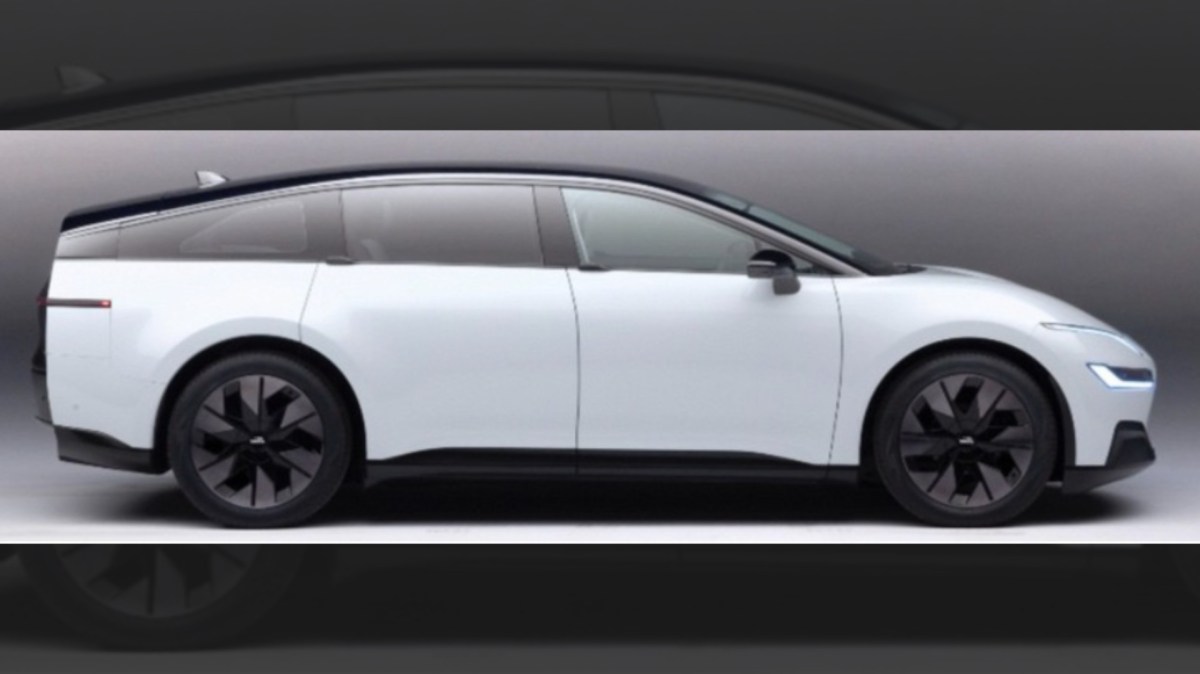
Instead, the program was canceled in August 2024 along with other pure-electric initiatives. The vehicle never reached showrooms, and until recently the public had barely seen it. The Drive reports that an image of the design had been visible for months as the LinkedIn banner of former Ford EV executive Doug Field, but the company itself had not explicitly identified it in public until now.
Ford’s confirmation adds weight to what might otherwise have remained an internet curiosity. Rather than dismissing the image or declining comment, the company told The Drive directly that it was the canceled three-row SUV. That rare acknowledgment is important because automakers generally avoid discussing unreleased or abandoned products in detail.
What the Prototype Was Supposed to Deliver
The description shared with The Drive presents the vehicle as a seven-passenger SUV designed from the inside out. Ford characterized it as a “personal bullet train,” emphasizing a longer, sleeker shape, a quiet cabin, and an interior focused on connection across all three rows. The most consequential technical claim in the description was its emphasis on aerodynamics as the basis for highway efficiency.
That focus matters. Large electric SUVs face a structural challenge: the space, weight, and utility customers expect tend to work against efficiency. Ford’s proposed answer appears to have been a vehicle shaped to move through air far more effectively than traditional boxier family SUVs, allowing it to deliver strong range without depending exclusively on battery scale.
The prototype description also pointed to rapid charging, claiming 100 miles of added range in six minutes, and described two possible range outcomes: more than 350 miles of battery-electric operation or a 550-mile extended-range journey. The article does not elaborate on the full technical architecture behind the extended-range figure, so the main confirmed takeaway is that Ford was exploring multiple ways to preserve flexibility for long-distance travel while keeping a large EV practical.
Why the Cancellation Matters Now
Ford’s decision to cancel the program in 2024 reflects a broader industry reset. Across the automotive sector, companies that had announced aggressive EV timelines have been forced to respond to cost pressures, shifting consumer demand, and a more volatile economic environment. The Drive links the canceled SUV to a larger pullback in Ford’s pure-electric plans, including the company’s pivot away from the current F-150 Lightning trajectory.
But the new confirmation also shows that cancellation does not necessarily mean failure in engineering terms. A production plan can be wrong for the market while still producing valuable ideas. That is especially true in EV development, where battery packaging, charging behavior, software integration, aerodynamic shaping, and cabin architecture often evolve through expensive prototype programs that outlast any individual nameplate.
Ford’s statement that the vehicle is “informing” its next generation of EVs is therefore significant. It implies the company still sees value in the SUV’s underlying design logic even if the original business case collapsed. Lessons from its packaging, aerodynamics, charging approach, or platform engineering may reappear in future vehicles that target lower prices or different segments.
Ford’s Next EV Push Is Shifting Downmarket
The Drive says Ford has not exited the battery-electric market and is instead developing a new small electric pickup with a target price of $30,000, assuming the company can maintain cost discipline in a difficult economy. That future pickup is expected to sit on a platform that will support several more affordable EVs.
This planned move is revealing. It suggests Ford now sees its best opportunity not in proving that a large premium-style electric SUV can be radically reimagined, but in creating a more affordable foundation that can serve multiple products. In strategic terms, that is a shift from a showcase vehicle to a scalable architecture.
The canceled three-row SUV still matters in that context because some of its ideas may transfer well to a cost-sensitive lineup. Aerodynamic efficiency, better charging performance, and smart use of interior volume are not limited to a luxury-adjacent flagship. If Ford can translate those lessons into smaller, cheaper vehicles, the scrapped moonshot may end up influencing products with broader commercial impact than the original concept ever would have had.
A Rare Look at the EV Industry’s Real Iteration Cycle
Automakers usually present product development as a linear story of vision, reveal, and launch. This case shows the process is messier. Projects are announced, reassessed, and sometimes canceled well before the public understands what they were meant to accomplish. What is unusual here is that Ford has allowed a partial glimpse of that internal iteration cycle.
The company’s acknowledgment does not revive the three-row SUV. It does something more useful: it clarifies that a canceled vehicle can still be a live source of engineering direction. For Ford, the point of the prototype may no longer be to become a product. Its role now is to compress years of experimentation into the company’s next EV architecture.
That makes this less a story about a lost vehicle than about a strategic handoff. Ford’s abandoned electric flagship is becoming a research asset, and the company is signaling that the next generation of its EVs will carry some of that DNA forward even if the original SUV never reaches the road.
This article is based on reporting by The Drive. Read the original article.
Originally published on thedrive.com