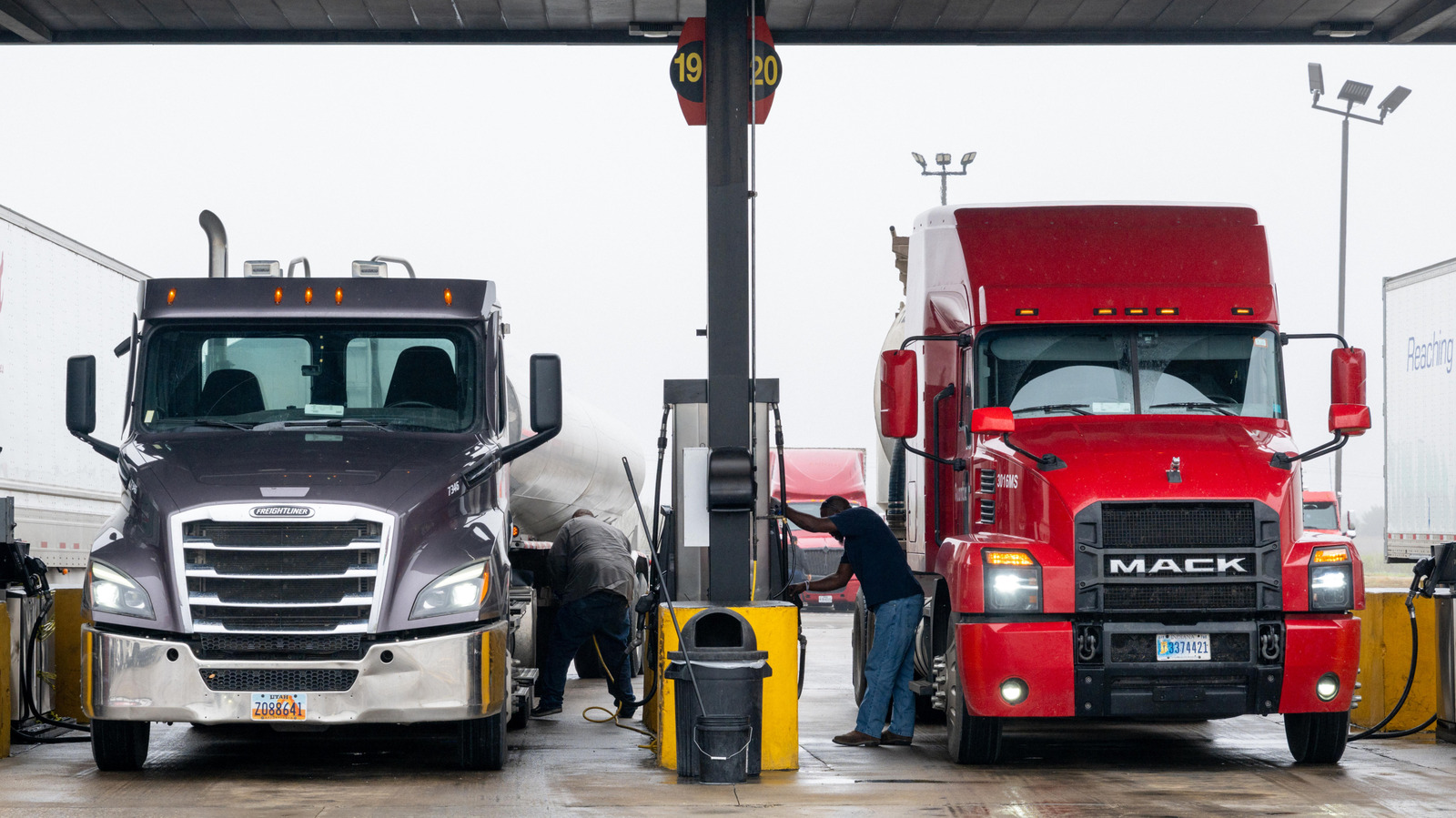
Diesel, not gasoline, is the pressure point
Public attention often focuses on gasoline prices, but the more consequential move for the real economy can come from diesel. Jalopnik reported on April 14 that the U.S. national average for diesel had climbed to $5.68 a gallon, nearly $2 higher than before the latest geopolitical disruption began.
That matters because diesel is the operating fuel for much of the freight system. While most households can reduce discretionary driving, freight carriers do not have that flexibility. Trucks still need to move food, consumer goods, industrial inputs, and parcels, and they need to do so on schedules set by commerce rather than convenience.
When diesel rises sharply, the effect is less visible at the pump for ordinary drivers and more visible in the price structure of everything that must be transported.
Fuel costs hit an industry with thin margins
The economics are simple and unforgiving. Jalopnik noted that the average semi-truck gets roughly 5 to 6 miles per gallon. At that efficiency, fuel becomes one of the most immediate and destabilizing costs in the business, especially when prices move quickly.
The burden is particularly severe in high-cost states. The article said California’s average diesel price stood at $7.73 a gallon at the time of writing. For long-haul operators and regional carriers alike, that can turn a workable route into a margin problem almost overnight.
Large carriers have some defenses. They can negotiate bulk purchasing arrangements, use scale to absorb temporary spikes, and manage through a period of turbulence more easily than smaller firms. But the broader industry does not operate on large-carrier economics alone.

Independent operators are more exposed
The sharpest stress falls on small companies and owner-operators. Jalopnik, citing reporting from CNN, said many truckers face a cash-flow mismatch: customers may take weeks or months to pay invoices, but fuel must be purchased immediately at the new elevated price.
That timing problem can be as damaging as the absolute price level. Even if a trucker can raise rates, the benefit does not arrive when the fuel bill is due. During a fast-moving price spike, that lag can push smaller operators into a financing crunch before they have any chance to pass costs through.
It also creates an uneven market structure. Large fleets can hedge, negotiate, and survive. Independents are forced to operate in real time against volatile spot costs.
Fuel surcharges are back
The first response from the freight system is already visible. Jalopnik reported that fuel surcharges seen during the 2022 price spike are returning from Amazon, UPS, FedEx, and the U.S. Postal Service. That is a practical signal that the industry is no longer treating current fuel prices as a short-lived anomaly.
Surcharges matter because they formalize cost pass-through. Once transportation providers begin adding them broadly, higher fuel prices stop being an internal logistics issue and become part of the retail and delivery bill facing businesses and households.
The article argued that trucking companies will not absorb these costs on their own, and that retailers in turn are likely to increase the prices consumers pay. That is the larger macroeconomic relevance of diesel: it acts as a transmission mechanism from geopolitics into consumer inflation.

An industry under pressure before this spike
The diesel shock is landing on top of an already weakened trucking market. Jalopnik wrote that the industry was in poor shape before the latest surge, and added that the loss of 200,000 legal immigrant truck drivers had worsened shipping costs by reducing available labor supply.
That preexisting fragility means higher fuel prices are not hitting a stable base. They are arriving in a sector already contending with strained economics and mismatches between capacity, labor, and rates.
In that kind of environment, even a temporary price spike can have lasting effects. Some operators may leave the market. Others may cut routes, delay investment, or shift the risk onto customers through pricing structures that persist after the immediate shock fades.
Why consumers are likely to feel it
The freight system sits upstream of much of the consumer economy. When diesel rises, the result is not just a more expensive trucking invoice. It is pressure on groceries, parcels, manufactured goods, and any product whose journey includes long-haul or regional transport.
Jalopnik’s central argument is that the public may not yet see the full scale of those increases because the most consequential markups happen business-to-business before showing up on store shelves. That lag can make the inflationary effect feel delayed, but not avoided.
The immediate takeaway is that diesel prices have become a systemic issue rather than a sector-specific inconvenience. A national average of $5.68 a gallon, paired with much higher levels in states such as California, puts transportation at the center of the next consumer-price risk.
If the surge persists, the outcome is likely to be familiar: stronger carriers survive, smaller operators suffer first, and the cost eventually reaches everyone else through higher prices on the goods that keep moving by truck.
This article is based on reporting by Jalopnik. Read the original article.

Originally published on jalopnik.com