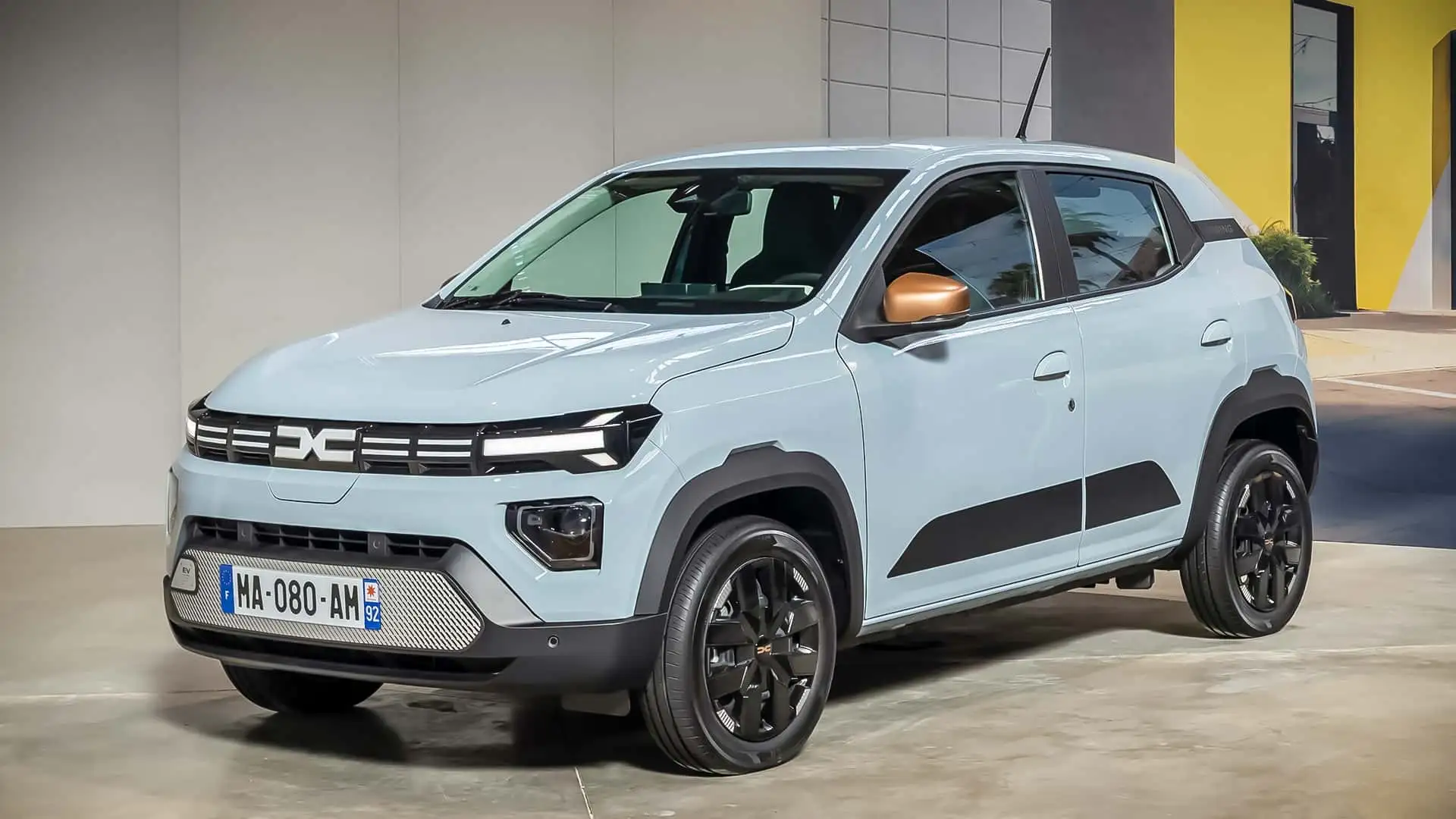
Dacia Spring EV Returns, Now Assembled in Europe
Dacia has officially launched the next generation of its Spring electric minicar at a starting price of €17,900. The new model marks a major strategic shift for the Romanian brand: instead of being built in China, the Spring will now roll off production lines in Slovenia. The move is designed to reinforce the car's position in a European small EV segment increasingly threatened by inexpensive Chinese imports.
The announcement was first reported by Automotive News and comes at a time when European automakers are racing to defend their home turf. Dacia, known for its value-oriented vehicles under Renault Group, is staking its claim with an electric car that is priced to attract budget-conscious buyers.
Why European Assembly Matters
The decision to relocate production is more than a simple logistics choice. European assembly makes the Spring eligible for various national and regional incentives, while also shielding the vehicle from import tariffs that have been introduced or proposed on Chinese-made EVs. The previous generation, produced in China through a partnership, often found itself at a competitive disadvantage as regulators tightened trade barriers.
By manufacturing the Spring in Slovenia, Dacia hopes to neutralize those hurdles. The company is leveraging a factory that already supports Renault Group's broader manufacturing footprint, enabling cost efficiencies that keep the final price competitive despite higher European labor costs.
A Price Point Built for Traffic
At €17,900, the new Spring slots into a growing niche of sub-€20,000 electric vehicles. That price point is critical in Europe, where affordability is one of the strongest barriers to mass EV adoption. The Spring's predecessor was already one of the cheapest EVs available in many markets, and the new version aims to continue that tradition while offering improved equipment and modern styling.
Dacia’s no-frills approach to carmaking—stripping away non-essentials to deliver core mobility—has helped it maintain low prices. The Spring inherits that philosophy, though it does include the essential safety and connectivity technology expected of a contemporary car.
Competing With Chinese EV Imports
The launch timing is no coincidence. A wave of low-cost electric cars from Chinese automakers, including MG and BYD, has been expanding across Europe. These competitors have adopted aggressive pricing and, in some cases, built factories inside Europe to skirt import duties.
Dacia's answer is to lean into a straightforward value proposition: a car built in Europe for Europeans, with a price tag that undercuts most rivals. Because the Spring is assembled locally, it may be better positioned to receive purchase subsidies in countries like France and Germany, where incentives are often reserved for vehicles with a smaller carbon footprint and regional manufacturing.
Addressing Affordability Without Sacrifice
One of the big questions for any budget EV is whether it can deliver acceptable range and practicality. While the official technical specifications were not part of the initial announcement, the Spring has historically offered a modest range that is adequate for city commuters. Dacia's marketing emphasizes the vehicle as a second car or an urban runabout, rather than a long-distance tourer.
The decision to keep the Spring compact also pays off in maneuverability and ease of parking—qualities that are valued by city residents. With European production, Dacia can more nimbly adjust its powertrain and battery options to align with consumer demand and regulatory requirements across different EU states.
The Bigger Strategic Picture
The Spring is not an island. It is part of Renault Group's larger electrification roadmap, which includes a variety of mass-market and budget models. Dacia’s brand identity is built on simplicity, reliability, and affordability, and an affordable EV is the natural extension of that identity.
The relocation also sends a message: European manufacturers are willing to make structural changes to counter the cost advantage of Asian competitors. By producing the Spring in Slovenia, Dacia avoids potential carbon footprint penalties and trade restrictions, allowing it to sell the same car across Europe without regional inconsistencies.
What Customers Can Expect
Consumers are likely to benefit from this development. The Spring will be available at a reasonable price in showrooms throughout Europe starting later this year, according to the announcement. Dealerships and ordering systems are expected to open soon, with the first customer deliveries in key markets by early next year.
For buyers, the reward is an EV that is truly positioned as a low-cost entry point. At €17,900, the Spring undercuts many mainstream competitors and could accelerate the switch from internal combustion engines in segments that typically lag behind.
Impact on the Industry
Dacia's move also puts pressure on Chinese automakers who have yet to localize their supply chains. A robust European-built sub-€18,000 EV changes the competitive calculus, especially in markets where price is the primary decision factor. Key takeaways from the launch include:
- Relocating production to Slovenia may make the Spring eligible for state subsidies in major EV markets.
- The €17,900 price undercuts many Chinese rivals, including MG and BYD models sold in Europe.
- European assembly shields Dacia from potential trade tariffs on Chinese imports.
- The move reinforces Renault Group's commitment to affordable electric mobility.
Analysts will be watching to see whether production at the Slovenian plant can keep pace with demand and whether supply chain disruptions can be avoided. The Spring's success could prompt other European automakers to shift production home or adopt similar cost-cutting measures.
Conclusion
The Dacia Spring’s return as a Europe-built EV at €17,900 marks a decisive move in the battle for affordable electric mobility. It directly targets low-cost Chinese vehicles while reinforcing the importance of regional manufacturing in automakers’ clean energy transitions.
Whether this next-generation Spring will dominate the market remains to be seen. What is certain is that Dacia has raised the stakes, delivering a compelling answer to the question of how to make EVs accessible to everyone in Europe.
This article is based on reporting by Automotive News. Read the original article.
Originally published on autonews.com