A Market in Freefall
China's car market entered a steep downturn in August, with sales collapsing by 24 percent compared with the same month last year. Official figures, reported by Automotive News, underscore the depth of the challenge facing automakers that have built massive capacity domestically. The decline is not confined to a niche or segment – it has hit the entire industry at a moment when manufacturers are already competing on wafer-thin margins.
Yet the numbers also reveal a striking counterpoint. While domestic sales tumbled, exports surged 78 percent, marking one of the most dramatic shifts in the industry's recent history. Vehicle shipments abroad now account for 38 percent of total sales, up from around 20 percent earlier in the year. That suggests the production lines are still humming, but the destination of those vehicles is decisively moving beyond Chinese borders.
The Price War Nobody Wins
The cause of the unusual divergence can be traced to a bitter price war inside China. For more than a year, automakers have slashed prices on everything from entry-level sedans to luxury SUVs, desperate to hold or expand market share in a mature market. With more than 100 active brands and a steady stream of new models, oversupply has become chronic. The result is a cycle of discounting that erodes profitability but rarely produces lasting market share.
Exports offer an escape route, and not just for Chinese companies. Automakers that produce in China, including international joint ventures, are increasingly routing vehicles to foreign markets where pricing is more rational and margins are healthier. This is not merely a tactical response to a temporary slump; it is becoming a fundamental pillar of corporate strategy for the next several years.
Volume Versus Profit
In China, volume is no longer the only metric that matters. Several automakers have seen their net margins compress to near zero as they sacrifice profit for registration figures. The export channel changes that calculus, because vehicles sold abroad typically command higher prices and enjoy a different competitive set. For example, Chinese-built electric vehicles have proven highly competitive in Europe and Southeast Asia, where they undercut local rivals on cost while offering comparable technology.
This shift is particularly important for companies like BYD and Tesla, which have both appeared in headlines this cycle as they push harder into foreign markets. BYD, the Chinese EV giant, has been expanding its international footprint, while Tesla's Shanghai factory continues to serve as a major export hub for Asia and Europe. Both face intense competition at home and are seeking growth outside a saturated domestic arena.
The Numbers Behind the Rush
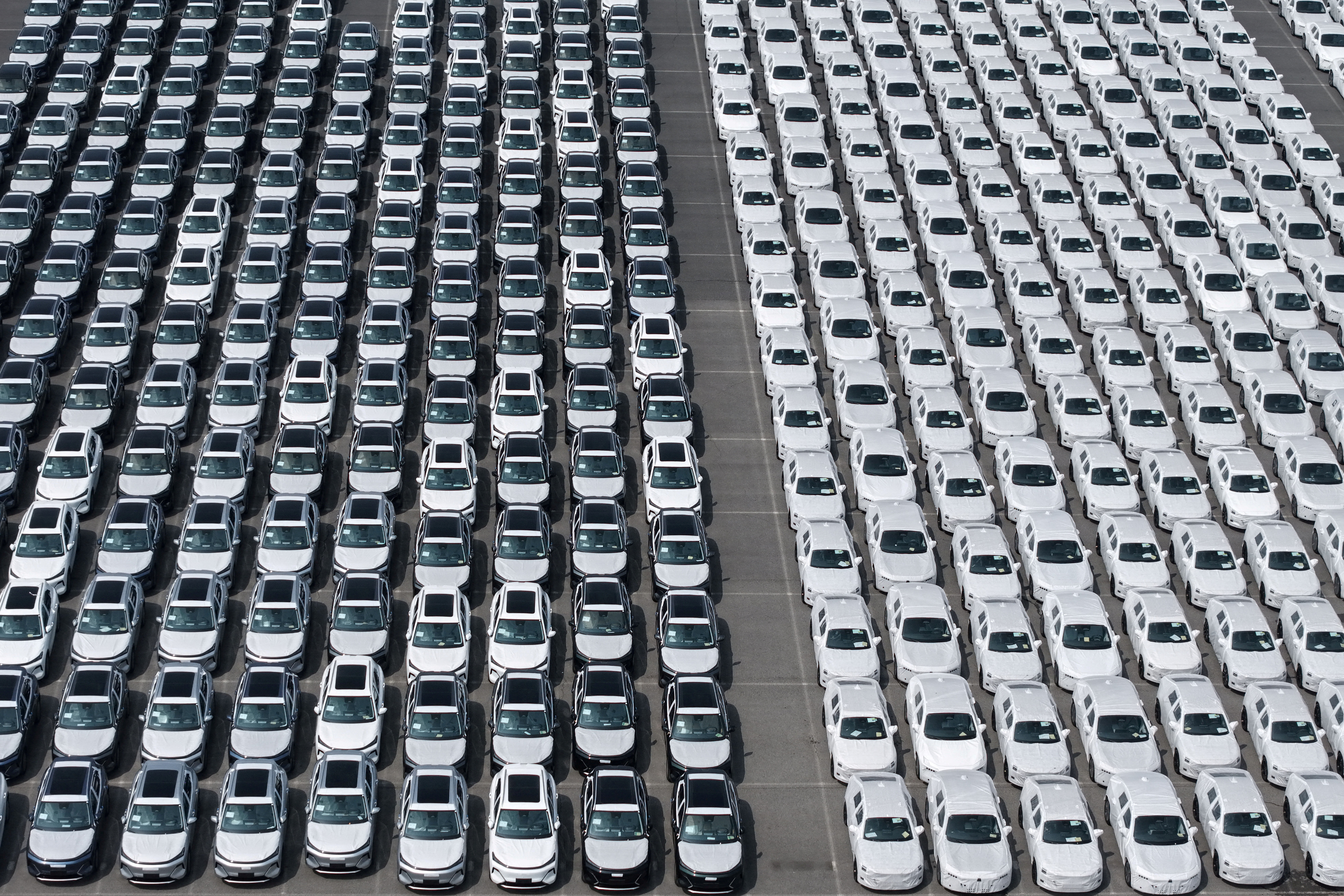
Let's look at the scale of the export surge. A 78 percent year-on-year increase is rare in any mature industry. Multiply that by the absolute volumes involved and it becomes clear that foreign buyers are increasingly dependent on Chinese-made vehicles. In total, exports represent roughly 38% of sales – meaning that for every five cars sold by manufacturers with Chinese operations, nearly two are now crossing national borders.
This mix shift has profound consequences for pricing and demand. For one, it changes the type of vehicles built. Car companies are adapting their product lines to suit overseas tastes, tweaking specifications, styling, and safety features to meet regulatory requirements in Europe, Latin America, the Middle East, and elsewhere. It also encourages logistics and supply-chain investments, including the use of deep-water ports, specialized car carriers, and distribution centers abroad.
However, the export-led model is not without risk. It depends on the continued willingness of foreign governments to accept large-scale inflows of Chinese-made vehicles. Trade tensions, tariff measures, and local-content rules could dampen the trend. Yet for now, the direction of travel is unmistakable. Automakers are voting with their wheels, moving production and inventory abroad as fast as they can.
What's Driving the Domestic Downturn
Analysts looking for a single explanation for the 24 percent domestic drop will be disappointed. Several factors likely converged. Consumer sentiment in China has been uneven, and big-ticket purchases often take a back seat when economic uncertainty is high. In addition, buying incentives from local governments have been phased out or reduced, making new vehicles more expensive relative to income. Finally, the very fact of export growth has had a knock-on effect on domestic supply: production that once would have flooded the home market is now being steered overseas, creating a sense of scarcity that paradoxically hasn't lifted domestic sales.
Another subtle driver is the mix of energy vehicles. Plug-in hybrids and battery-electrics have been the focus of most price competition, and as subsidies have changed, some buyers may be delaying purchases in anticipation of newer models with longer range and faster charging. The battle is no longer simply between petrol and electric, but between competing EV standards, battery chemistries, and charging ecosystems.
Key Numbers at a Glance
- Domestic market decline: 24 percent in August year-on-year.
- Export growth: 78 percent year-on-year surge.
- Export share: 38 percent of total sales, up from previous levels.
- Main actors: BYD and Tesla among automakers seeking foreign markets.
Implications for the Global Auto Industry
The August figures are not just a data point for China. They spell a shift in the geographic center of gravity of car manufacturing. For years, China was the world's largest market, but it was largely self-contained. Now the flow is outward. Automakers in Detroit, Tokyo, Seoul, and Wolfsburg will have to rethink their assumptions about Chinese competition. They will face Chinese-built vehicles not only in Shanghai streets but in Bangkok, Buenos Aires, and Berlin.
For consumers outside China, this might be welcome news. More supply means more choice and often lower prices. But it also raises a strategic challenge for local automakers who have to compete against manufacturers with scale advantages and strong government support.
The Road Ahead
The export push is likely to intensify in the coming months, especially if domestic sales remain under pressure. Automakers will continue to forge partnerships and distribution networks overseas. Some may even shift engineering and design resources to meet export demand. The result could be a more globalized car industry than ever, but also a more contested one.
China's August sales decline of 24 percent is a stark reminder that no market grows forever, but it is also paired with an export boom that proves the industry's resilience. In the short term, BYD, Tesla, and dozens of others are finding that the road to recovery now passes through foreign lands. Whether they can maintain that momentum will be one of the biggest questions in the automotive world – and one that the rest of the industry is watching closely.
This article is based on reporting by Automotive News. Read the original article.
Originally published on autonews.com