A Hybrid Supercar With an Unusual Solution
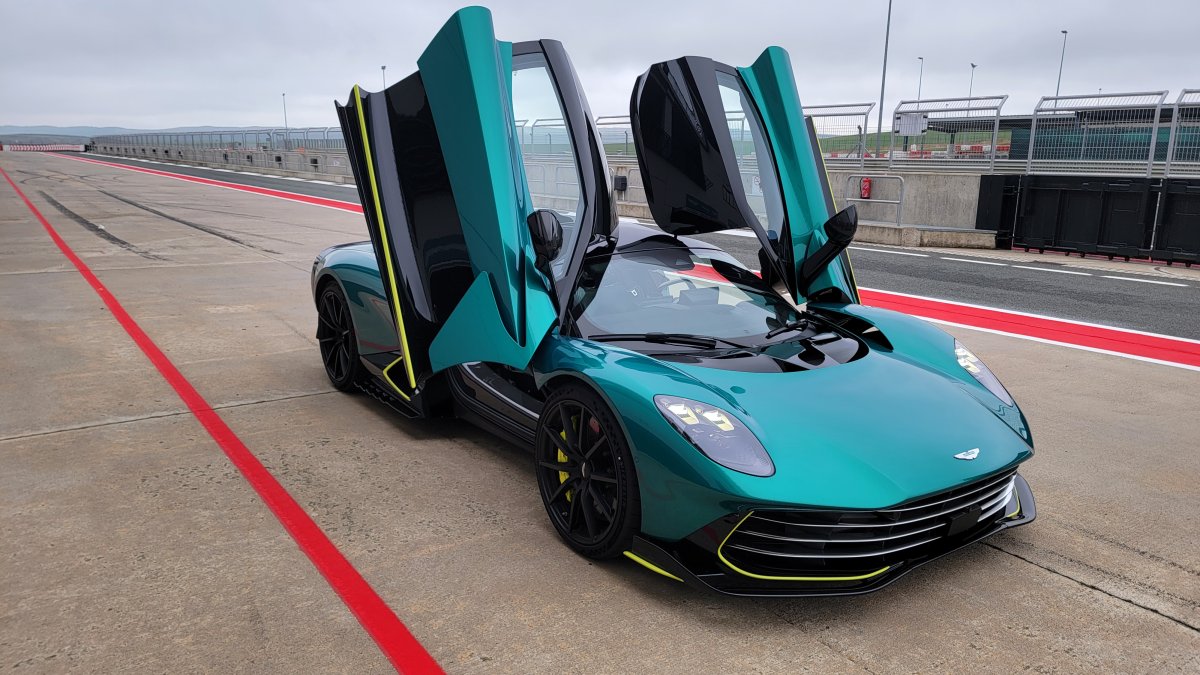
The 2026 Aston Martin Valhalla has no conventional reverse gear. Instead, as described in the supplied source text from The Drive, the plug-in hybrid hypercar reverses by placing its transmission in neutral and spinning its two front electric motors backward.
That detail is more than a novelty. It shows how hybrid architecture can be used not just to add power, but to eliminate hardware. In the Valhalla, Aston Martin’s engineers turned what might look like drivetrain redundancy into a packaging and weight-saving opportunity.
How the System Works
The Valhalla combines a 4.0-liter twin-turbocharged flat-plane-crank V8 with three electric motors. Two motors sit on the front axle, each driving a front wheel independently. According to the source text, those motors effectively create a remote electric axle with no physical center differential or output shaft linking them to the gearbox behind the mid-mounted V8.
That separation is what makes the reverse strategy possible. When the driver selects reverse, the gearbox itself does not engage a dedicated reverse ratio. The car simply uses the front motors to move backward. If the battery is depleted, the gasoline engine can still act as a generator, meaning reverse remains available as long as the car has fuel.
The same front-motor arrangement also enables dynamic front-axle torque vectoring, giving the system another job beyond low-speed maneuvering. In other words, the motors are not replacing a reverse gear in isolation. They are part of a broader layout intended to support handling, packaging efficiency, and electrified performance.
Engineering Around Redundancy
The Drive’s report also points to another clever use of the Valhalla’s hybrid layout at the rear axle. A third electric motor is integrated into the eight-speed dual-clutch transmission. That configuration takes advantage of how a DCT keeps both of its internal shafts engaged on the output side, with the clutches managing power transfer between even and odd gears.
The result is a drivetrain that uses electrification to remove some conventional parts rather than simply stacking electric hardware on top of a traditional powertrain. That is a meaningful distinction. Plug-in hybrids are often criticized as carrying the complexity of both combustion and electric systems. The Valhalla’s design argues that the complexity can be repurposed to do useful work.
Why It Matters
On paper, deleting a reverse gear sounds small. In practice, it reflects a deeper shift in performance-car engineering. Electrification is no longer only about emissions compliance or short electric-only range. In cars like the Valhalla, it becomes a tool for rethinking the transmission, the axle layout, and even the basic assumptions behind how a supercar moves.
That does not make plug-in hybrids simple. But it does show that the best examples are not merely compromise machines. Sometimes they solve old mechanical problems in new ways. Aston Martin’s answer to reverse is one of the clearest illustrations yet.
This article is based on reporting by The Drive. Read the original article.
Originally published on thedrive.com