The universe’s most annoying material may also be one of its most essential
Dust has a public-relations problem. It gets into lungs, fouls machinery, coats optics, and complicates exploration from mines on Earth to the lunar surface. In a new essay for Universe Today, astrophysicist Paul Sutter makes that case with enthusiasm, framing dust as one of the most persistent engineering and environmental nuisances humans encounter. But the deeper point of the article is not that dust is irritating. It is that the same material that regularly makes life and technology harder may also be woven into some of the processes that make the universe navigable, observable, and in some cases habitable.
That contrast is what gives the subject its force. Dust is usually treated as contamination or debris, something to remove, suppress, or work around. In planetary science and astronomy, though, it is often a signal as much as an obstacle. The tension between those two roles helps explain why dust remains such a central concern in both exploration planning and basic research.
Dust as a hazard on Earth and beyond
The supplied source text begins with the familiar litany of complaints. Industrial dust can reach deep into the lungs and is linked to respiratory disease. Under the right conditions, fine particles can become explosive, turning places such as grain elevators, coal mines, and flour mills into high-risk environments. Even in ordinary life, dust’s persistence is a reminder that particulate matter is not passive. It moves, accumulates, and interferes.
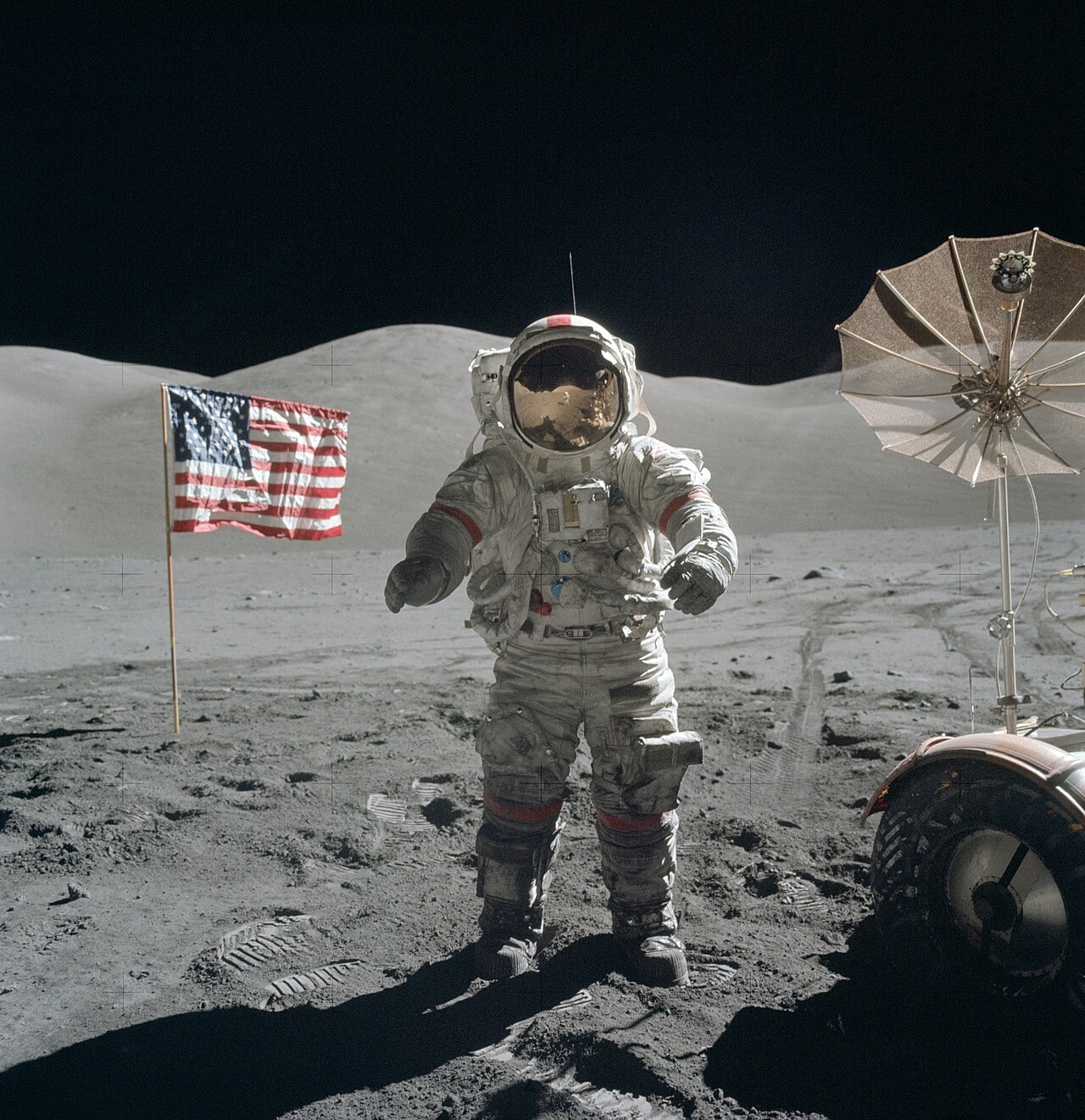
Those same properties become more severe in space exploration. The article highlights lunar dust as one of the most stubborn engineering problems encountered by Apollo astronauts. Unlike terrestrial dust, lunar particles have not been weathered by wind or water, leaving them sharp-edged, sticky, and abrasive. Astronauts reported that the material clung to suits, visors, and equipment and was tracked back inside the lander. That experience is more than historical trivia. It remains directly relevant as space agencies and commercial programs plan longer-duration operations on the Moon.
Dust’s behavior matters because sustained activity on the lunar surface depends on systems that can survive constant exposure to abrasive particles. Seals, joints, optics, radiators, and life-support interfaces are all vulnerable. A material that was once an annoyance over a handful of Apollo missions becomes a major architectural problem for any long-term base, rover fleet, or in-situ resource operation.
Why astronomy both hates and needs dust
For astronomers, dust is simultaneously a barrier and a source of information. On the barrier side, the source text notes the practical problem: dust can settle on lenses and scatter light, undermining the core purpose of a telescope. Dust in Earth’s atmosphere creates additional scattering, degrading observations from the ground. In this sense, dust is one of the many reasons precision astronomy depends on careful site selection, delicate instrument handling, and in some cases the expense of getting observatories into space.
But dust is not just an observational headache. It is also part of the medium through which stars, planets, and other structures emerge and evolve. The supplied text is only the opening installment of a broader argument, yet even this first section points toward the reversal: the reason dust is everywhere in astronomy is because it participates in the universe’s construction as much as in its obstruction.
That duality helps explain why dust studies remain so active. Researchers want to understand not only how to mitigate dust’s effect on instruments and missions, but also how particulate material shapes protoplanetary disks, thermal environments, and the transfer of light through galaxies and planetary atmospheres. Dust can hide information, but it also carries information.
An engineering problem that keeps coming back
One reason dust deserves renewed attention is that exploration road maps keep returning to dusty environments. The Moon is the obvious case. Mars is another. Surface operations there must contend with fine particulates that can settle on equipment, alter thermal performance, and interact with moving systems over long periods. Even when dust is not the headline risk, it often becomes a compounding one, shortening the life of hardware or increasing maintenance complexity.
The practical takeaway is not romantic. Space exploration often depends on solving unglamorous materials problems, and dust sits high on that list. Mission concepts that look straightforward at the systems diagram level can become fragile when abrasive particulate behavior enters the picture. That makes dust research and mitigation less of a housekeeping concern than a platform requirement.
- Dust threatens human health, especially in industrial environments where fine particles can be inhaled.
- Under certain conditions, airborne dust can become explosive.
- Lunar dust was described by Apollo crews as sticky, abrasive, and persistently disruptive.
- Dust degrades astronomical observations by coating optics and scattering light.

The broader lesson
The Universe Today essay is not a new research paper, but it lands on an important truth: the materials that most frustrate human systems are often the same ones that define natural systems. Dust is a nuisance precisely because it is fundamental. It is mobile, persistent, chemically consequential, and hard to exclude. For future missions to the Moon and Mars, that makes it a design challenge. For astronomy, it makes it an interpretive challenge. And for anyone trying to understand how messy the universe really is, dust remains one of the clearest reminders that inconvenience and importance are often the same thing.
This article is based on reporting by Universe Today. Read the original article.
Originally published on universetoday.com