A Magnetic Mission Is Revealing Motion Deep Below the Surface
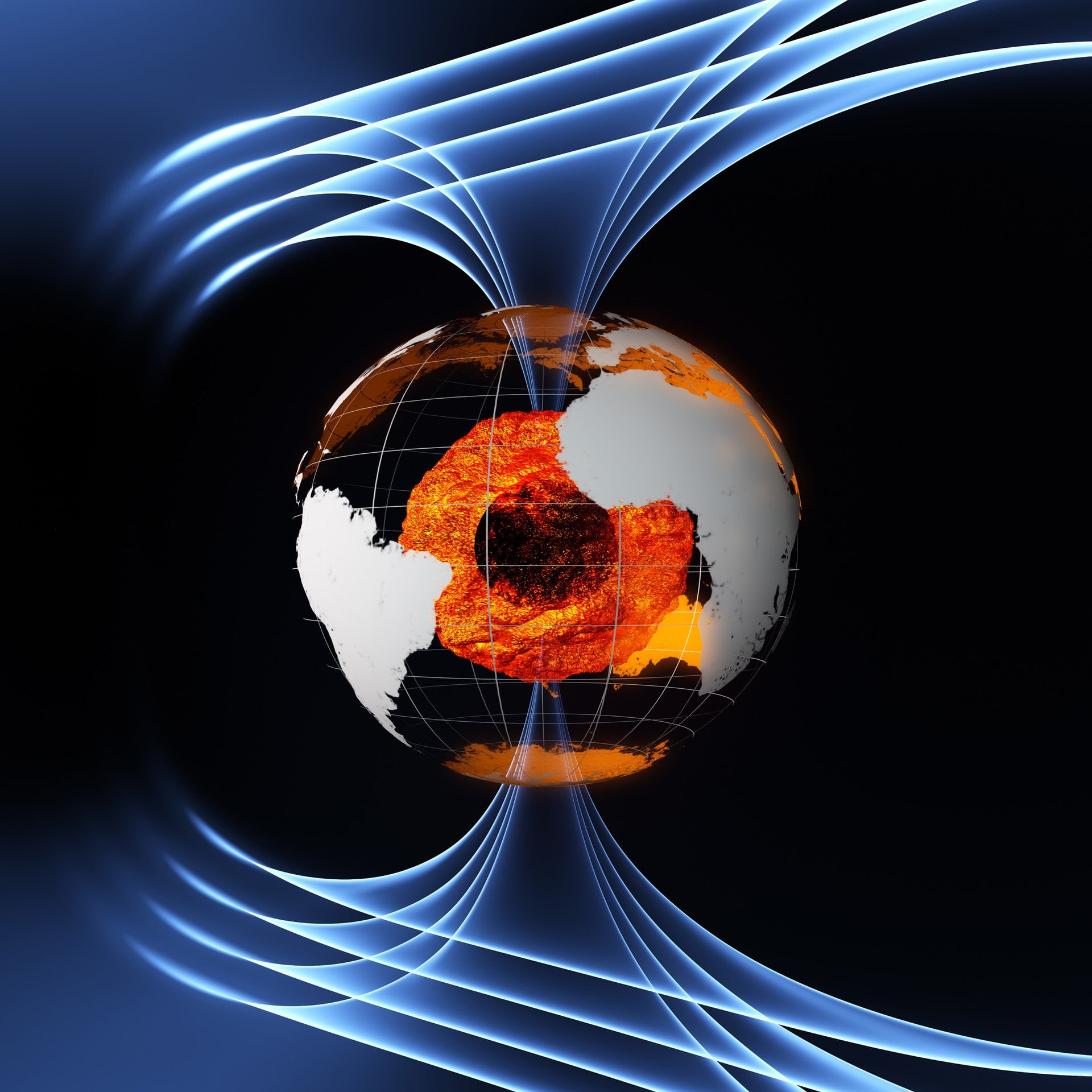
Earth’s magnetic field is one of those planetary features that seems constant until a closer look shows how dynamic it really is. ESA’s three-satellite Swarm mission, launched in 2013 to measure changes in the magnetic field with high precision, is now helping scientists track something striking far beneath the Pacific: a large-scale reversal in the motion of molten material within Earth’s outer core. According to the report, material in that region had been moving slowly westward but changed direction around 2010. It is now heading east and picking up speed.
That finding matters because the magnetic field is generated largely by turbulent motion in Earth’s liquid iron outer core. As electrically conducting material moves, it creates electric currents and the shifting electromagnetic field that protects the planet and shapes many geophysical processes. Any notable change in the circulation of that deep layer is therefore more than a curiosity. It may offer a window into the hidden mechanics of Earth’s interior and the processes that sustain the geodynamo.
Why Scientists Care About a Flow Reversal
The outer core sits roughly 2,200 kilometers beneath the Pacific region discussed in the report. It cannot be observed directly, so researchers depend on indirect evidence from magnetic measurements, satellite data, and ground-based instruments. Swarm is especially useful because it provides repeated, global observations precise enough to track subtle changes in the field over time.
A reversal in large-scale flow raises immediate questions. Is it a short-lived fluctuation? Part of a longer oscillation? Or the sign of a new stable configuration within the outer core? Those are not minor distinctions. The answer affects how scientists think about the deep engine that drives Earth’s magnetism and how predictable its behavior may be over decades.
The study cited in the report does not claim a full explanation yet. Instead, it highlights the observation and its implications. That is often how progress works in deep Earth science. First comes the recognition that something unexpected has happened. Only then can competing models be tested against the accumulating data.
Swarm’s Value Is in Long-Term Observation
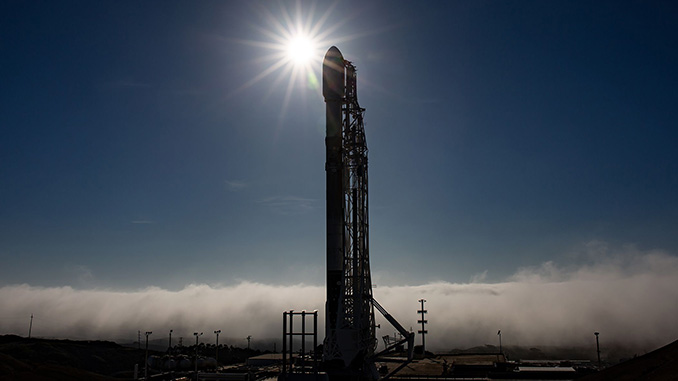
Swarm was designed precisely for this sort of detective work. The three satellites identify and measure changes in the magnetic field from orbit, helping separate contributions from the core, crust, oceans, ionosphere, and magnetosphere. In this case, those data are being combined with information from ESA’s CryoSat mission and ground-based measurements to build a clearer picture of the core’s behavior.
The longer the record becomes, the more useful it is. Earth’s outer core often moves in long-duration patterns that can last for decades, but occasional changes complicate that picture. A single snapshot would not reveal much. Continuous monitoring over years can show whether an apparent anomaly is real, whether it is accelerating, and whether it connects to other changes in the magnetic field.
This is one reason satellite constellations matter in planetary science. They do not simply capture dramatic images. They create persistent measurement systems that allow scientists to observe processes otherwise hidden from view. In Earth’s case, that includes the deep circulation of liquid iron thousands of kilometers below where any drill will ever reach.
What the Discovery Suggests About Earth’s Interior
The report frames the reversal as a challenge to current understanding. Scientists know the magnetic field is generated through turbulent action in the outer core, but they still do not fully understand how variations there connect to broader behavior deeper inside the planet or how those changes influence the magnetic field generator itself. The newly identified change in flow direction beneath the Pacific sharpens those questions.
Lead author Frederik Dahl Madsen described the reversal as raising new questions about the behavior of Earth’s deep interior and emphasized the need for continued monitoring. That emphasis is important. Deep Earth systems do not reveal their logic quickly. The core evolves on timescales that can exceed a human career, and any unusual transition demands patient observation before scientists can judge whether it represents noise, cycle, or structural change.
Still, the very fact that such a reversal can be detected is impressive. The magnetic field measured at or above Earth’s surface carries encoded information about moving molten metal far below. Extracting that information requires careful modeling and repeated observation, but when it works, it effectively turns the planet’s magnetic behavior into a probe of internal motion.

Why the Magnetic Field Story Matters on the Surface
It is tempting to treat outer-core research as abstract geophysics, but the stakes are broader. Earth’s magnetic field helps shield the planet from charged particles from the Sun and plays a role in the space weather environment that affects satellites, communications, and power systems. Understanding how the field changes over time matters operationally as well as scientifically.
No one observation from Swarm translates directly into a near-term public hazard. But a better grasp of the processes that shape the magnetic field improves long-range understanding of how the planet behaves. It also helps refine the models scientists use to separate core-driven changes from signals generated by the crust, oceans, and near-Earth space environment.
The larger lesson is that Earth remains an active planet with major processes unfolding far beyond direct reach. The outer core is not static. It is a restless ocean of superheated, electrically conducting iron whose behavior shapes the magnetic cocoon around the world above. Thanks to Swarm, researchers can now see evidence that part of that ocean changed course and accelerated in the opposite direction.
That does not solve the mysteries of the geodynamo. But it does make those mysteries more concrete. A hidden reversal in deep-Earth flow is no longer just a theoretical possibility. It is an observed event, and the years ahead will determine whether it marks a fluctuation, a rhythm, or the beginning of a new pattern inside the planet.
- ESA’s Swarm satellites detected a reversal in outer-core flow beneath the Pacific.
- The molten material changed direction around 2010 and is now moving eastward faster.
- Scientists are using satellite and ground data to determine whether this is a fluctuation or a longer-term shift.
This article is based on reporting by Universe Today. Read the original article.
Originally published on universetoday.com