The Oldest Light in the Universe
When a massive star collapses into a neutron star or black hole, it releases a burst of neutrinos so intense that a stellar explosion in a distant galaxy can send detectable signals across billions of light-years of space. The 1987 detection of neutrinos from a supernova in the Large Magellanic Cloud — a neighboring galaxy some 168,000 light-years away — was a landmark moment in astrophysics, opening a new observational window on one of the universe's most violent events.
But individual nearby supernovae are rare. The vast majority of stellar deaths have occurred at cosmological distances, over the entire 13.8-billion-year history of the universe. Their individual neutrino bursts, integrated over cosmic time and space, have produced a background of relic neutrinos that permeates the universe — faint, arriving from all directions, and carrying information about the complete history of stellar death from the earliest epochs of structure formation through the present day.
This diffuse supernova background radiation has been theoretically predicted for decades. Detecting it is the next great goal of neutrino astrophysics, and a new generation of deep underground detectors is within striking range of achieving it.
The Technical Challenge
Detecting the diffuse supernova background is extraordinarily difficult. The neutrinos involved are low-energy — in the range of a few tens of MeV — and arrive at a rate of perhaps a few events per year per thousand metric tons of detector material. Separating these genuine astrophysical signals from the backgrounds created by reactor neutrinos, atmospheric neutrinos, and radioactive decays within the detector requires enormous detectors of extraordinary purity, operated deep underground to shield against cosmic ray backgrounds.
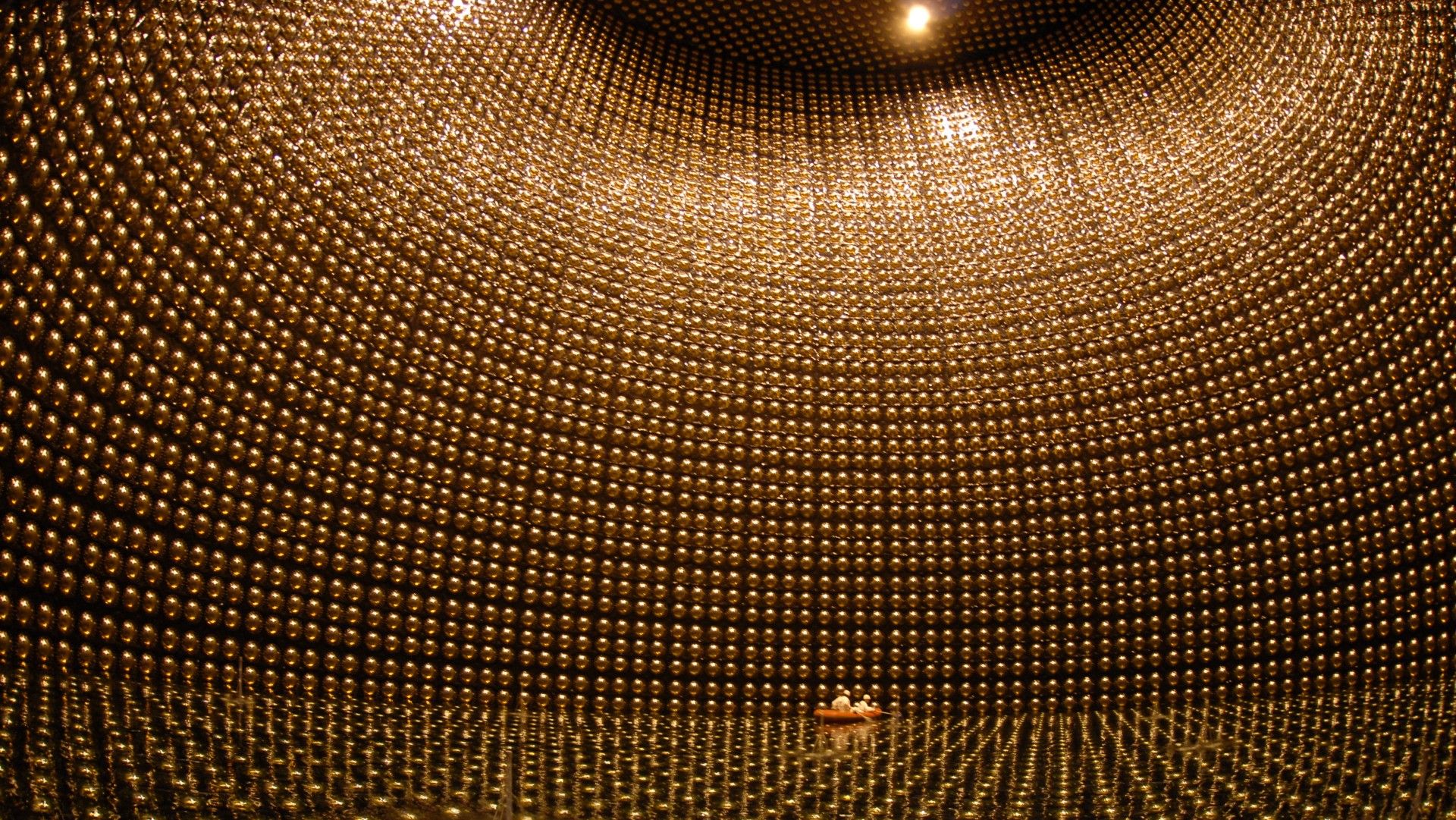
The Super-Kamiokande detector in Japan has been the global leader in this search. Recent upgrades incorporating gadolinium into the detector's water volume — which dramatically improves the ability to identify neutrons produced in inverse beta decay events — have brought the detector to within reach of sensitivity sufficient to observe the signal. Initial data from the upgraded detector have shown tantalizing hints consistent with the expected signal, though not yet at statistical significance sufficient for a definitive detection claim.
What Detection Would Reveal
A confident detection of the diffuse supernova background would yield several important physical measurements. The total intensity of the signal constrains the total cosmological supernova rate — how many stellar deaths have occurred per unit volume over cosmic history. The energy spectrum of the detected neutrinos provides information about the average properties of the stellar collapses that produced them: average progenitor mass, average collapse dynamics, and the fraction of collapses that produce black holes versus neutron stars.
These measurements bear on fundamental questions in stellar physics, cosmology, and the origin of elements. Supernovae are the primary source of most heavy elements in the universe — iron, nickel, and the full suite of elements synthesized in stellar nucleosynthesis and dispersed in supernova explosions. Understanding the rate and properties of past supernovae constrains models of galactic chemical evolution and ultimately the cosmic history of the conditions that made planetary systems like our own possible.
The Next Generation of Detectors
Super-Kamiokande's successor, Hyper-Kamiokande — a detector twenty times larger currently under construction in the same Japanese mine — will have sensitivity sufficient for a high-confidence detection within years of beginning operation. The Deep Underground Neutrino Experiment in the United States, using liquid argon technology, will complement water-based detectors with different sensitivity characteristics, particularly to the lower-energy part of the spectrum.
Together, these instruments represent a genuine step change in neutrino astrophysics capability. If the diffuse supernova background is detected as predicted, it will be the first direct measurement of the integrated history of massive star death across cosmic time — a cosmic census of stellar violence stretching back to epochs long before Earth existed, now made visible by instruments buried beneath mountains to listen for the quietest echoes of the universe's most violent events.
This article is based on reporting by Space.com. Read the original article.
Originally published on space.com