A failed Milky Way spectacle still led to a useful scientific question
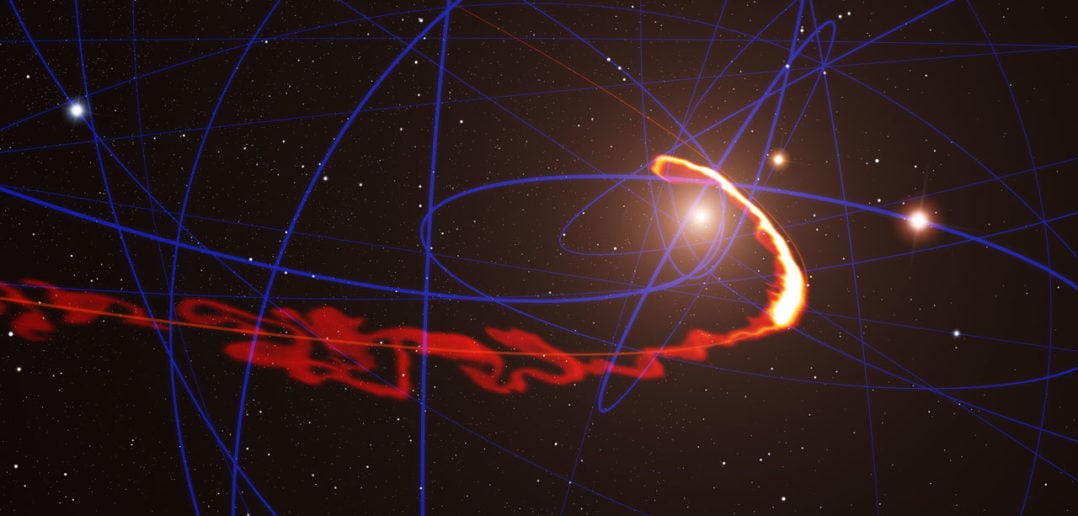
In 2014, astronomers watched closely as an object known as G2 made a close approach to Sagittarius A*, the supermassive black hole at the center of the Milky Way. Many expected fireworks. If the object had been pulled apart and swallowed more directly, the event might have generated a bright flare from material heating up around the black hole. Instead, as the supplied source text recounts, G2 survived the flyby and continued on a shortened orbit. The episode was scientifically valuable precisely because the anticipated outburst never arrived.
That mismatch between expectation and outcome helps frame new work from astronomers at Syracuse University and the University of Zurich. Their computer simulations aim to explain what determines whether a close stellar encounter with a supermassive black hole turns into a dramatic flare or a relative non-event.
Tidal disruption events are one of the few ways to study otherwise hidden black holes
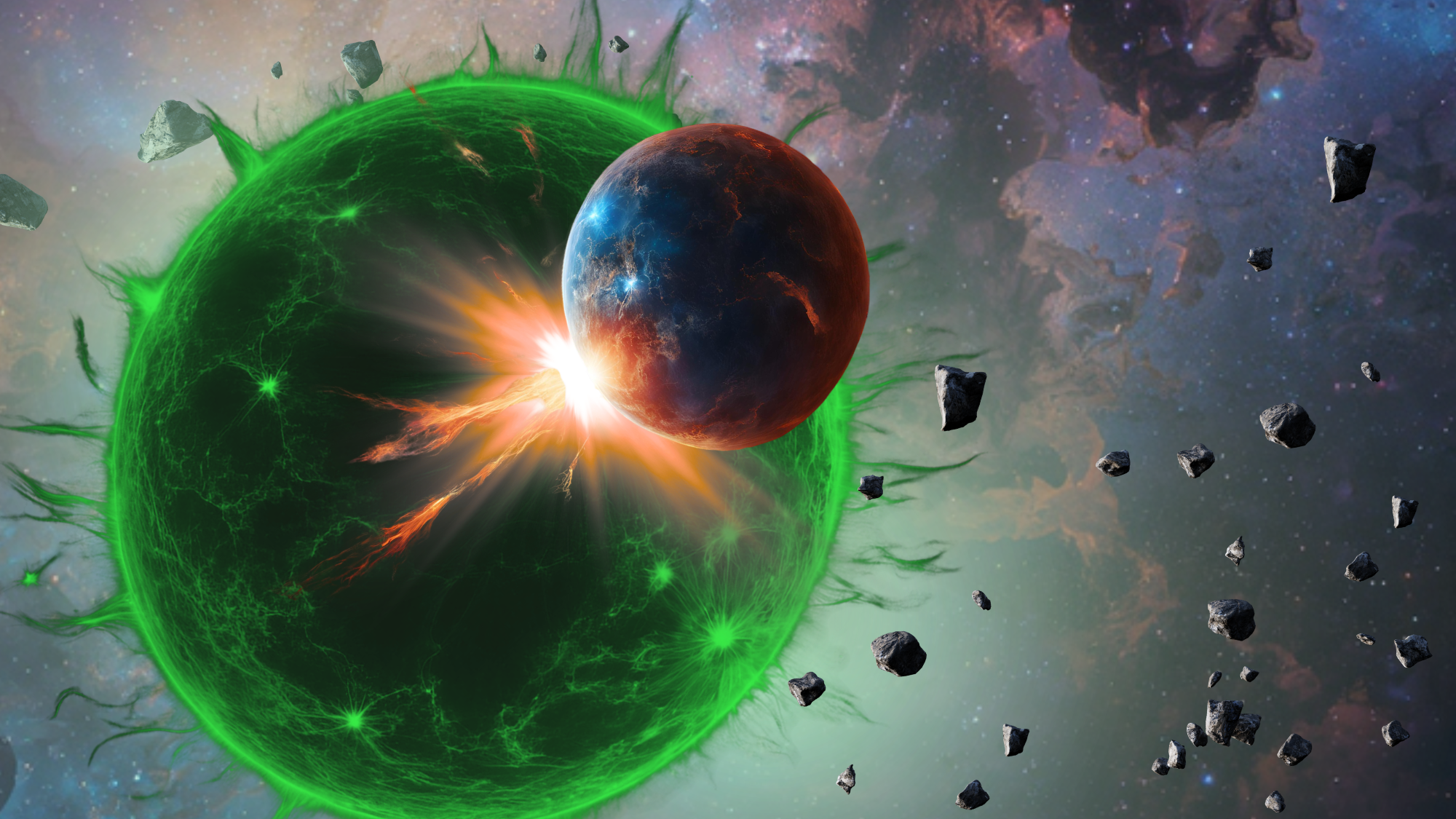
Supermassive black holes do not emit light directly, but the matter around them can. When a star is pulled into a destructive encounter, the process can create what astronomers call a tidal disruption event, or TDE. In the scenario described in the source text, the star is ripped apart as it spirals inward, and some of the debris forms an accretion disk around the black hole. Collisions and friction inside that debris heat the material until it shines intensely, in some cases brighter than the host galaxy itself.
That makes TDEs unusually important. They offer one of the clearest observational routes to studying black holes that would otherwise remain difficult to examine. Eric Coughlin of Syracuse University, quoted in the source material, says astronomers can use tidal disruption events to learn more about black holes hidden from view, including Sagittarius A* and similar objects in other galaxies.

The new result is about variation, not just spectacle
One of the enduring puzzles of TDEs is that no two look exactly the same. Some events produce spectacular flares. Others evolve differently in brightness, timing or structure. The new simulations described by Universe Today focus on this diversity. Rather than treating stellar disruption as a single standard process, the work tries to explain what physical conditions shape the resulting flare.
That matters because astronomy increasingly depends on matching observed light curves and spectra to detailed physical models. If researchers can understand why one close encounter creates a brilliant transient while another barely registers, they gain a stronger interpretive framework for data from surveys looking for short-lived cosmic events.
G2 helps show why not every close approach ends the same way
G2 is useful here because it appears not to have been a simple gas cloud. The supplied text says observations suggested it was more likely a dusty protostellar object wrapped in a dusty cloud, or perhaps several merged stars. That helps explain why the much-anticipated display never materialized when it passed Sagittarius A*.
In other words, the outcome of a black hole encounter depends not only on the black hole but also on the nature of the approaching object and the geometry of the encounter. A direct, destructive pass can generate luminous debris. A glancing or otherwise less vulnerable encounter may not. The new simulations appear designed to capture that complexity with higher resolution than simpler models.
Why this matters for galactic centers
Galactic nuclei are difficult places to study. They are crowded, energetic and often obscured. Yet they also hold supermassive black holes that shape galactic evolution in ways astronomers are still working to understand. If TDEs can briefly illuminate those environments, then understanding how they form becomes a significant tool in extragalactic astronomy.
The striking claim in the source material is that the heated debris from a disrupted star can shine more brightly than the galaxy hosting the black hole. That makes these events not only scientifically rich but observationally powerful. A galaxy that otherwise appears quiet can suddenly advertise the presence of an active feeding event at its core.
Because no two tidal disruption events are identical, simulation work that maps out the range of possible outcomes becomes especially valuable. It can help astronomers determine whether a flare’s shape, timing or intensity reflects the mass of the black hole, the structure of the star, or the orbital details of the encounter.
The broader lesson is that black holes are often revealed indirectly
Black hole research frequently advances by inference. Astronomers observe the behavior of nearby matter and reconstruct the unseen object driving it. Tidal disruption events fit that pattern perfectly. A star’s destruction becomes a brief beacon that exposes an otherwise invisible gravitational engine.
The G2 episode once felt like a missed opportunity. In retrospect, it helped clarify the problem: not every close pass produces the expected flare, and astronomers need better models to know why. The new simulations described here move that understanding forward by treating stellar destruction around supermassive black holes as a family of outcomes rather than a single script.
That is a useful shift. If future observations catch more stars being torn apart near hidden black holes, researchers will need robust models to decode what they are seeing. Studies like this are part of building that interpretive map.
This article is based on reporting by Universe Today. Read the original article.
Originally published on universetoday.com