Dark Skies and Bright Opportunities
The arrival of the new moon on February 17, 2026, brings with it the darkest nights of the month, offering stargazers and amateur astronomers their best window for observing the winter sky. With the moon's illumination reduced to zero, the faintest stars, the wispy arms of the Milky Way, and the subtle glow of deep sky objects all become more accessible to the naked eye and through telescopes alike.
February's long winter nights in the Northern Hemisphere provide extended observing windows, with astronomical darkness arriving early in the evening and lingering well into the morning hours. The crisp, cold air that characterizes late winter often brings excellent atmospheric transparency, reducing the haze and moisture that can obscure celestial objects during warmer months. For anyone looking to step outside with a pair of binoculars or a telescope, the days surrounding this new moon represent some of the best observing conditions of the entire year.
Planets on Parade
The planetary lineup for mid-February is remarkably generous. Saturn makes its appearance in the southwestern sky shortly after sunset, shining as a steady golden point of light that stands out against the darkening twilight. Look for it as early as 6:00 PM, where it will be the only bright "star" visible low in the southwest. Through even a modest telescope, Saturn's rings remain one of the most awe-inspiring sights available to backyard astronomers.
Jupiter dominates the evening sky, blazing brilliantly in the east and climbing higher as the night progresses. The gas giant is currently more than twice as bright as Sirius, the brightest star in the night sky, making it impossible to miss for anyone who glances upward after dark. A pair of binoculars will reveal Jupiter's four Galilean moons as tiny points of light flanking the planet, while a telescope shows the cloud bands that stripe its surface.
Venus, the perpetual showstopper of the evening sky, and Mercury both make appearances near the horizon around this time. The moon's passage near Venus, Mercury, and Saturn during the days surrounding the new moon phase creates a series of lovely conjunctions that are worth watching for, particularly in the early evening twilight.
- Saturn appears in the southwest after sunset, visible from approximately 6:00 PM
- Jupiter blazes in the eastern sky, more than twice as bright as Sirius
- Venus and Mercury are visible near the horizon in the evening twilight
- The moon passes near Venus, Mercury, and Saturn in sequence around the new moon date
- An annular solar eclipse occurs on February 17, visible from southern Africa, South America, and Antarctica
Winter Constellations at Their Best
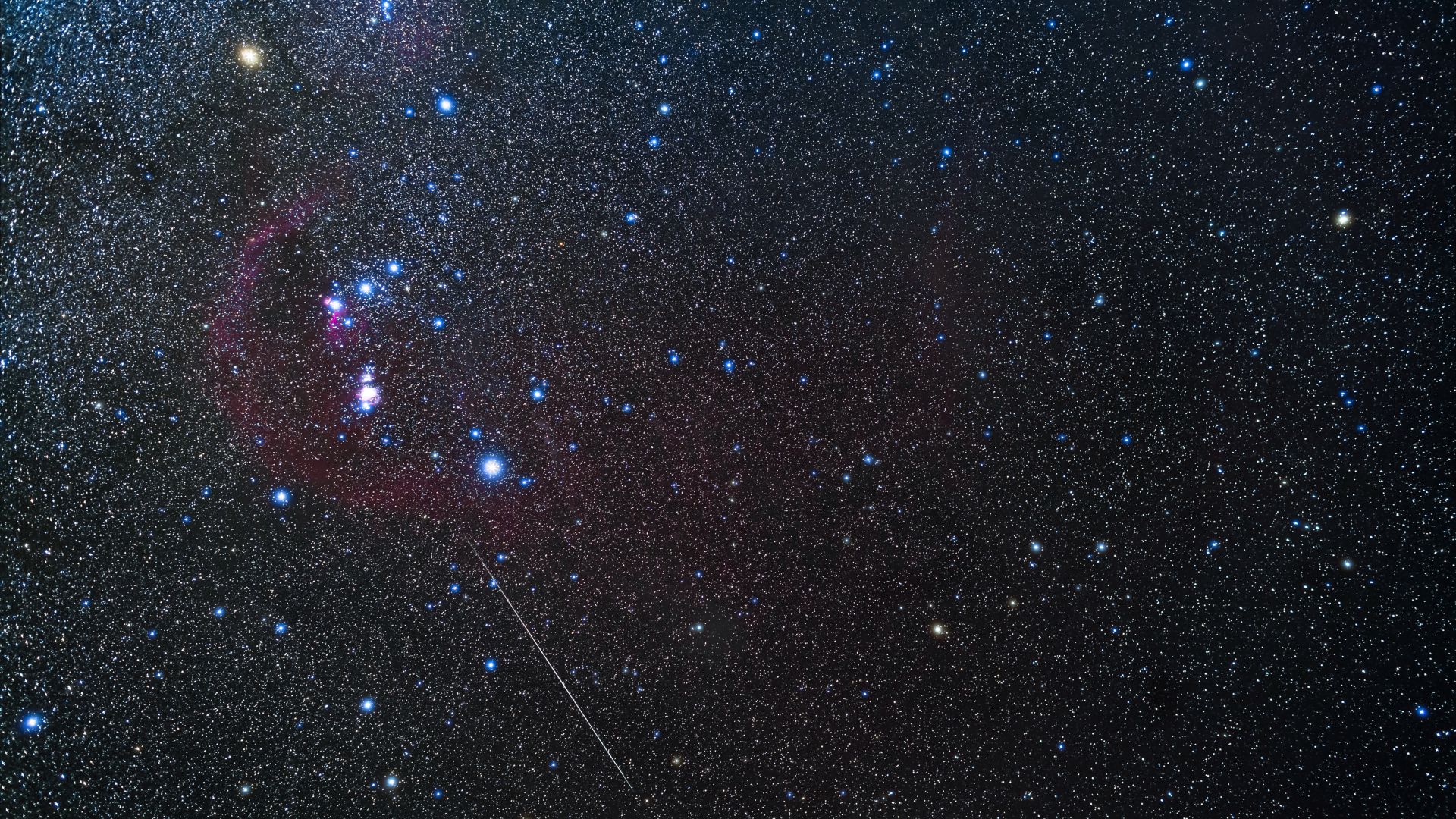
The dark skies around the new moon are perfect for exploring the grand winter constellations, which are among the most recognizable and impressive star patterns visible from Earth. Orion the Hunter commands center stage, striding across the southern sky with his distinctive three-star belt, the brilliant blue-white star Rigel at his foot, and the ruddy supergiant Betelgeuse marking his shoulder.
Orion serves as a cosmic signpost, pointing the way to many of the winter sky's other highlights. Follow the line of his belt downward and to the left to find Sirius, the brightest star in the night sky, blazing with an intense blue-white light in the constellation Canis Major. Extend the belt line upward and to the right to locate Aldebaran, the angry red eye of Taurus the Bull, and beyond it the delicate star cluster of the Pleiades.
Gemini the Twins stands high in the sky, marked by its two bright stars Castor and Pollux, which serve as the heads of the twin brothers of Greek mythology. Auriga the Charioteer, dominated by the brilliant yellow star Capella, sits nearly overhead for Northern Hemisphere observers, making it easy to locate on any clear evening.
Deep Sky Treasures
The absence of moonlight makes February's new moon period ideal for hunting deep sky objects, the galaxies, nebulae, and star clusters that require dark skies to appreciate fully. Orion alone contains some of the most impressive deep sky targets in the entire sky.
The Orion Nebula, located in the sword hanging from Orion's belt, is visible to the naked eye as a fuzzy patch of light. Through binoculars or a telescope, it reveals itself as a vast cloud of glowing gas where new stars are being born. It is one of the most photographed objects in the sky and never fails to impress, even through modest equipment.
The Pleiades star cluster in Taurus, also known as the Seven Sisters, is another spectacular target for binoculars. While the naked eye can typically discern six or seven stars in the cluster, binoculars reveal dozens more, along with hints of the nebulosity that surrounds the brightest members. The Beehive Cluster in Cancer, the Double Cluster in Perseus, and the rich star fields of the Milky Way running through Monoceros and Puppis are all enhanced by the dark skies that the new moon provides.

An Eclipse for the Southern Hemisphere
While Northern Hemisphere observers focus on nighttime viewing, the February 17 new moon also produces an annular solar eclipse visible from the southern portions of Africa and South America, as well as Antarctica. During an annular eclipse, the moon passes directly in front of the sun but does not completely cover it, leaving a brilliant ring of sunlight, known as the "ring of fire," visible around the moon's silhouette.
Observers along the path of annularity will witness this dramatic spectacle, while those in surrounding regions will see a partial solar eclipse with a significant portion of the sun's disk obscured by the moon. For anyone traveling in southern Africa or South America during this period, the eclipse represents a once-in-a-lifetime viewing opportunity that is well worth planning for.
Tips for Getting the Most Out of Your Observing Session
To take full advantage of the dark skies, allow at least 20 to 30 minutes for your eyes to fully adapt to the darkness after stepping outside. Avoid looking at your phone or any bright lights during this adaptation period. If you need illumination, use a red-filtered flashlight, which preserves your night vision much better than white light.
For planetary observing, start early in the evening when Saturn is still above the horizon and work your way through the targets as they rise and set throughout the night. Jupiter is best observed when it reaches its highest point in the sky, where atmospheric turbulence is minimized and fine detail on the planet's surface becomes easier to discern.
Whether you are a seasoned astronomer or someone simply curious about what is up there, the February new moon offers a welcoming invitation to look up. The universe is always overhead, but during these darkest nights of the month, it puts on its finest display for anyone willing to step outside and pay attention.
This article is based on reporting by Space.com. Read the original article.

Originally published on space.com