Two Coasts, One Constellation
SpaceX operates from two primary launch sites on opposite coasts of the United States, and understanding why requires a brief excursion into orbital mechanics. The trajectory a rocket can fly from any given launch site is constrained by the Earth's rotation and by the need to avoid flying over populated areas during ascent. These constraints determine what orbital inclinations — the angle of the orbit relative to the equator — each site can efficiently reach.
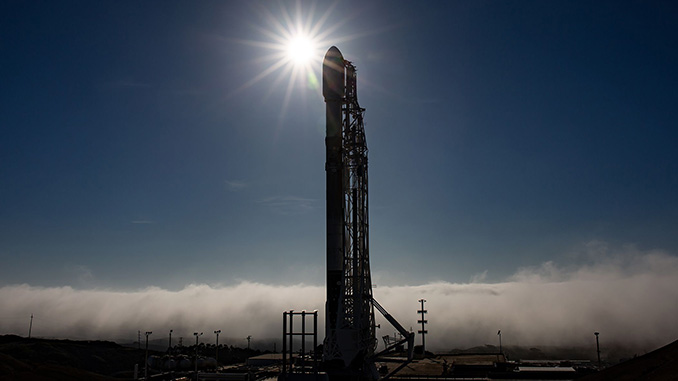
Cape Canaveral, on Florida's east coast, is optimized for lower-inclination orbits providing strong coverage of equatorial and mid-latitude regions. Vandenberg Space Force Base, on California's central coast, launches to higher-inclination polar and sun-synchronous orbits that provide coverage of polar regions and pass over every point on Earth as the planet rotates beneath them.
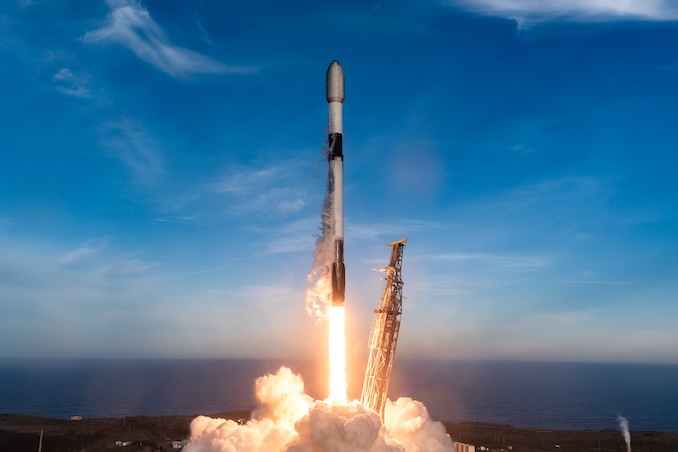
For Starlink's global coverage ambitions, both orbital regimes matter. The Starlink 17-31 mission from Vandenberg carried 25 Starlink V2 Mini satellites into a high-inclination shell that fills coverage gaps at higher latitudes that lower-inclination satellites leave.
The Significance of Polar Coverage
Polar orbital coverage is especially important for certain Starlink customer segments. Arctic shipping routes — increasingly traversed as sea ice retreat opens new pathways — require connectivity at latitudes where geostationary satellites are poorly positioned. Scientific research stations in Antarctica and the High Arctic have become among Starlink's most enthusiastic adopters, finally gaining reliable high-bandwidth internet after years of intermittent service.
Aviation connectivity over the North Pole, used by transpolar flights between North America and Asia, is another segment where Vandenberg-launched satellites provide coverage that Cape Canaveral launches cannot. As Starlink Aviation rolls out across airline fleets, polar coverage becomes commercially significant at scale.

The Vandenberg Operation
SpaceX's Vandenberg operations have matured considerably since the site's first Starlink launches in 2020. The pad 4 East launch complex has been upgraded to support Falcon 9's high cadence, with infrastructure for rapid booster turnaround similar to what exists at Cape Canaveral. When both sites are active simultaneously — which is increasingly common — SpaceX can deploy satellites into multiple orbital shells within days of each other, filling coverage gaps in a way that a single launch site could never achieve.
V2 Mini Satellites: What's Changed
The 25 satellites carried by this Vandenberg mission are Starlink V2 Mini — significantly more capable than the original Starlink design. Each satellite carries more powerful phased-array antennas, improved inter-satellite laser links for routing traffic between satellites, and enhanced propulsion for precise orbit management.
The laser links have transformed Starlink's technical architecture. Rather than requiring traffic to reach a ground station before routing to other satellites, V2 Mini satellites can pass data directly between each other in space, reducing latency and allowing service in regions without nearby ground stations. This is especially relevant for maritime and aviation applications where the nearest ground terminal may be thousands of kilometers away.
Global Coverage Status
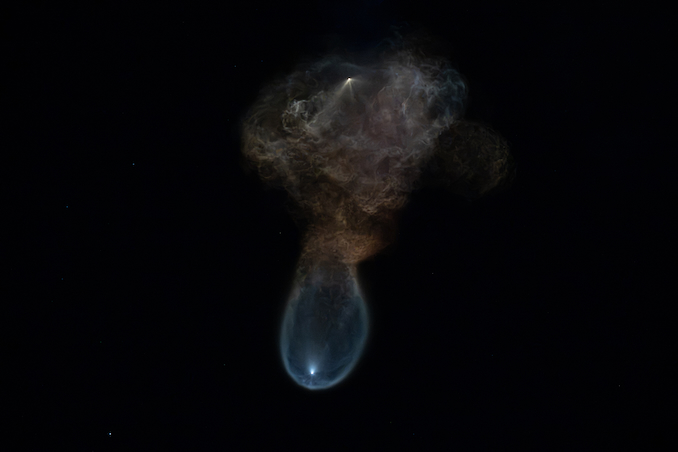
With the addition of the Starlink 17-31 satellites, the constellation continues to close remaining coverage gaps. SpaceX has achieved global coverage for most use cases, but continues launching additional satellites to increase capacity density over high-demand areas and to provide redundancy that improves reliability.
The combination of Cape Canaveral launches serving mid-latitude markets and Vandenberg launches serving polar customers represents a genuinely global strategy — one that has taken years to build but now delivers meaningful connectivity to people and operations that previously had no viable alternative.
This article is based on reporting by Spaceflight Now. Read the original article.
Originally published on spaceflightnow.com