SpaceX schedules another Starlink launch from California
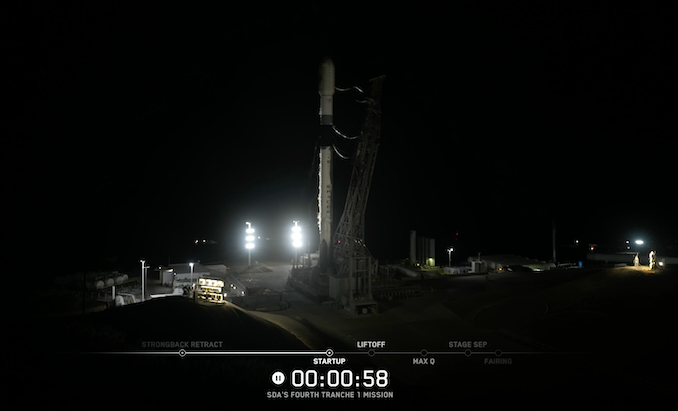
SpaceX is preparing to launch 27 Starlink satellites aboard a Falcon 9 rocket from Vandenberg Space Force Base in California. The mission, designated Starlink 15-25, is scheduled to lift off from Space Launch Complex 4 East at 5:28 p.m. Pacific Daylight Time on Monday, according to Spaceflight Now.
The planned launch time corresponds to 8:28 p.m. Eastern Daylight Time and 0028 UTC. The rocket is set to fly southward along the California coast toward an orbit inclined 70 degrees to the Equator.
Booster set for its 20th flight
The Falcon 9 first stage assigned to the mission is booster B1088. If it launches as planned, the flight will be the booster’s 20th mission.
B1088 has previously supported missions including NROL-126, Transporter-12, SPHEREx, NROL-57 and USSF-366, along with 14 prior Starlink launches. Reusing the booster for a 20th time would add another flight to its operating history.
After stage separation, SpaceX plans to recover the first stage on the drone ship Of Course I Still Love You. The landing is expected nearly eight and a half minutes after liftoff.
Satellite deployment planned about an hour after liftoff
The payload consists of 27 Starlink V2 Mini Optimized satellites. SpaceX plans to deploy them into an orbit about 266 kilometers above Earth a little more than an hour after launch, assuming the mission proceeds as planned.
The flight is another deployment mission for Starlink, SpaceX’s satellite network. Its trajectory and deployment target are specified for this launch, while the recovery attempt will take place at sea on the company’s autonomous drone ship.
Mission at a glance
- Launch site: Space Launch Complex 4 East, Vandenberg Space Force Base, California
- Scheduled liftoff: 5:28 p.m. PDT Monday
- Payload: 27 Starlink V2 Mini Optimized satellites
- Target orbit: 266 kilometers high, inclined 70 degrees
- Booster: Falcon 9 B1088, on its 20th planned flight
- Recovery: Drone ship Of Course I Still Love You
Spaceflight Now said it would begin live coverage roughly 30 minutes before the scheduled launch time.
This article is based on reporting by Spaceflight Now. Read the original article.
Originally published on spaceflightnow.com