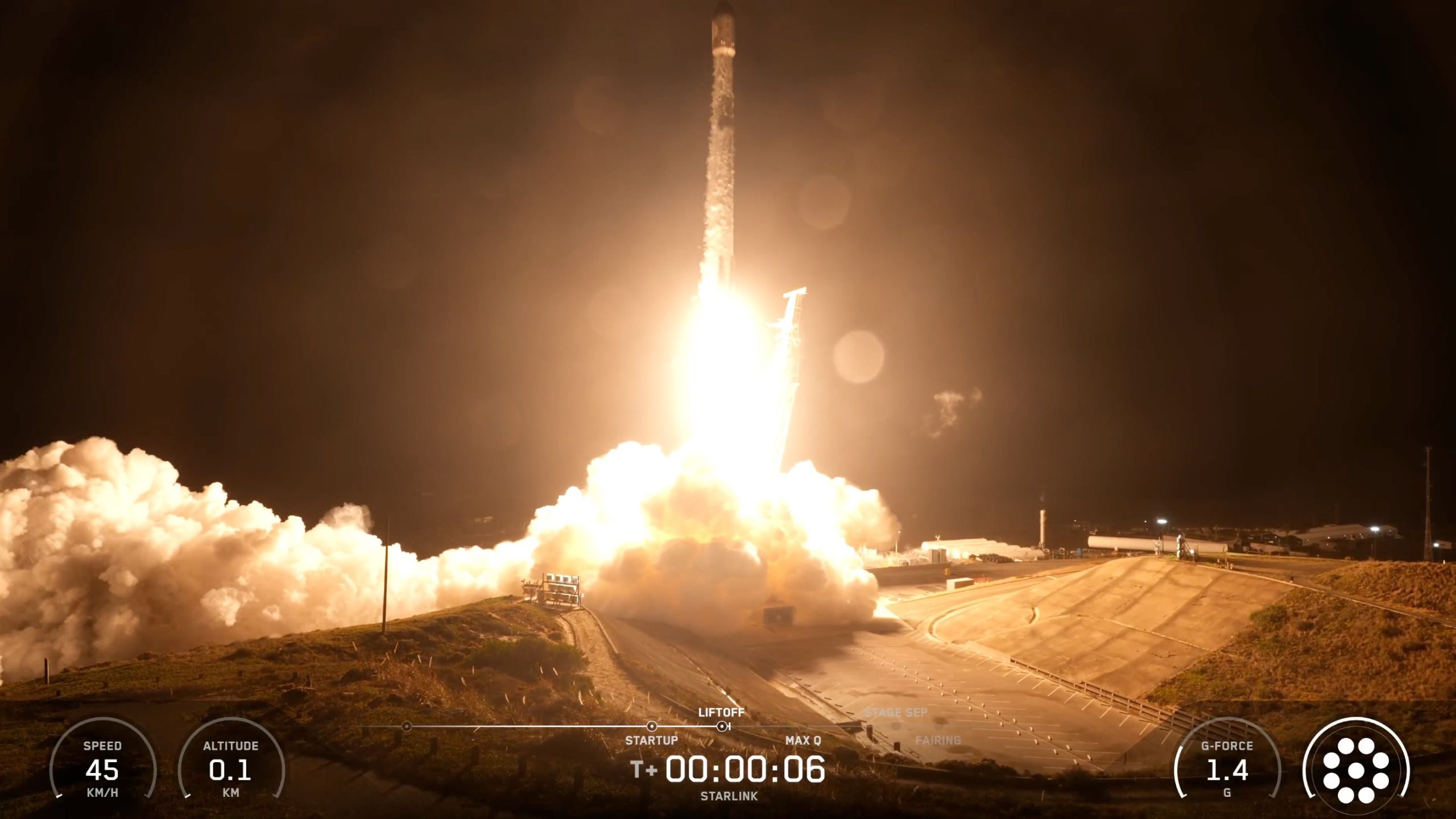
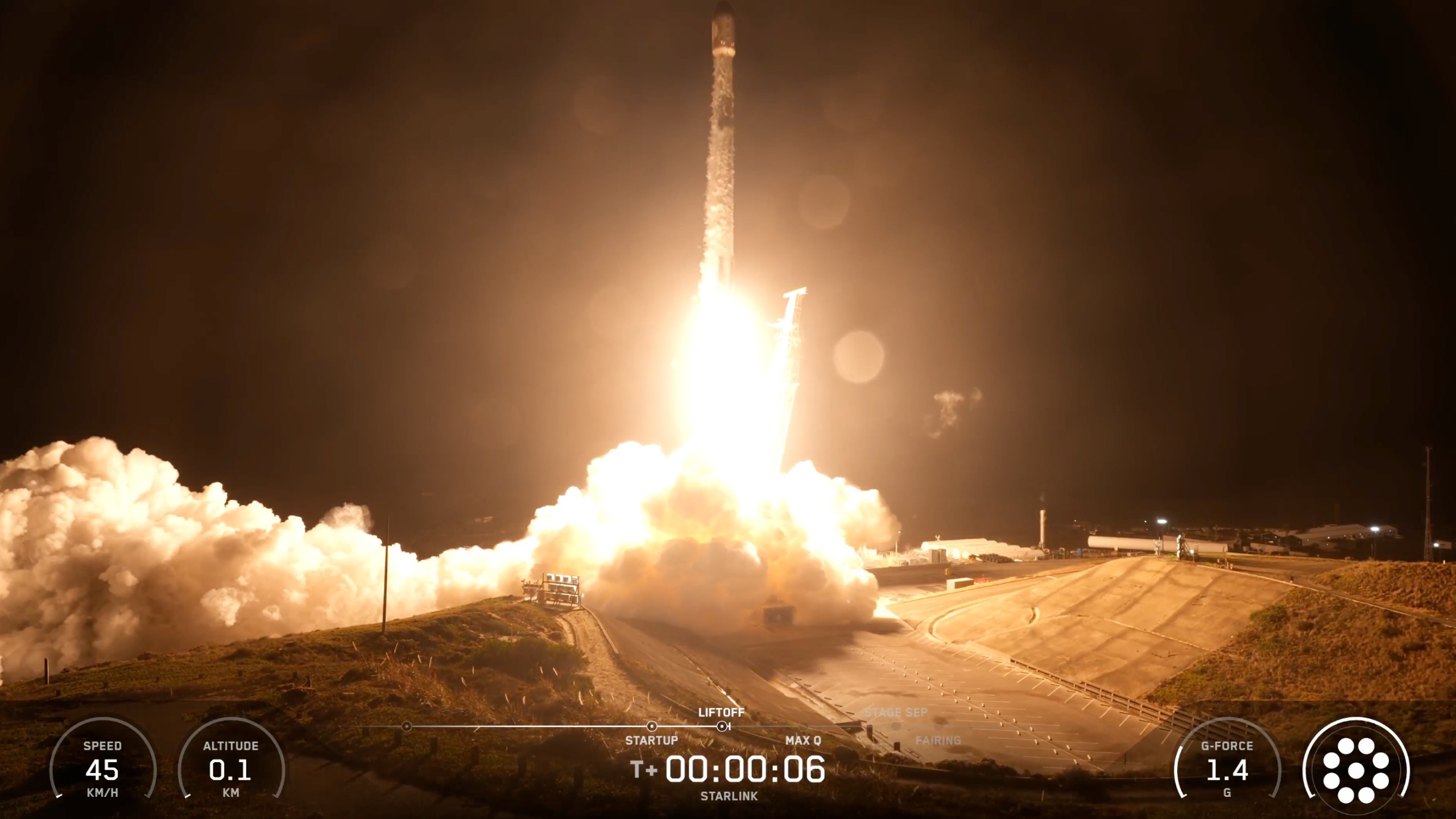
SpaceX launched 27 Starlink internet satellites from California in the opening minutes of Oct. 31, adding to the company’s already vast low Earth orbit communications network and extending an exceptionally busy year for its Falcon 9 rocket.
The Falcon 9 lifted off from Vandenberg Space Force Base at 12:04 a.m. EDT, or 9:04 p.m. on Oct. 30 local time in California. The mission carried the satellites to low Earth orbit, the region of space used by the Starlink constellation to provide broadband service.
A routine mission at extraordinary scale
The launch illustrates the scale and cadence SpaceX has reached with its reusable launch system. It was the company’s 118th Falcon 9 flight of 2026, according to Space.com. More than 70% of those Falcon 9 missions this year have been dedicated to building out Starlink.
That concentration of launches shows that Starlink is not simply one payload customer among many. It has become the principal driver of Falcon 9 activity, using frequent missions to deploy new satellites and expand the density of the network in orbit.
The 27 spacecraft launched on this flight are joining a megaconstellation that already comprises more than 11,000 satellites. Space.com described it as the largest satellite network ever assembled. The total also helps put the operational challenge into perspective: constellation deployment is no longer centered on isolated launches, but on repeated missions that each add a relatively standardized group of satellites.

Booster returns to a Pacific drone ship
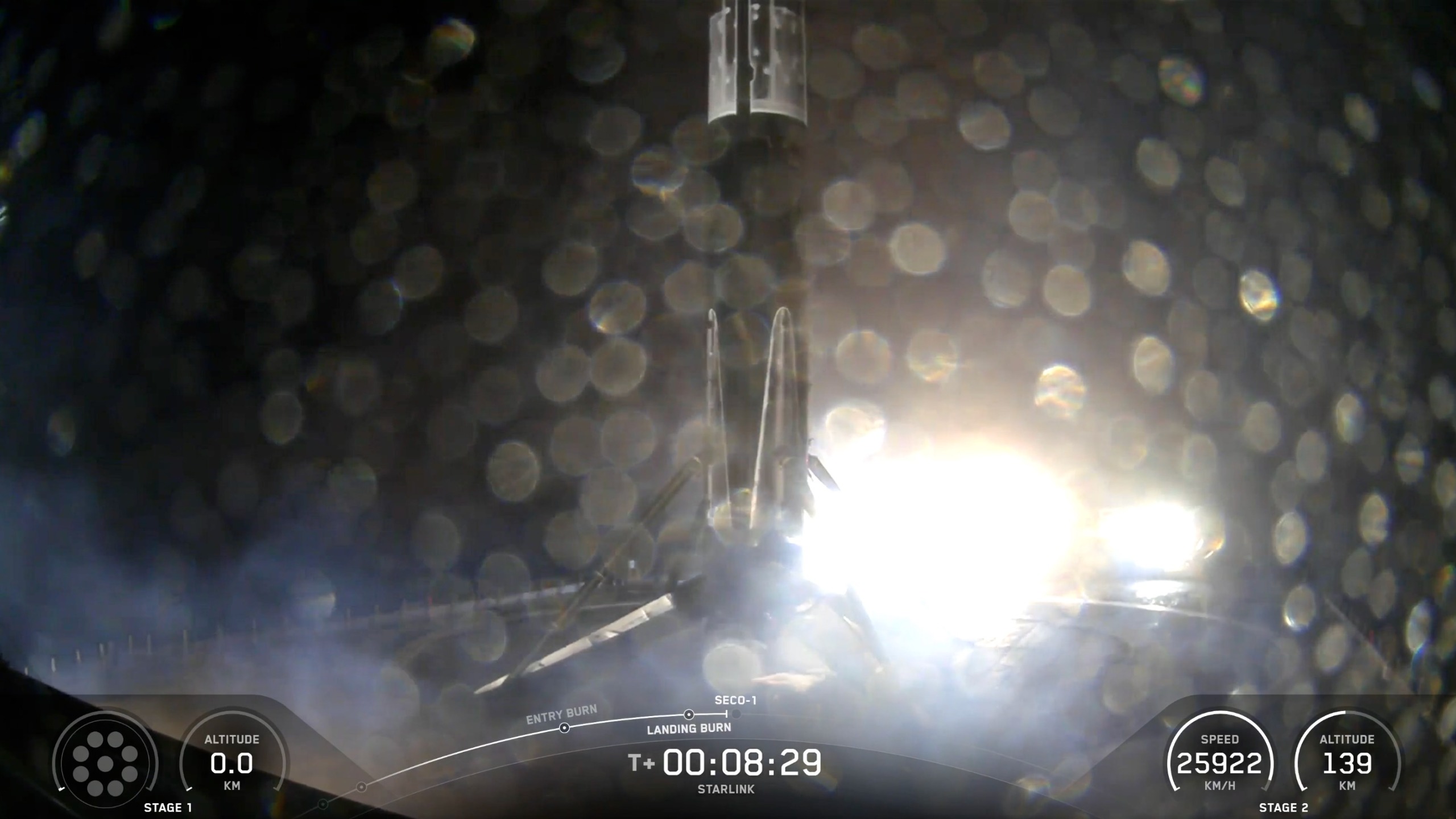
After sending the upper stage and its payload on their way, Falcon 9’s first stage returned to Earth as planned. The booster landed about eight and a half minutes after liftoff on the drone ship Of Course I Still Love You, stationed in the Pacific Ocean.
The recovered first stage, designated B1093, was making its 18th flight. Reflight is central to SpaceX’s ability to maintain a high launch tempo, because returning the first stage reduces the need to build a new booster for every mission. A landing at sea is a familiar end to missions from Vandenberg, whose launch trajectories often carry vehicles over the Pacific.
Even against SpaceX’s own standards, B1093’s flight history highlights the maturity of the fleet. The company’s current first-stage reuse record is 37 flights, held by booster B1067 and set in August. B1093 has therefore completed fewer than half as many flights as the record-holder, but its 18 missions still represent extensive operational reuse for an orbital rocket.
Deployment completed about an hour after liftoff
The Falcon 9 upper stage completed the mission by deploying all 27 satellites into low Earth orbit about 62 minutes after launch. With the satellites released, the mission’s major objectives were complete: launch, booster recovery and payload deployment.
For the public, Starlink launches can appear repetitive because their immediate goal is often similar from flight to flight. But the repetition is the point. A large low-orbit network depends on many satellites, and operators must keep building and sustaining that network over time. Each launch contributes another set of spacecraft to the wider system.
The California mission also came during a year in which SpaceX has flown more than Falcon 9. The company has launched Falcon Heavy three times in 2026 and has also flown Starship three times. Falcon Heavy is an operational vehicle, while Starship remains in its test-flight phase. SpaceX is preparing for another Starship launch expected sometime in November.
What the launch signals
The immediate significance of this mission is straightforward: 27 more Starlink satellites are now in orbit, and a booster completed another successful recovery. Its broader significance lies in the operational model behind it. The Falcon 9 program is supporting an unusually high rate of launches while repeatedly returning first stages for future use.
That model has allowed SpaceX to make Starlink deployment a regular, high-volume activity rather than a sequence of occasional expansion missions. The Oct. 31 launch was one more increment in that process, but it was also the 118th Falcon 9 mission of the year—a figure that underscores just how industrialized orbital launch operations have become.
As SpaceX prepares for its next Starship test flight, Falcon 9 remains the company’s active workhorse. The Halloween launch from Vandenberg showed that the established system continues to carry the bulk of the company’s near-term launch activity, particularly the continuing buildout of the Starlink constellation.
This article is based on reporting by Space.com. Read the original article.
Originally published on space.com