Falcon 9 sends NASA cargo mission toward the ISS
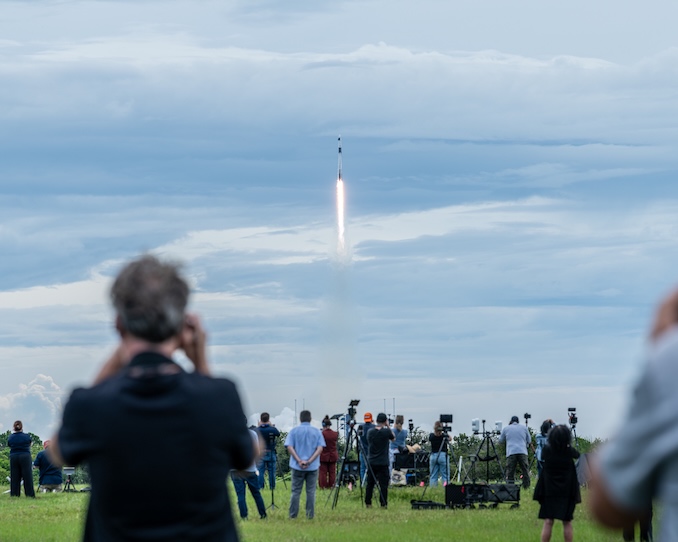
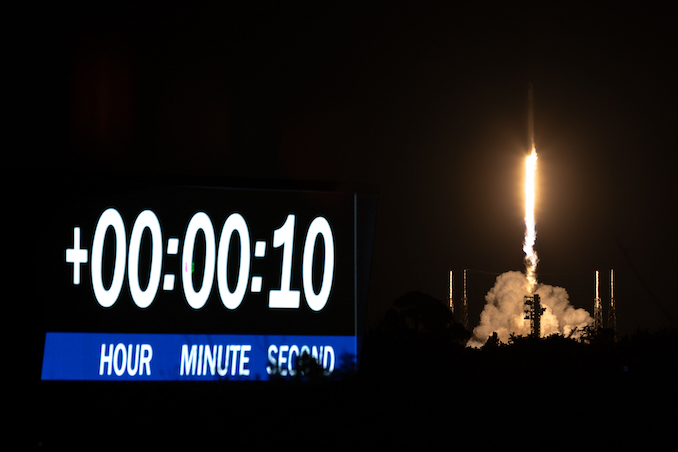
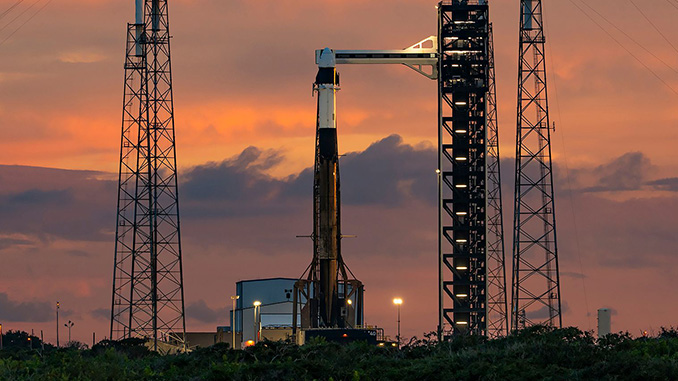
SpaceX launched NASA’s CRS-35 cargo mission to the International Space Station on October 13, sending more than 6,300 pounds of science and supplies toward the orbiting laboratory. The Falcon 9 lifted off from Space Launch Complex 40 at Cape Canaveral Space Force Station at 6:33 a.m. EDT, or 1033 UTC, in a sunrise launch.
The mission is SpaceX’s 35th flight for NASA under the Commercial Resupply Services 2 contract. After reaching orbit, the Cargo Dragon spacecraft separated from Falcon 9’s upper stage and began its planned two-day trip to the station. It is scheduled to dock on Thursday morning at the space-facing port of the Harmony module.
Routine cargo flights are an essential part of operating the International Space Station, supplying crew provisions, research hardware and equipment needed to maintain the outpost. CRS-35 also carries a payload with long-term consequences for the station’s electrical system: the fourth and final pair of Roll-Out Solar Arrays, known as ROSAs.
The final pair of Roll-Out Solar Arrays
Two ROSA wings were carried in Dragon’s unpressurized trunk. Built by Redwire Space, they are intended to augment the station’s existing power generation. Spaceflight Now reported that each array can provide more than 20 kilowatts of power for more than 10 years.
The delivery completes the final pair of ROSAs bound for the ISS. NASA has been preparing for their installation through a series of spacewalks. The arrays are being added to an orbital complex that has been continuously inhabited for decades and whose original power system was not designed around straightforward, standardized upgrades.
Gaurang Patel, NASA’s operations integration manager for the agency’s Low Earth Orbit Program, described the long path from an earlier technology demonstration to the ISS upgrade effort. NASA flew a ROSA demonstration on CRS-11 in 2017. Once that approach had been proven, teams worked on adapting it for the station’s existing hardware.
According to Patel, the legacy ISS arrays did not have standard provisions for upgrades. NASA teams therefore had to develop modification kits and address non-standard interfaces so the new arrays could be mounted safely. The work is a reminder that extending the useful life of an aging space station often depends on tailored engineering as much as on new hardware.
Why additional solar power matters
Electrical power supports nearly every major activity aboard the ISS, from life-support systems and communications to scientific experiments and the charging of equipment. The new arrays will add capacity alongside the station’s legacy solar arrays rather than simply replacing the infrastructure around them.
The rollout design is central to their usefulness. ROSA was developed as a deployable solar-array approach, and the ISS mission shows how a technology first tested in orbit can become part of an operational upgrade program. NASA’s plan to install multiple pairs of the arrays has made the system one of the most visible examples of maintaining and modernizing the station while it remains occupied and in service.
The technology also has a role beyond low Earth orbit. Spaceflight Now reported that a version of ROSA is planned to help power NASA’s Space Reactor 1 Freedom, or SR-1 Freedom, when that mission launches in 2028. That link gives the ISS hardware program added significance as a demonstration of technology that may support future space systems.
Booster returns after eighth flight
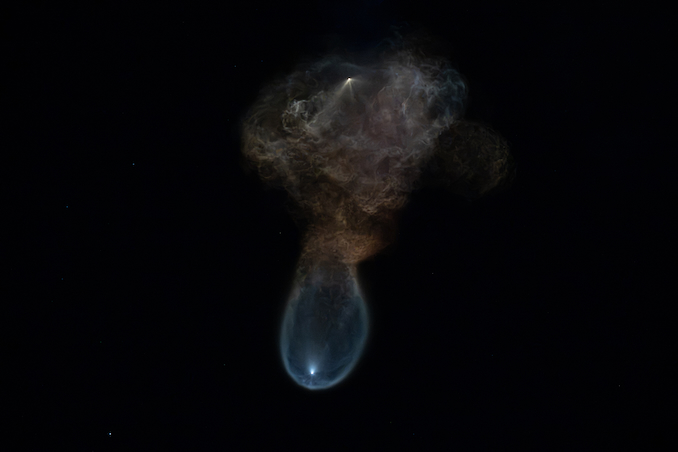
Falcon 9’s first stage, identified as booster B1096, completed its eighth flight with a landing at Landing Zone 40 near the launch site. The booster touched down fewer than 7.5 minutes after liftoff. Its return produced a sonic boom heard across the spaceport and beyond, according to Spaceflight Now.
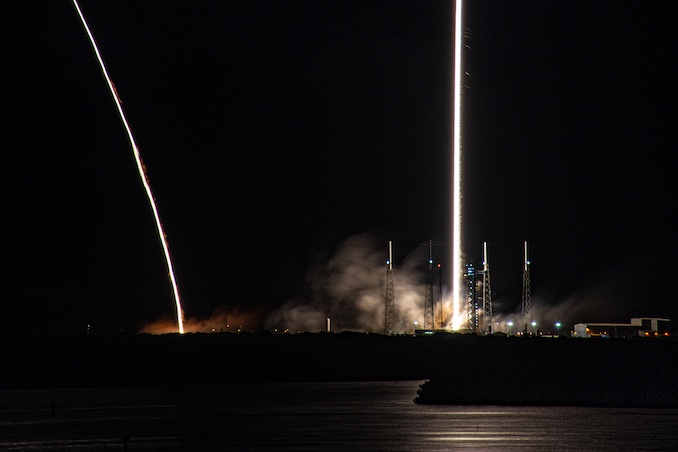
Meanwhile, Cargo Dragon C211 separated from the upper stage about two minutes after the booster landing and continued toward the ISS. The sequence highlights the operational rhythm SpaceX has established for cargo missions: launch a Dragon spacecraft to orbit, recover the first-stage booster for future use and send the capsule on a rendezvous trajectory toward the station.
Reusable boosters have become a defining part of this cargo-service model. The eighth flight of B1096 is not the central payload achievement of CRS-35, but it shows how repeated use of a launch vehicle is now integrated into NASA’s contracted resupply operations.
A mission built around operations and research
CRS-35 combines several layers of ISS work. The more than 6,300 pounds of cargo includes science and supplies required for day-to-day station operations. The solar arrays add a major piece of infrastructure intended to support the station over a longer period. And the planned installation will require the coordination of spacecraft operations, robotic systems and astronaut spacewalk activity.
The mission’s expected Thursday docking will mark the start of that next phase. Arriving cargo must be transferred and prepared for use, while the large arrays in Dragon’s trunk will await their deployment and installation. The station’s crew and ground teams will be working within an orbital platform that cannot simply be taken offline for an upgrade.
For NASA, the final ROSA pair represents the culmination of an incremental power-upgrade campaign rooted in a 2017 demonstration. For SpaceX, the launch adds another mission to its long-running Commercial Resupply Services record. And for the ISS, it is a practical investment in keeping a complex, decades-old laboratory supplied and powered for the work ahead.
This article is based on reporting by Spaceflight Now. Read the original article.
Originally published on spaceflightnow.com