Seeing More of the Sun Before It Turns Toward Earth
For decades, solar scientists have had an incomplete picture of the Sun’s far side. Active regions could emerge there, sunspots could form, and eruptions could begin building toward flares or coronal mass ejections long before any of it rotated into direct view from Earth. Helioseismology changed that by letting researchers infer hidden activity from sound waves moving through the Sun. But one important property remained difficult to recover: magnetic polarity.
Now researchers led by Amr Hamada of the National Solar Observatory say they have found a way to extract that missing information from helioseismic maps produced through NOAA’s Global Oscillation Network. The result is a polarity-resolved view of far-side active regions, potentially giving forecasters a more useful early warning signal for space weather.
Why Polarity Matters
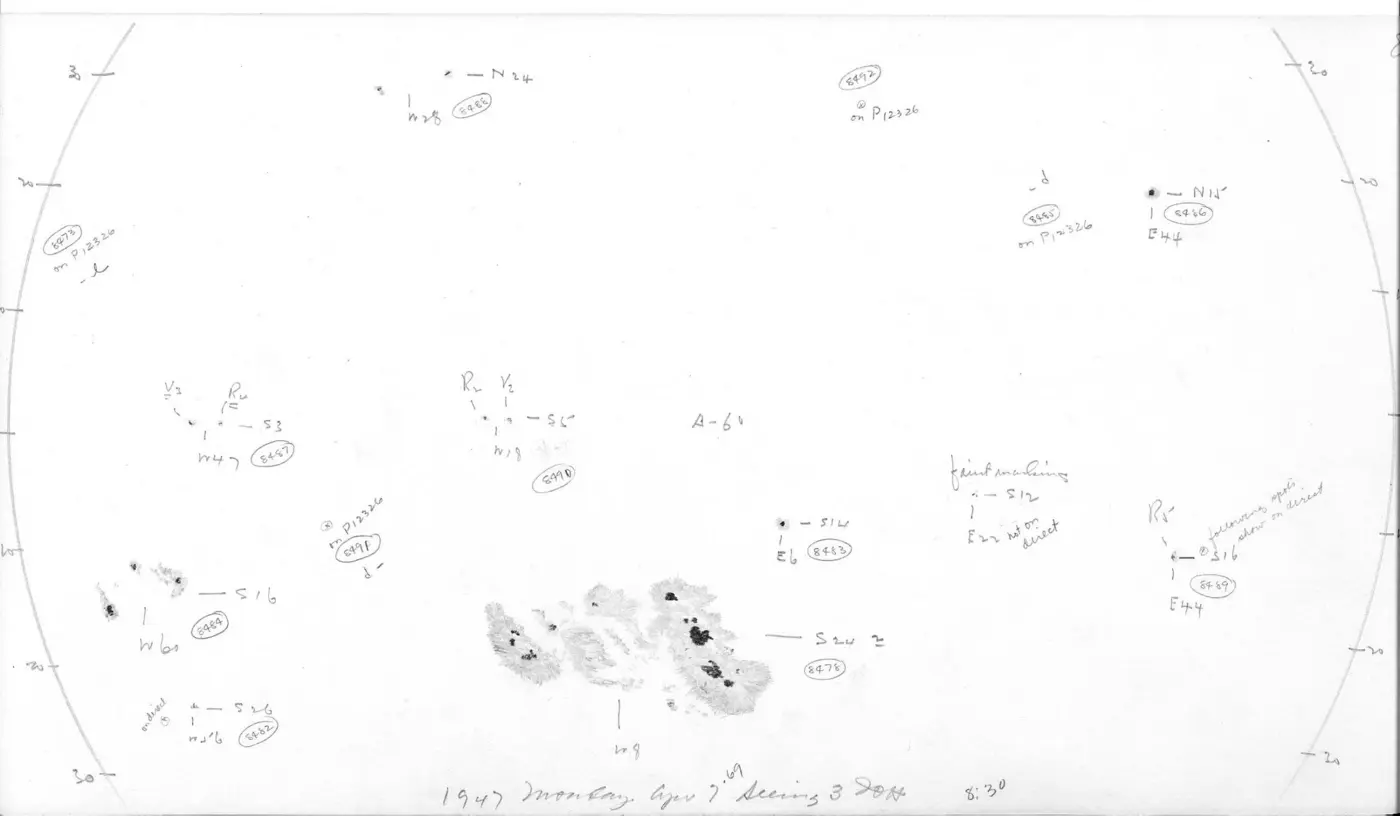
Magnetic polarity is central to solar behavior. The Sun’s visible surface is shaped by magnetic fields that concentrate in sunspots and help drive eruptions such as flares and coronal mass ejections. To predict solar activity more accurately, scientists need more than the location of an active region. They also need to understand the structure of the magnetic field within it.
That is what makes the new step important. Helioseismology had already allowed scientists to detect where active regions existed on the far side. According to Hamada, what researchers lacked until recently was the ability to determine one of the most important characteristics of those regions: the polarity of their magnetic field.
Using Sound Waves to Recover Hidden Magnetism
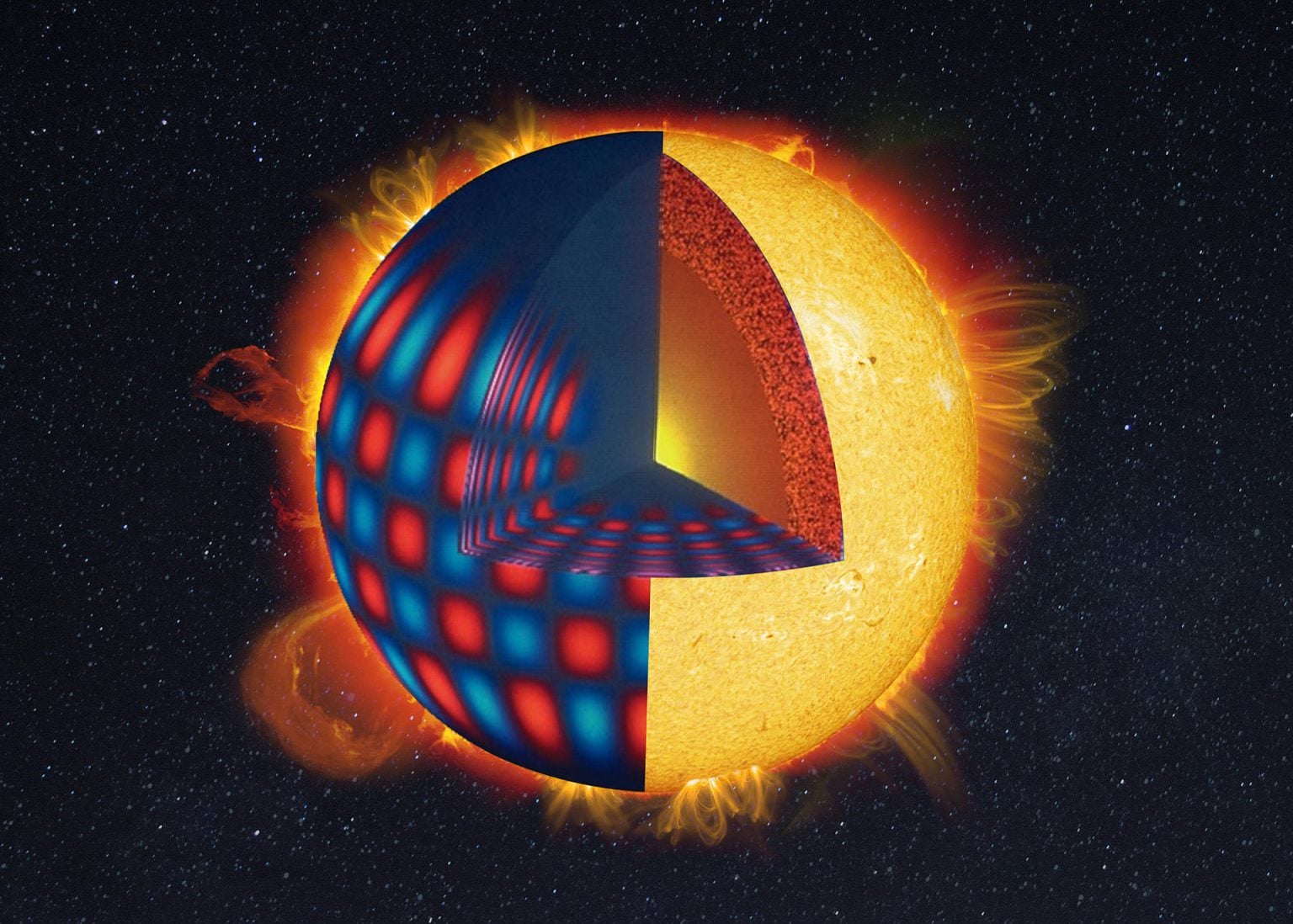
The underlying technique still starts with helioseismology. Scientists analyze sound waves influenced by activity inside the Sun as those waves echo through the star. Far-side active regions leave signatures in those wave patterns. The new work adds a method for analyzing phase shifts in those fields and assigning magnetic polarity to far-side sunspots.
The source report describes a workflow in which helioseismic phase-shift signals are isolated, converted into unsigned magnetic-field values, and then paired with a polarity assignment. The approach was compared with observations from Solar Orbiter’s Polarimetric and Helioseismic Imager, offering an important observational anchor for the reconstruction.
Forecasting Benefits Could Be Immediate
The practical consequence is better advance notice. Instead of waiting for a magnetically complex region to rotate into Earth-facing view, forecasters may be able to estimate its structure earlier. That could improve preparedness for solar events that affect satellites, communications, navigation, and power systems.
Space weather forecasting depends heavily on lead time. Even a modest improvement in understanding what is happening on the far side of the Sun can matter if it gives operators time to prepare for stronger activity. By adding polarity information rather than just presence detection, the new method could make far-side monitoring more actionable.

A Step Toward a Deeper Solar Puzzle
The work also feeds back into basic solar physics. Scientists still do not know with certainty where the Sun’s overall magnetic field is generated. It may arise near the surface or much deeper inside the star. What researchers can observe directly is the active surface, where localized magnetic fields appear as sunspots and power explosive events.
That makes every new window into solar magnetism valuable. A more complete reconstruction of far-side magnetic behavior can help researchers test ideas about how magnetic structures evolve across the solar cycle and how they connect to visible eruptions. In that sense, the forecasting benefit and the fundamental science are linked.
From Hidden Activity to Earlier Decisions
The Sun’s far side is no longer as hidden as it once was, but it has remained partly unreadable. This new polarity analysis appears to reduce that blind spot. It does not mean scientists can observe the hidden hemisphere as directly as the Earth-facing side. It does mean they can extract more meaningful physical information from the signals they already have.
That shift reflects a broader trend in astronomy and space science: extracting more insight from indirect measurements by combining better instruments with smarter analysis. In the case of the Sun, the payoff is unusually practical. Every improvement in understanding magnetic activity is also an improvement in civilization’s ability to anticipate disruptions from the star that powers it.
This article is based on reporting by Universe Today. Read the original article.
Originally published on universetoday.com