Routine Mission, Irreplaceable Role
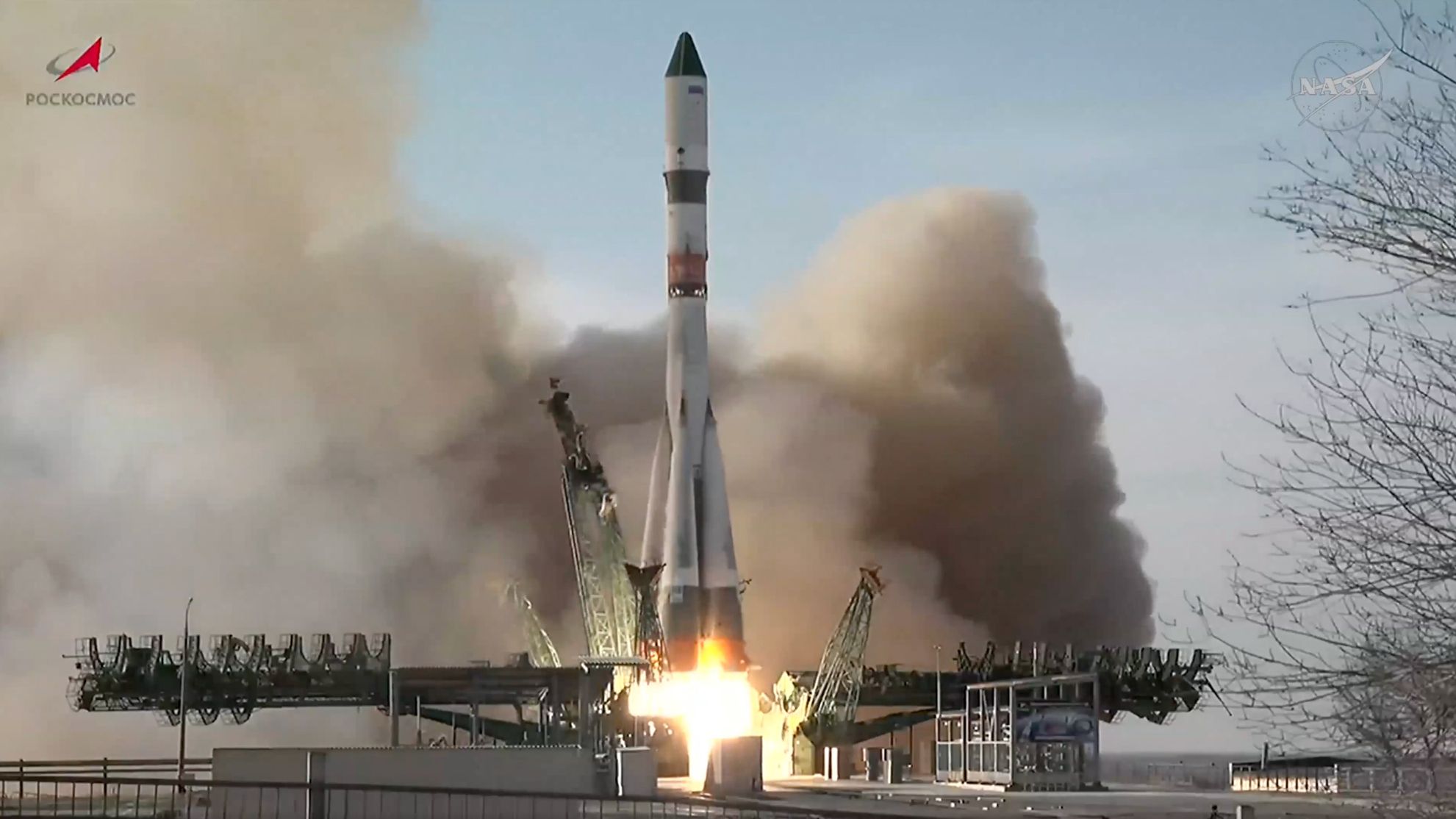
In the world of human spaceflight, few missions receive less attention than cargo runs, yet few are more consequential. Without a steady stream of food, water, fuel, spare parts, and scientific equipment, the International Space Station would become uninhabitable within weeks. Russia's Progress series has been the backbone of ISS resupply since the station's assembly began, and the 94th mission in the series continued that legacy with a launch from the Baikonur Cosmodrome in Kazakhstan on March 22, 2026.
The Soyuz 2.1a rocket carrying Progress MS-29, designated Progress 94 in the sequential numbering used by NASA and space enthusiasts, lifted off as scheduled and completed a nominal ascent to orbit. The spacecraft is on a two-day rendezvous profile with the ISS, using automated approach and docking systems refined over decades of Soviet and Russian spaceflight operations.
Cargo Manifest and Station Needs
Progress 94 is carrying approximately three tons of cargo distributed across three compartments: the dry cargo module holds food, clothing, spare hardware, and scientific equipment; the propellant module contains fuel for station reboosts; and the water module delivers fresh water, supplementing the station's regenerative water recovery systems.
Station reboost fuel is particularly critical. The ISS does not maintain a fixed orbit — atmospheric drag, even at 400 kilometers altitude where air density is extremely low, gradually pulls the station lower. Regular engine firings push the station back up to its operational altitude. Progress spacecraft, once docked, can use their engines to perform these reboosts, serving a dual function as both supply ship and orbital tug.

The Docking
After orbital insertion, Progress 94 performed a series of phasing maneuvers to close the distance with the ISS over approximately two days. The spacecraft uses the Kurs automated rendezvous system to approach and dock at the Zvezda service module's aft port without requiring manual intervention from the crew.
Successful docking was confirmed by mission controllers in Moscow and Houston, with hatch opening following pressure equalization checks. The crew then began the process of unloading dry cargo and reconfiguring the propellant and water transfer lines.
Progress in Context: The ISS Supply Chain
The ISS today operates a diversified logistics ecosystem. NASA contracts with SpaceX for Cargo Dragon missions, which can return cargo to Earth as well as deliver it — a capability Progress lacks, as it burns up on reentry after undocking. Northrop Grumman's Cygnus spacecraft provides additional pressurized cargo capacity.
Despite this diversification, Progress remains essential for propellant delivery and for sustaining the Russian segment of the station, which has its own life-support architecture partially independent of the American segment. As long as the ISS continues to operate — scheduled through at least 2030 under agreements between NASA and Roscosmos — Progress missions will continue flying roughly every three to four months.
The broader geopolitical climate has complicated but not severed space cooperation between the United States and Russia. The two nations continue to crew the station jointly and coordinate cargo logistics, an arrangement that both sides have described as too operationally important to sacrifice to political tensions. Progress 94's successful launch is the latest evidence that this compartmentalized cooperation endures.
This article is based on reporting by Space.com. Read the original article.
Originally published on space.com