A New Era of Astronomical Discovery
Perched in the Chilean Andes, the Vera C. Rubin Observatory is preparing to unleash what scientists are calling a deluge of discovery. The telescope, equipped with the largest digital camera ever constructed — a 3.2-gigapixel instrument that would take 378 4K televisions to display a single image at full resolution — is completing its testing phase before commencing the Legacy Survey of Space and Time (LSST), a decade-long mapping of the southern sky that promises to transform our understanding of the universe.
The numbers associated with the Rubin Observatory are staggering. In its first year of operation alone, the telescope will image more objects than all other optical observatories in the history of humanity combined. Over its full ten-year survey, it is expected to catalog 20 billion galaxies, detect 20,000 galaxy clusters, discover 36,500 new near-Earth objects, and identify thousands of supernovae. Each night, it will generate up to 7 million alerts about objects that have changed, moved, or appeared since the previous observation.
How It Works
Unlike traditional telescopes that point at a single target and observe it in detail, the Rubin Observatory operates as a systematic survey machine. Every clear night, it takes 30-second exposures of the southern hemisphere sky, building up a time-lapse record of the entire visible universe. By comparing consecutive images, the system automatically identifies anything that has changed: asteroids moving against the stellar background, supernovae brightening in distant galaxies, variable stars pulsing, and any number of unexpected transient phenomena.
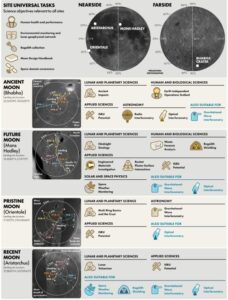
The data pipeline is extraordinarily fast. Within 60 seconds of a new image being captured, the observatory's software has compared it to previous observations, identified changes, and generated alerts. These alerts are distributed through specialized software systems called brokers, which allow researchers around the world to filter the flood of discoveries by object type, location, brightness, and other characteristics. Complete images are released after an 80-hour proprietary period, ensuring the broader scientific community has rapid access to the data.
A Machine for Discovery at Scale
The Rubin Observatory's approach represents a fundamental shift in how astronomy is conducted. Rather than individual researchers proposing observations of specific targets, the telescope will discover phenomena in massive numbers and alert the scientific community to follow up with more powerful instruments. The Giant Magellan Telescope and the Extremely Large Telescope, both under construction in Chile, are expected to serve as complementary facilities that can zoom in on the most interesting discoveries Rubin identifies.
This collaborative model means that the Rubin Observatory is not just a telescope but the hub of a new ecosystem of astronomical research. Its alerts will trigger observations from ground-based and space-based telescopes around the world, creating a responsive network that can rapidly characterize new discoveries.
Planetary Defense
One of the observatory's most immediately practical contributions will be to planetary defense. By systematically scanning the sky each night, Rubin is expected to discover approximately 130 new near-Earth objects every single night. Over its ten-year survey, the 36,500 new NEO detections will dramatically expand our catalog of potentially hazardous asteroids and comets, providing earlier warning of any objects on collision courses with Earth.
Current NEO detection efforts have identified roughly 35,000 near-Earth objects over several decades of work. The Rubin Observatory is expected to roughly double that count in a single decade, filling in gaps in our knowledge about smaller objects that could still cause significant damage in an impact event.
Gravitational Lensing and Dark Energy
Among the observatory's most scientifically significant targets are gravitationally lensed supernovae — instances where the light from an exploding star in a distant galaxy is bent and magnified by the gravity of an intervening galaxy or galaxy cluster. These rare events provide powerful tools for measuring the expansion rate of the universe and constraining the properties of dark energy. The Rubin Observatory is expected to detect approximately 44 lensed Type Ia supernovae annually, a dramatic increase over the handful discovered to date.
The systematic detection of these rare events, combined with the deep and uniform coverage of the LSST, will provide cosmologists with an unprecedented dataset for testing theories about the nature of dark energy and the ultimate fate of the universe.
Citizen Science and Open Data
The observatory is also designed to engage the broader public. Partnerships with citizen science platforms like Zooniverse will allow volunteers to help classify the enormous volume of objects discovered by the survey. Given the expected 7 million alerts per night at full capacity, automated classification algorithms will handle the bulk of the sorting, but human eyes will be essential for identifying unusual objects that do not fit neatly into existing categories.
The commitment to open data access means that the Rubin Observatory's discoveries will be available not just to professional astronomers but to educators, students, amateur astronomers, and the general public. This democratization of astronomical data could inspire a new generation of scientists and space enthusiasts.
From First Light to Full Operations
The observatory achieved first light approximately eight months ago and has been in an extensive commissioning and testing phase since then. The alert system is currently being tested at a rate of 800,000 alerts per night, with plans to scale to the full 7 million alerts as operations ramp up. When the LSST officially begins, it will mark the start of what many astronomers expect to be the most productive decade in the history of observational astronomy.
This article is based on reporting by Universe Today. Read the original article.
Originally published on universetoday.com