A new satellite image doubles as a mission statement
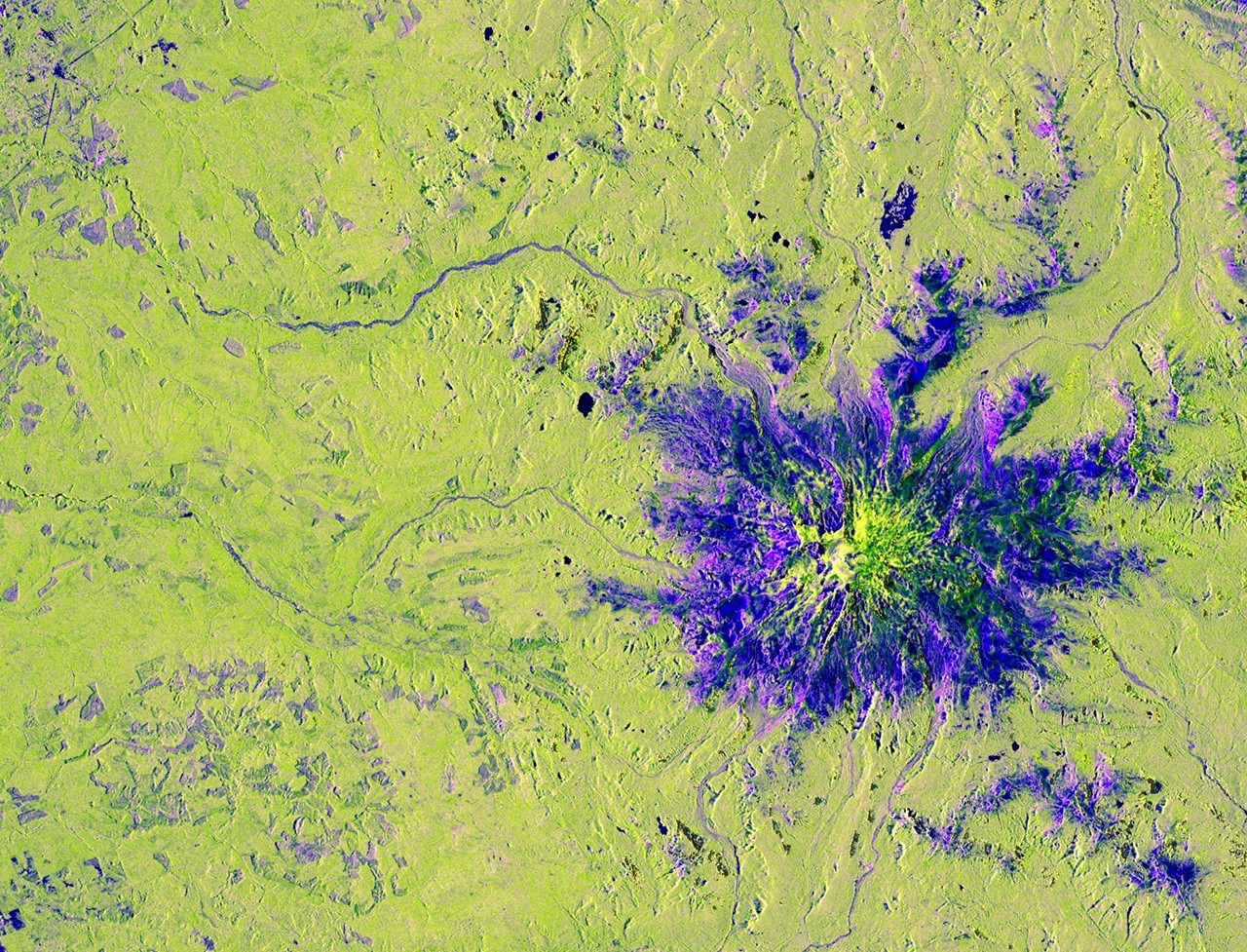
A newly released image of Mount Rainier is more than a striking view of the Pacific Northwest. It is an early demonstration of why the NASA-ISRO Synthetic Aperture Radar mission, or NISAR, matters. Captured on Nov. 10, 2025 and published by NASA this week, the scene shows how radar-based Earth observation can extract detailed information from a cloudy landscape that would frustrate many traditional optical systems.
The image focuses on Washington’s Mount Rainier, but the frame is cropped from a much larger swath covering the Pacific Northwest. NASA says the region was cloudy when the data were collected. NISAR’s L-band synthetic aperture radar was able to peer through those clouds to observe the surface below. That ability is one of the mission’s defining features and one reason scientists have been watching closely since the satellite launched in July 2025.
What the colors are showing
NASA’s description makes clear that the image is not a conventional photograph. The colors represent how radar signals interact with the ground, vegetation, built surfaces, and terrain geometry. Some areas appear magenta because radar signals strongly reflected off flat surfaces such as roads and buildings, combined with the orientation of those surfaces relative to the satellite’s ground track.
Other parts of the image appear yellow, which NASA says can result from a range of factors including land cover, moisture, and surface geometry. Yellow-green areas generally indicate vegetation, matching the forests and wetlands that blanket much of the surrounding region. Relatively smooth surfaces appear dark blue. In this specific scene, NASA says that likely includes vegetation-free clearings on the mountaintop as well as water.
One of the more revealing details sits near the foot of the mountain, where patches of purple squares interrupt lighter green vegetation. Their right angles show they are man-made. NASA says they are likely linked to forests that have been thinned or to vegetation regrowth after thinning. That kind of detail shows why radar imagery can be so useful not just for dramatic visuals, but for land-use analysis and environmental monitoring.

Why NISAR is different
NISAR is a joint mission developed by NASA and the Indian Space Research Organisation, reflecting a rare and ambitious international collaboration in Earth observation. NASA says the spacecraft launched from Satish Dhawan Space Centre on India’s southeastern coast in July 2025. The U.S. side of the project is led by NASA’s Jet Propulsion Laboratory, which provided the satellite’s L-band SAR instrument and antenna reflector. ISRO provided the spacecraft bus and the mission’s S-band SAR instrument.
That combination is central to the mission’s importance. NASA describes NISAR as the first satellite to carry two synthetic aperture radar instruments operating at different wavelengths. The two-radar approach is intended to improve scientists’ ability to track different kinds of changes across Earth’s land and ice surfaces. Different wavelengths interact with terrain and vegetation in different ways, and pairing them creates a richer set of measurements than a single-band mission can provide on its own.
The platform is also physically notable. NISAR collects data using a giant drum-shaped reflector measuring 39 feet, or 12 meters, across. NASA says it is the largest radar antenna reflector the agency has ever sent into space. That large reflector helps the spacecraft gather the repeated, wide-area observations needed for systematic Earth monitoring.
A mission built for repeat observation
NISAR is designed to monitor Earth’s land and ice surfaces twice every 12 days. That cadence matters as much as the hardware. A single image can be visually impressive, but regular revisit schedules are what turn remote sensing into a tool for tracking change over time.
Repeated observations can help researchers distinguish temporary conditions from persistent shifts. They can reveal how landscapes respond to weather, moisture, vegetation cycles, and human activity. In icy or mountainous terrain, they can provide regular measurements in places where cloud cover, distance, or seasonal darkness complicate other forms of observation.
The Mount Rainier image is a useful example because it combines several of those challenges. The Pacific Northwest is often cloudy. The terrain is varied. Vegetation, snow-free clearings, roads, and built areas all sit in the same larger scene. NISAR’s data show that the mission can separate and characterize these surfaces in ways that are directly relevant to scientists, land managers, and disaster researchers.

From image release to operational value
NASA presented the Mount Rainier release as a photojournal item, but the broader significance lies in what the image suggests about the mission’s operational maturity. NISAR is moving from launch-era attention to the more demanding phase in which its data must prove useful across real monitoring tasks.
The image does that in a straightforward way. It shows cloud-penetrating observation. It highlights how radar reflections can distinguish between built infrastructure, vegetation, and smooth surfaces. It hints at the mission’s usefulness for identifying human modifications on the landscape. And it reinforces that the satellite is now generating data sets with enough clarity and scale to support ongoing analysis.
That does not mean every user will read the colors intuitively. Radar imagery requires interpretation, and NASA’s explanation is part of the point. The value of these missions is not simply collecting pictures, but translating physical signal behavior into usable information about the planet.
An early sign of what the mission may deliver
NISAR was built to watch a dynamic Earth, and this week’s Mount Rainier release offers an early public look at that capability. The scene is local, but the mission is global. By pairing two radar instruments, revisiting land and ice surfaces on a steady schedule, and seeing through cloud cover, NISAR is positioned to become a significant platform for tracking environmental change.
For now, the Rainier image works as both a technical demonstration and a reminder of why radar missions are indispensable. They can show familiar places in unfamiliar ways, revealing structure, moisture, geometry, and human impact where ordinary imagery might show only clouds. In that sense, the mountain is not just the subject of the image. It is the proving ground for a satellite designed to watch the planet with unusual persistence and precision.
This article is based on reporting by science.nasa.gov. Read the original article.
Originally published on science.nasa.gov