Roman has moved from assembly into its final stretch before launch
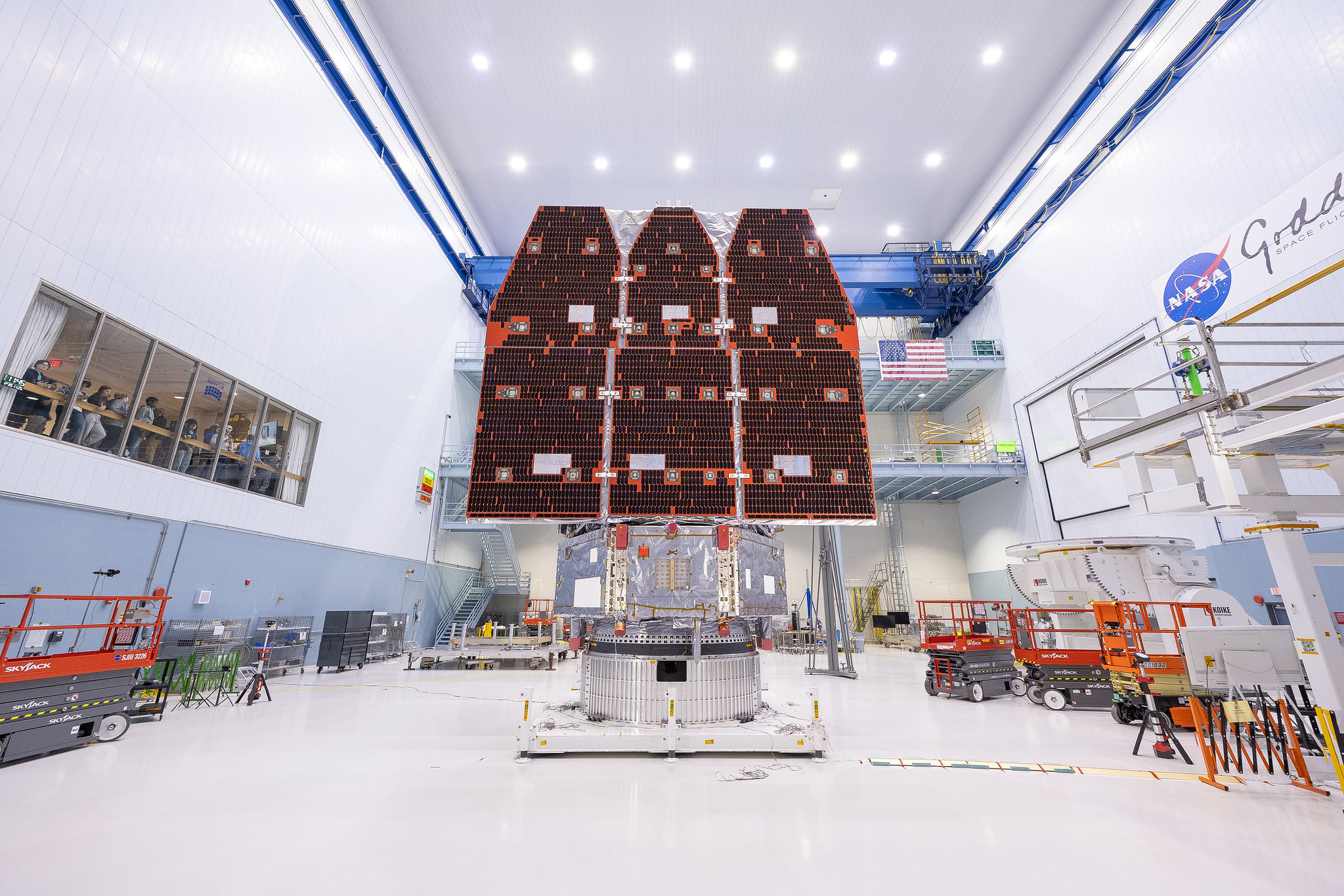
NASA says the Nancy Grace Roman Space Telescope has completed construction, marking a major milestone for one of the agency’s flagship science missions. The telescope now stands fully assembled at NASA’s Goddard Space Flight Center in Greenbelt, Maryland, after the integration of its two major segments, and the agency says it is wrapping up prelaunch testing before shipment to Florida.
The announcement came in a media advisory inviting reporters to Goddard on April 21 for what NASA described as one of the last opportunities to see the fully integrated observatory before it is moved to the Kennedy Space Center. NASA said the mission is slated to launch by May 2027, but the team is on track for a launch as early as fall 2026.
That combination of completed construction and an earlier possible launch window makes this more than a routine press event. It places Roman at a transitional moment: no longer a telescope still being pieced together, but a finished observatory entering the final phase of testing and launch preparation.
Why this milestone matters
Space projects are defined by milestones, but not all milestones carry the same weight. A fully assembled flagship telescope is different from a design review or a subsystem handoff. It means the mission has crossed the threshold from component-level progress to observatory-level readiness. NASA’s language reflects that change. Roman is no longer being introduced as a project under construction. It is being presented as a completed spacecraft nearing departure from Goddard.
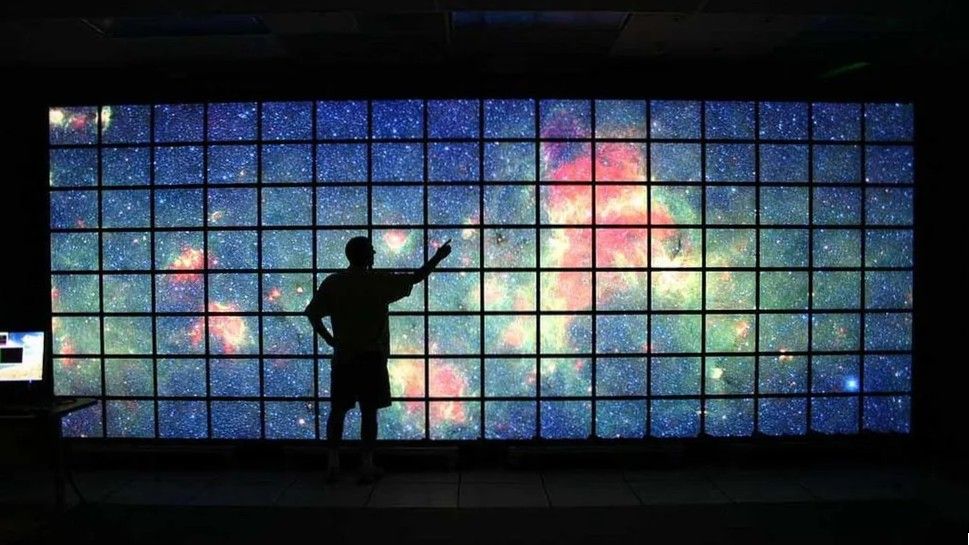
That status matters because Roman is intended to play a major role in how NASA studies the universe over the coming years. The agency says the telescope will deliver a deep, panoramic view of the cosmos and generate never-before-seen images. NASA also says the observatory will usher in a new era of cosmic surveys, revealing large numbers of celestial objects and helping scientists investigate some of the universe’s most profound mysteries, including phenomena that cannot be directly seen.
Those are broad ambitions, but they explain why the assembly milestone is important. Roman is built for survey science at scale. NASA is not framing it as a narrow mission with a small target list. It is presenting Roman as an observatory designed to open up a wide field of discovery.
A launch schedule with some flexibility
NASA’s timeline is notable for its two-part structure. Officially, the mission remains slated to launch by May 2027. At the same time, the agency says the team is on track for launch as early as fall 2026. That wording suggests both caution and momentum. The formal schedule remains intact, but the project has advanced enough that an earlier opportunity is plausible.
For a major science mission, that is a meaningful signal. Launch dates can move for many reasons, including testing results, vehicle readiness, scheduling at the launch site, and broader program constraints. NASA is not claiming an earlier launch is locked in. But by publicly saying the team is on track for fall 2026, the agency is indicating confidence in the current state of the program.
The next major physical move will be transport to Kennedy Space Center in Florida. NASA says the April event will be one of the last chances to view the telescope at Goddard before that shipment happens. In other words, the mission is approaching the point where assembly and local testing give way to launch-site processing.
What NASA wants Roman to do
The telescope’s scientific positioning is central to the agency’s message. Roman, named after NASA’s first chief astronomer Nancy Grace Roman, is meant to combine scale and depth in a way that expands what survey astronomy can do. NASA says it will produce a broad view of the universe while also delivering images that can transform understanding of cosmic structure and hidden phenomena.
The agency’s phrasing is careful but ambitious. Roman is expected to generate large troves of observations rather than isolated snapshots. That makes it a mission oriented around discovery as much as confirmation. Surveys of this kind can change science not only by answering known questions, but by uncovering objects and patterns researchers did not know to search for in the first place.
NASA also says Roman will showcase advanced technology. Even in the brief advisory, the agency treats the mission as both a scientific observatory and a platform demonstrating high-end space instrumentation. That dual role is common in flagship missions, where the instrument package is part of the story as well as the science that follows from it.

The April 21 event is a public marker of program confidence
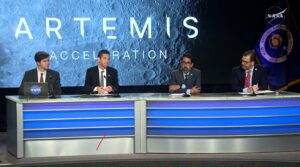
Media advisories are sometimes administrative. This one is also symbolic. NASA is assembling senior officials for the April 21 briefing, including Administrator Jared Isaacman, Science Mission Directorate Associate Administrator Nicky Fox, Roman project manager Jamie Dunn, and Roman senior project scientist Julie McEnery. That lineup underscores the importance the agency is assigning to this stage of the mission.
The event will take place in Goddard’s largest clean room and will be streamed on NASA’s YouTube channel. NASA is also offering credentialed media the opportunity to visit other facilities at the center and conduct interviews on additional programs, including Artemis-related work, the DAVINCI mission to Venus, the Habitable Worlds Observatory concept, and Dragonfly, the mission to Saturn’s moon Titan.
But Roman is the centerpiece. By putting the completed telescope on display before shipment, NASA is turning a technical milestone into a public one. That matters for a flagship observatory because these missions depend not only on engineering execution, but on long-term institutional and public support.
What comes next
The near-term path is clear. Roman has completed construction, is finishing prelaunch testing, and is preparing for transfer to Kennedy. The schedule still supports launch by May 2027, with fall 2026 now presented as a realistic earlier possibility.
Between now and then, the mission enters the most scrutinized stretch of any space program: the period when a finished spacecraft must prove, through testing and handling, that it is ready to survive launch and operate as intended. NASA’s advisory does not suggest that all risk has disappeared. No major mission reaches that point. But it does show that Roman has advanced beyond the uncertain phase of assembly and into the final approach to flight.
For NASA, that is a visible and consequential threshold. For astronomers, it is the moment when a long-promised observatory starts to look less like a future idea and more like an imminent scientific instrument. Roman is not in orbit yet. But with construction complete and testing nearly done, it is clearly much closer than it was.
This article is based on reporting by NASA. Read the original article.

Originally published on nasa.gov