Measuring the Unmeasurable
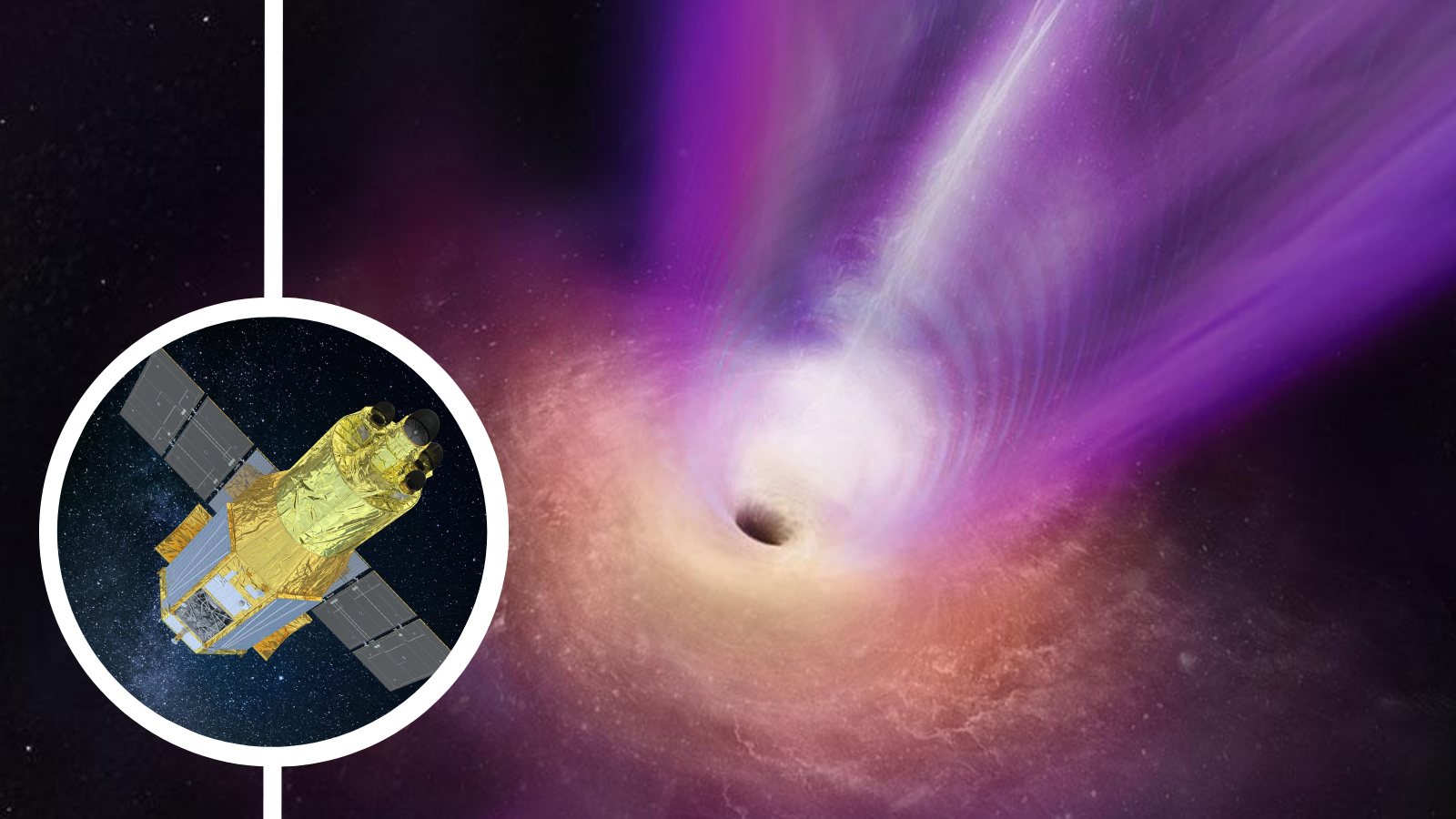
For the first time, astronomers have peered directly into the metaphorical eye of the storm swirling around a supermassive black hole, measuring the velocities and turbulence of superheated gas with a precision that was previously impossible. The observations, published in Nature in late January 2026, were made possible by the X-Ray Imaging and Spectroscopy Mission, known as XRISM, a joint venture between the Japan Aerospace Exploration Agency and NASA with participation from the European Space Agency.
The target of these groundbreaking observations was M87*, the supermassive black hole at the center of the giant elliptical galaxy Messier 87, located approximately fifty-five million light-years from Earth in the Virgo Cluster. M87* holds a special place in astronomical history as the first black hole ever directly imaged, when the Event Horizon Telescope captured its iconic shadow in 2019. Now XRISM has added an entirely new dimension to our understanding of this cosmic giant by revealing the dynamic behavior of the gas surrounding it.
As one researcher described the advancement, before XRISM it was as though scientists could see a photograph of a storm. Now they can measure the speed of the cyclone itself.
The Strongest Turbulence Ever Seen
When XRISM zoomed into the relatively compact region immediately surrounding M87*, it discovered something extraordinary. The turbulence in the hot gas enveloping the black hole is the most violent ever recorded in any galaxy cluster, exceeding even the extreme conditions generated when entire galaxy clusters collide and merge, events that are among the most energetic phenomena in the universe.
Galaxy clusters are the largest gravitationally bound structures in the cosmos, containing hundreds or thousands of galaxies embedded in a vast atmosphere of hot gas called the intracluster medium. This gas typically reaches temperatures of tens of millions of degrees, hot enough to emit copious X-rays. Normally, the most extreme turbulence in the intracluster medium occurs during mergers, when two clusters smash together at thousands of kilometers per second.
The fact that a single supermassive black hole can generate turbulence exceeding even these cataclysmic events speaks to the extraordinary concentration of energy in the region immediately surrounding M87*. The black hole, through a combination of jets, outflows, and accretion processes, is stirring its surroundings with a ferocity that dwarfs the most violent large-scale events in the universe.
How XRISM Sees What Others Cannot
XRISM's revolutionary capability lies in its Resolve instrument, a microcalorimeter spectrometer that measures the energy of individual X-ray photons with extraordinary precision. When hot gas moves toward or away from the observer, the energy of the X-rays it emits is shifted by the Doppler effect, just as the pitch of an ambulance siren changes as it approaches and recedes. By measuring these energy shifts with extreme accuracy, XRISM can determine the velocity of the emitting gas.
Previous X-ray observatories like Chandra and XMM-Newton could image the hot gas and measure its temperature, but they lacked the spectral resolution to distinguish between gas at rest and gas moving at hundreds or thousands of kilometers per second. XRISM's Resolve instrument changed this fundamentally, turning static X-ray images into dynamic maps of gas motion.
This capability allows researchers to unambiguously distinguish gas motions powered by the black hole from those driven by other cosmic processes, such as galaxy motion through the cluster medium, sound waves propagating through the gas, or turbulence left over from past merger events. For the first time, scientists can isolate the black hole's specific influence on its surroundings.
Anatomy of a Black Hole Storm
The XRISM observations revealed a striking pattern in the velocity structure around M87*. The fastest gas motions are concentrated closest to the black hole and drop off rapidly with distance. This velocity gradient is consistent with a combination of two physical processes. The first is turbulent eddies, swirling vortices of gas stirred up by the black hole's gravitational influence and the interaction of its jets with the surrounding medium. The second is a shockwave of outflowing gas driven by energy released as matter falls toward the black hole.
Supermassive black holes like M87* are surrounded by accretion disks, vast flattened structures of gas and dust spiraling inward under gravitational attraction. As this material spirals closer, it heats to millions of degrees and releases enormous amounts of energy. Some of this energy is channeled into relativistic jets, narrow beams of plasma launched perpendicular to the accretion disk at speeds approaching that of light. M87* hosts one of the most spectacular jets known, extending thousands of light-years from the galaxy's center.
These jets do not simply pass through the surrounding gas without effect. They inflate enormous bubbles, or cavities, in the intracluster medium, displacing vast quantities of hot gas and driving shock waves outward. The XRISM observations have now quantified this interaction with unprecedented detail, revealing the velocity structure and turbulent energy content of the gas at various distances from the black hole.

Implications for Galaxy Cluster Physics
The findings have significant implications for understanding how supermassive black holes regulate the environments of the galaxy clusters that host them. This process, known as active galactic nucleus feedback, is thought to be one of the most important mechanisms controlling the evolution of massive galaxies and galaxy clusters.
Without feedback from the central black hole, the hot gas in galaxy clusters should cool rapidly, condensing into new stars at rates far exceeding what is actually observed. The energy injected by the black hole through jets and outflows is thought to prevent this cooling, maintaining the cluster in a state of approximate thermal equilibrium. But the details of how this energy is transferred from the black hole to the surrounding gas have been poorly understood.
XRISM's velocity measurements provide direct evidence for the mechanism of energy transfer. The turbulence measured near M87* represents a reservoir of kinetic energy that will eventually dissipate as heat, warming the surrounding gas and counteracting radiative cooling. By quantifying the turbulent energy at various distances from the black hole, the observations constrain theoretical models of feedback with a rigor that was previously impossible.
A New Era of X-Ray Astronomy
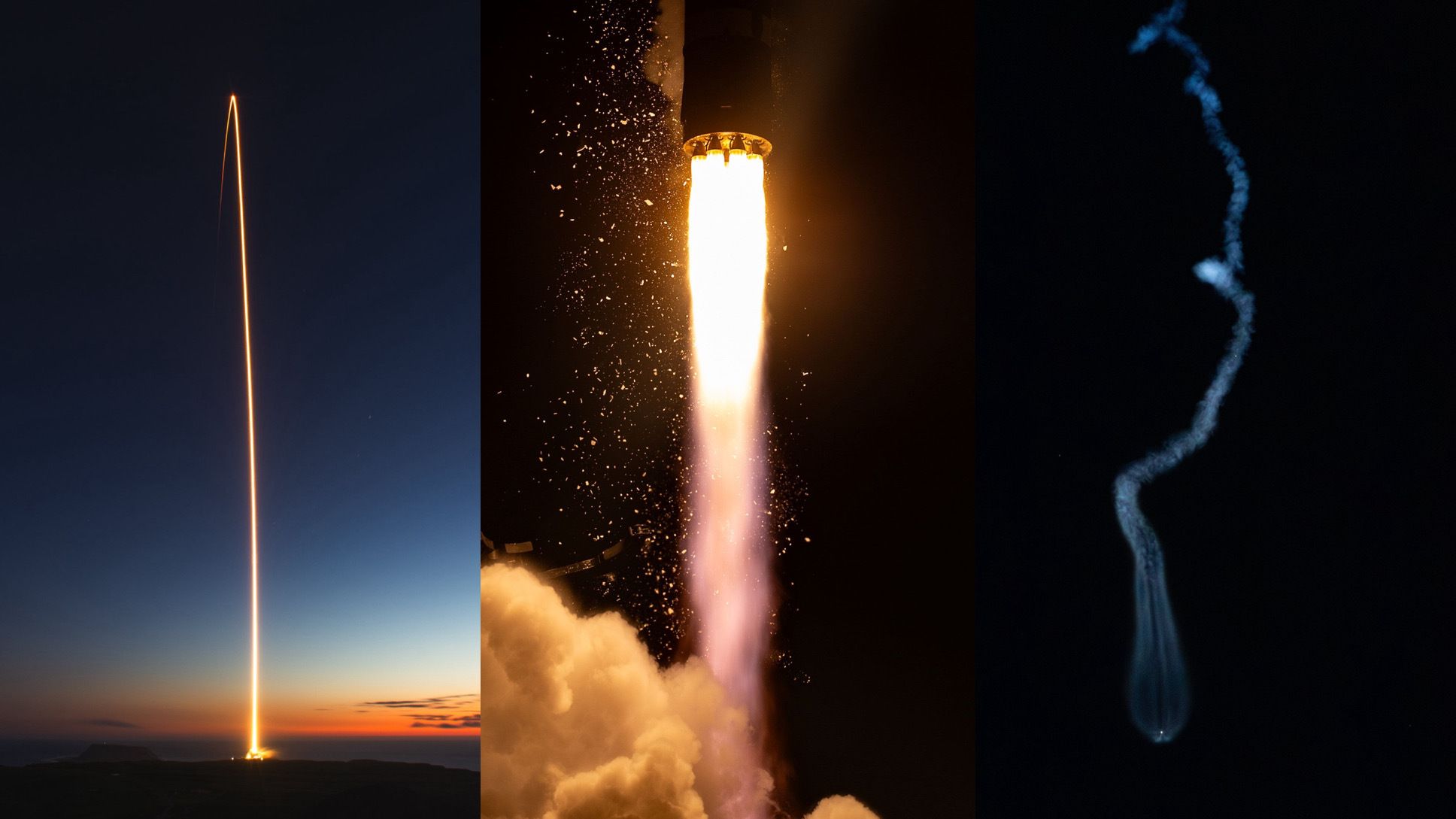
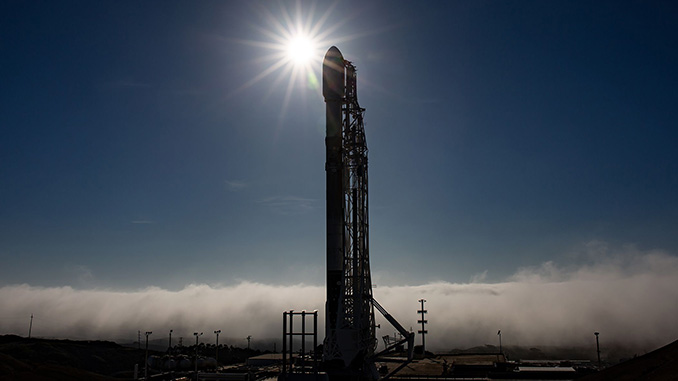
XRISM launched on September 6, 2023, and after a careful commissioning phase, began regular science observations in 2024. The M87* observations represent one of the mission's showcase results, demonstrating capabilities that astronomers have awaited for over two decades. A previous mission with similar capabilities, Hitomi, was lost shortly after launch in 2016 due to a spacecraft attitude control failure, making XRISM's success all the more significant.
The mission is expected to operate for at least three years, with a broad science program spanning supermassive black holes, galaxy clusters, supernova remnants, neutron stars, and the cosmic web of diffuse gas connecting galaxies. Each of these targets will benefit from the same velocity-measuring capability that has transformed our view of M87*.
Future observations will extend the M87* analysis to other supermassive black holes, building a comparative picture of how different black holes interact with their environments. The ultimate goal is a comprehensive understanding of the feedback cycle that links the smallest scales around a black hole to the largest structures in the universe, a connection that XRISM is now uniquely equipped to investigate.

Looking Deeper Into the Storm
The XRISM results have opened a new window on one of astrophysics' most fundamental questions: how do supermassive black holes, objects occupying a vanishingly small volume of space, exert such outsized influence on structures millions of light-years across? The answer, it appears, lies in the extraordinary concentration of turbulent energy they generate, energy that ripples outward through the surrounding gas and shapes the evolution of entire galaxy clusters.
The eye of the storm around M87* has proven to be even more violent than anticipated. As XRISM continues its mission, the picture will grow clearer, one X-ray photon at a time.
This article is based on reporting by Space.com. Read the original article.
Originally published on space.com