Dragon heads to the International Space Station with cargo and research
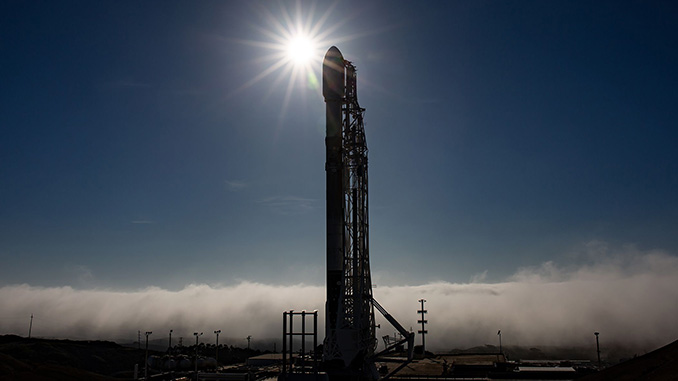
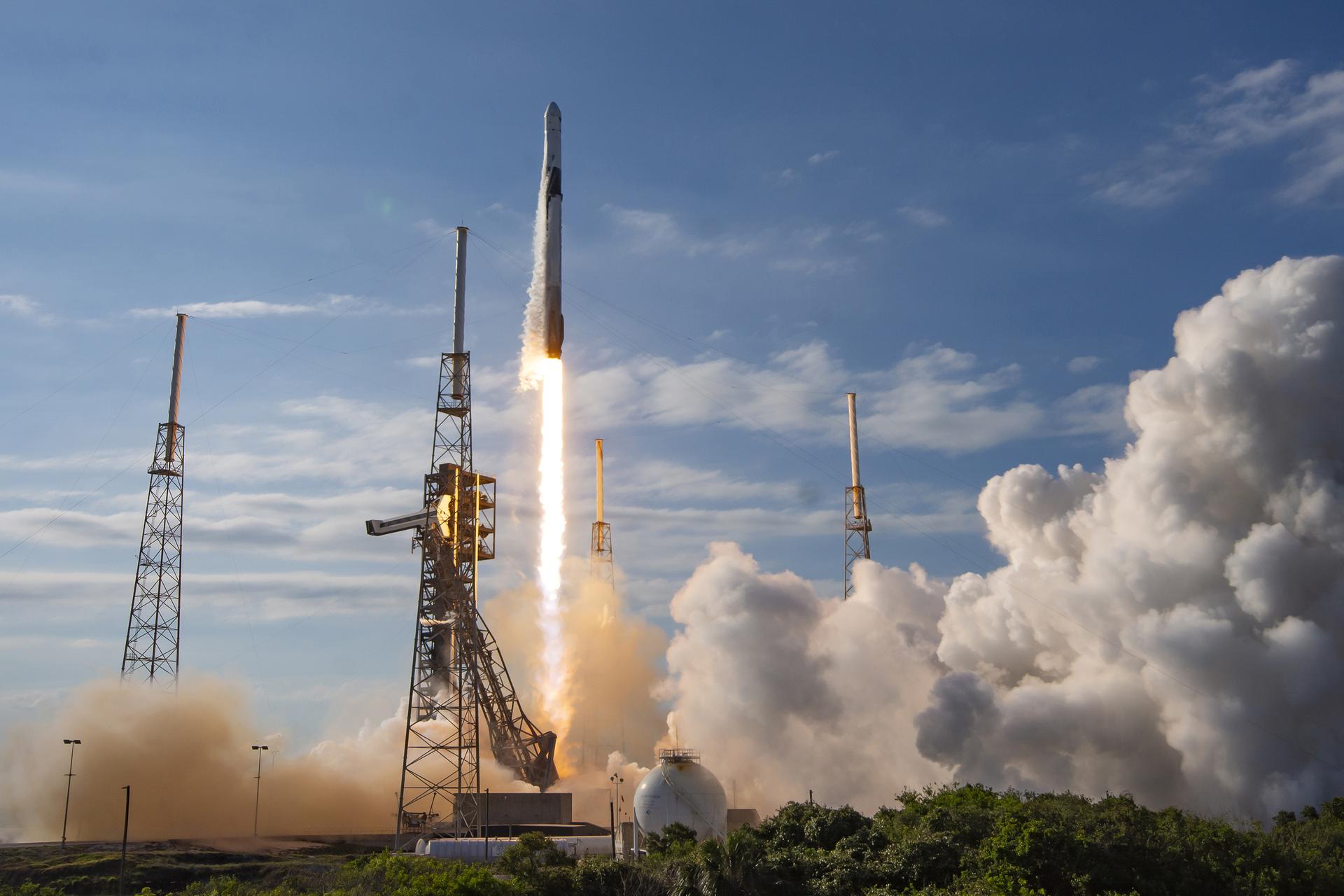
NASA and SpaceX launched the 34th commercial resupply mission to the International Space Station on May 15, 2026, sending a Dragon cargo spacecraft toward the orbital laboratory on a Falcon 9 rocket from Cape Canaveral Space Force Station in Florida. Liftoff took place at 6:05 p.m. EDT from Space Launch Complex 40, according to NASA.
The flight, part of NASA’s long-running cargo partnership with SpaceX, is carrying nearly 6,500 pounds of supplies for the station’s Expedition 74 crew. Dragon is scheduled to dock autonomously at about 7 a.m. on Sunday, May 17, at the forward port of the Harmony module, with NASA planning live rendezvous and docking coverage beginning at 5:30 a.m.
Resupply missions are operational workhorses, but this one also underscores how strongly the station remains oriented around research. NASA said the spacecraft is delivering several new experiments spanning biology, biotechnology, physical sciences, and Earth and space science. The list in the supplied source material offers a useful snapshot of how wide that portfolio has become.
Among the projects aboard Dragon is an investigation into how well Earth-based simulators reproduce microgravity conditions. That question is more than procedural. If researchers can better understand where simulation on Earth matches or fails to match real spaceflight, they can sharpen experiment design, improve preflight validation, and reduce uncertainty in how ground testing translates to orbital results.
Another payload centers on a bone scaffold made from wood that could support new treatments for fragile-bone conditions such as osteoporosis. The candidate source stops short of making efficacy claims, but the experiment stands out as an example of how station research continues to connect space-based investigation with potential medical applications on Earth.
NASA also highlighted equipment intended to help researchers evaluate how red blood cells and the spleen change in space. Human physiology remains one of the central barriers to long-duration exploration, and even relatively focused studies can feed into the larger challenge of keeping crews healthy on missions that extend well beyond low Earth orbit.
The cargo manifest also includes a new instrument to study charged particles around Earth that can affect power grids and satellites. That gives the mission a direct tie to space weather and infrastructure resilience. Understanding the behavior of charged particles is important not only for scientific modeling, but also for protecting systems on which modern communications, navigation, and electrical networks depend.
NASA said Dragon is also carrying an investigation that could provide a fundamental understanding of how planets form, along with an instrument designed to take highly accurate measurements of sunlight reflected by Earth and the Moon. Those payloads show how station logistics flights often combine immediately practical work with longer-horizon scientific inquiry.
In NASA’s framing, these experiments are only a sample of the hundreds of investigations conducted aboard the ISS. The agency also used the mission announcement to reinforce the station’s strategic role. For more than 25 years, people have lived and worked continuously aboard the platform, generating scientific results that are difficult or impossible to reproduce on Earth.
That continuity is central to NASA’s broader argument for the station’s relevance. The ISS is not just a destination for crew rotations and cargo traffic; it is a testbed for human spaceflight, a venue for commercial activity in low Earth orbit, and a bridge to future missions under Artemis and, eventually, to Mars. Cargo missions like CRS-34 therefore do double duty: they keep the outpost running, and they sustain the research cadence that underpins exploration planning.
Dragon is expected to remain at the station until mid-June before departing with time-sensitive research and cargo for a return to Earth, splashing down off the coast of California. That return leg is part of what makes Dragon especially valuable to station science. Some experiments require recovery and analysis soon after landing, and the ability to bring material home on a defined schedule broadens the type of work that can be flown.
On its face, CRS-34 is a logistics mission. In practice, it is a reminder that access to orbit is now routine enough to support a highly varied research pipeline. From bone science and blood studies to particle measurements and planetary formation questions, the cargo aboard this Dragon capsule reflects the station’s hybrid purpose as both infrastructure and laboratory.
This article is based on reporting by NASA. Read the original article.
Originally published on nasa.gov